“Why can’t we just toss the beef straight into the pan with the sauce and call it dinner?” my friend asked one evening as I was meticulously measuring out ingredients for these Korean beef rice bowls. I started to explain why that wouldn’t work — then stopped. Somehow, her offhand idea made me realize this recipe didn’t need to be complicated to be delicious. Honestly, that moment shifted how I think about cooking Korean flavors at home.
That night, we improvised a bit—skipping some traditional steps and blending the gochujang sauce with the beef right in the pan. The result was bold, saucy, and packed with umami in a way I hadn’t expected. I forgot to grab the scallions for garnish and spilled a little soy sauce on the counter, but the bowl was so satisfying that those little mishaps didn’t matter.
Maybe you’ve been there too—trying to perfect a dish only to realize the simplest approach wins every time. These Flavorful Korean Beef Rice Bowls with Gochujang Sauce and Kimchi stay with me because they balance spicy, savory, and tangy notes perfectly, and you don’t have to be a pro to get it right. Let me tell you, this recipe has become my go-to for a quick, comforting meal that feels a bit special.
Why You’ll Love This Recipe
After testing this recipe multiple times (and yes, tweaking the sauce more than once!), I can say these Korean beef rice bowls are truly something special. Here’s why you’re going to love making and eating them:
- Quick & Easy: From start to finish in under 30 minutes—ideal for busy nights when you want something tasty without the fuss.
- Simple Ingredients: Most of what you need is likely already in your pantry or fridge. No exotic shopping trips necessary.
- Perfect for Weeknight Dinners: Hearty and filling, yet light enough to enjoy any night of the week.
- Crowd-Pleaser: The combination of savory beef, spicy-sweet gochujang, and tangy kimchi gets rave reviews from everyone I’ve served it to.
- Unbelievably Delicious: The sauce has just the right kick without overpowering, and the beef stays tender and juicy—trust me, you’ll want seconds.
This isn’t just another Korean beef recipe floating around. The magic is in the homemade gochujang sauce I fine-tuned to be balanced and approachable. Plus, pairing it with fresh kimchi adds that authentic tangy crunch that lifts the whole dish. Honestly, it’s comfort food with a spicy twist—something that feels both familiar and exciting on your plate.
What Ingredients You Will Need
This recipe uses simple, wholesome ingredients to deliver bold flavor and satisfying texture without the fuss. Most are pantry staples, with a few fresh touches that make all the difference.
- For the beef and marinade:
- 1 lb (450g) ground beef (preferably 85% lean for juiciness)
- 2 cloves garlic, minced (adds depth to the beef)
- 1 tablespoon ginger, freshly grated (brightens the flavor)
- 2 tablespoons soy sauce (I recommend Kikkoman for consistent taste)
- 1 tablespoon sesame oil (toasting the oil beforehand intensifies the nutty aroma)
- For the gochujang sauce:
- 2 tablespoons gochujang (Korean chili paste; use Chung Jung One brand if you can find it)
- 1 tablespoon honey or brown sugar (balances the heat)
- 1 tablespoon rice vinegar (adds a pleasant tang)
- 1 teaspoon soy sauce (for extra umami)
- 1 teaspoon toasted sesame seeds (optional, for garnish)
- For serving:
- 3 cups cooked white or brown rice (about 1 cup uncooked)
- 1 cup kimchi (store-bought or homemade; the tangy crunch is essential)
- 2 scallions, thinly sliced (for freshness and color)
- Optional: sliced cucumber or shredded carrots for extra crunch
Substitution tips: Use almond flour for a gluten-free thickener if you want to thicken the sauce, or swap Greek yogurt with dairy-free coconut yogurt to add creaminess if you prefer a milder sauce. And if you want to keep it vegetarian, substituting the beef with crumbled tofu or tempeh works surprisingly well with the sauce.
Equipment Needed
- Large non-stick skillet or wok: Perfect for cooking the beef evenly and allowing the sauce to coat every bite. I’ve tried cast iron for this recipe, but the non-stick makes clean-up easier.
- Mixing bowls: For marinating the beef and mixing the gochujang sauce components.
- Measuring spoons and cups: Accuracy helps balance the boldness of the sauce, especially with spicy ingredients like gochujang.
- Rice cooker or pot: For perfectly cooked rice every time; a rice cooker takes the guesswork out, but a pot with a tight lid works fine.
- Sharp knife and cutting board: For prepping garlic, ginger, and scallions safely and efficiently.
If you don’t have a rice cooker, no worries—just be sure to keep an eye on the rice to avoid burning. Also, a silicone spatula is my personal favorite for stirring the beef without scratching the pan. Budget-friendly alternatives like a regular wooden spoon work just fine too.
Preparation Method
- Prepare the rice: Rinse 1 cup (190g) of rice under cold water until the water runs clear. Cook according to package instructions or in a rice cooker. This takes about 20 minutes, so start here first.
- Mix the marinade: In a medium bowl, combine 2 tablespoons soy sauce, 1 tablespoon sesame oil, minced garlic, and grated ginger. Stir well.
- Marinate the beef: Add 1 lb (450g) ground beef to the marinade and mix thoroughly, breaking up any clumps. Let it sit for 10 minutes if you can spare the time—this helps the flavors penetrate.
- Make the gochujang sauce: In a small bowl, whisk together 2 tablespoons gochujang, 1 tablespoon honey, 1 tablespoon rice vinegar, and 1 teaspoon soy sauce until smooth. Set aside.
- Cook the beef: Heat a large skillet over medium-high heat. Add the marinated beef, spreading it out in an even layer. Let it brown for 3-4 minutes undisturbed to build flavor, then stir and cook for another 4-5 minutes until fully cooked and slightly caramelized.
- Add the sauce: Pour the gochujang sauce over the cooked beef. Stir to coat evenly and cook for another 2 minutes, letting the sauce thicken and cling to the meat.
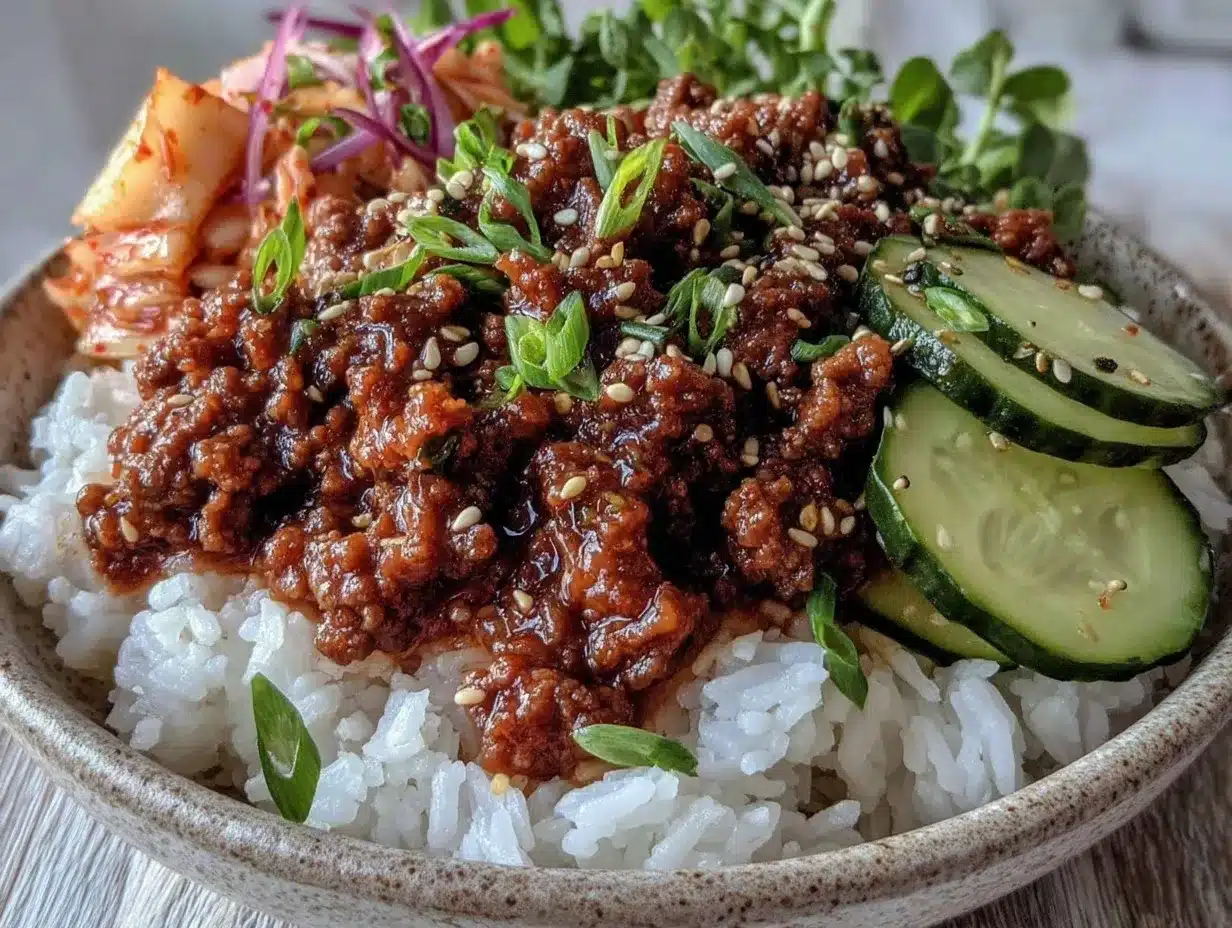
- Assemble the bowls: Divide the cooked rice into 4 bowls. Spoon the beef mixture over the rice. Top each bowl with a generous scoop of kimchi, sliced scallions, and optional veggies like cucumbers or shredded carrots.
- Final touch: Sprinkle toasted sesame seeds on top for a nutty crunch. Serve immediately—warm, spicy, and satisfying.
Quick tip: If your sauce feels too thick, splash in a teaspoon of water to loosen it up. And if the beef seems dry, a little extra sesame oil right at the end can do wonders. When you’re cooking the beef, resist the urge to stir too often—it needs that contact with the pan to get those tasty browned bits.
Cooking Tips & Techniques
One thing I learned the hard way is that overcooking ground beef can make it dry and tough. So, keep a close eye and stir gently just enough to break it apart. Letting it brown without constant stirring is key for flavor.
When working with gochujang, a little goes a long way—start with the recommended amount and adjust if you want more heat. Mixing it with honey and rice vinegar balances the spice with sweetness and tang, which is a trick I picked up from a Korean chef during a cooking class.
Don’t rush the rice prep—it really is the base of the bowl, and if it’s mushy or undercooked, the whole dish suffers. I like to fluff the rice with a fork just before assembling to keep it light.
You know that moment when you think you’ve nailed the dish, but it’s missing something? A squeeze of fresh lime or a splash of soy sauce right at the end can brighten flavors without overpowering.
Lastly, multitasking is your friend here. While the rice cooks, you can prep garlic, ginger, and sauce. That way, once you start cooking the beef, everything else is ready to go—making the whole process feel smooth and satisfying.
Variations & Adaptations
This recipe is flexible and welcomes a few twists depending on your mood or dietary needs.
- Vegetarian option: Swap ground beef with crumbled firm tofu or tempeh. Press tofu well to remove excess moisture for best texture.
- Spicy level: If you prefer milder heat, reduce gochujang by half and add a dash of smoked paprika for depth without spice.
- Grain swap: Use cauliflower rice for a low-carb version or quinoa for extra protein and texture.
- Seasonal veggies: In summer, add fresh cucumber slices or shredded summer squash for a refreshing crunch. Winter calls for sautéed mushrooms or roasted sweet potatoes.
- Cooking method: Try cooking the beef in an air fryer for a slightly crispier texture before adding the sauce. I did this once when the power went out mid-cooking, and it gave the beef a nice edge.
Personally, I’ve experimented by adding a fried egg on top—runny yolk mixed in with the beef and rice is comfort food gold.
Serving & Storage Suggestions
Serve these Korean beef rice bowls hot, straight from the stove. The warmth helps the flavors meld, and the kimchi adds a cool contrast.
For a full meal, pair with a light cucumber salad or steamed greens to balance the richness. A cold barley tea or lightly sweetened iced green tea complements the spicy-sweet profile nicely.
Leftovers keep well in the fridge for up to 3 days in an airtight container. When reheating, sprinkle a little water or broth over the rice to keep it moist and cover the bowl to trap steam.
Flavors actually deepen after a day, so these bowls taste even better the next day once the beef has soaked up more of the sauce. Just add fresh kimchi and scallions when serving again.
Nutritional Information & Benefits
Each serving provides approximately 450 calories, with about 25 grams of protein and 40 grams of carbohydrates. The dish packs a good dose of iron from the beef and probiotics from the kimchi, which support digestion.
The gochujang sauce, made with fermented chili paste, contributes capsaicin that can boost metabolism and add antioxidants. Using lean ground beef helps keep saturated fat moderate.
This recipe is naturally gluten-free if you use tamari instead of soy sauce and is suitable for anyone looking for a balanced, flavorful meal with a spicy kick.
Conclusion
These Flavorful Korean Beef Rice Bowls with Gochujang Sauce and Kimchi are a testament to simple ingredients coming together in a way that feels both comforting and exciting. They’re easy enough for weeknights but special enough to impress without stress.
Feel free to adjust the spice, swap out ingredients, or pile on the veggies to make this recipe truly yours. I love it because it reminds me that sometimes the best meals come from trusting a friend’s unconventional suggestion—just like that night when the simplest approach won me over.
If you try this recipe, I’d love to hear how you made it your own or any tips you discovered along the way. Sharing those moments makes cooking even more fun!
FAQs
Can I use sliced beef instead of ground beef for this recipe?
Absolutely! Thinly sliced beef like ribeye or sirloin works well. Just cook it quickly over high heat to keep it tender, then toss with the sauce.
Is gochujang very spicy for beginners?
Gochujang has moderate heat with a sweet undertone. If you’re sensitive to spice, start with less and add more to taste. Mixing it with honey and vinegar tones down the heat nicely.
How do I store leftover kimchi?
Keep kimchi in an airtight container in the fridge. It continues to ferment, so it gets tangier over time. Use within a month for best flavor.
Can I make the sauce ahead of time?
Yes, the gochujang sauce can be mixed and stored in the fridge for up to a week. Just stir before using as it may separate slightly.
What can I serve besides rice with this beef?
Try it over quinoa, noodles, or even wrapped in lettuce leaves for a low-carb option. It’s versatile and works with many bases.
Pin This Recipe!
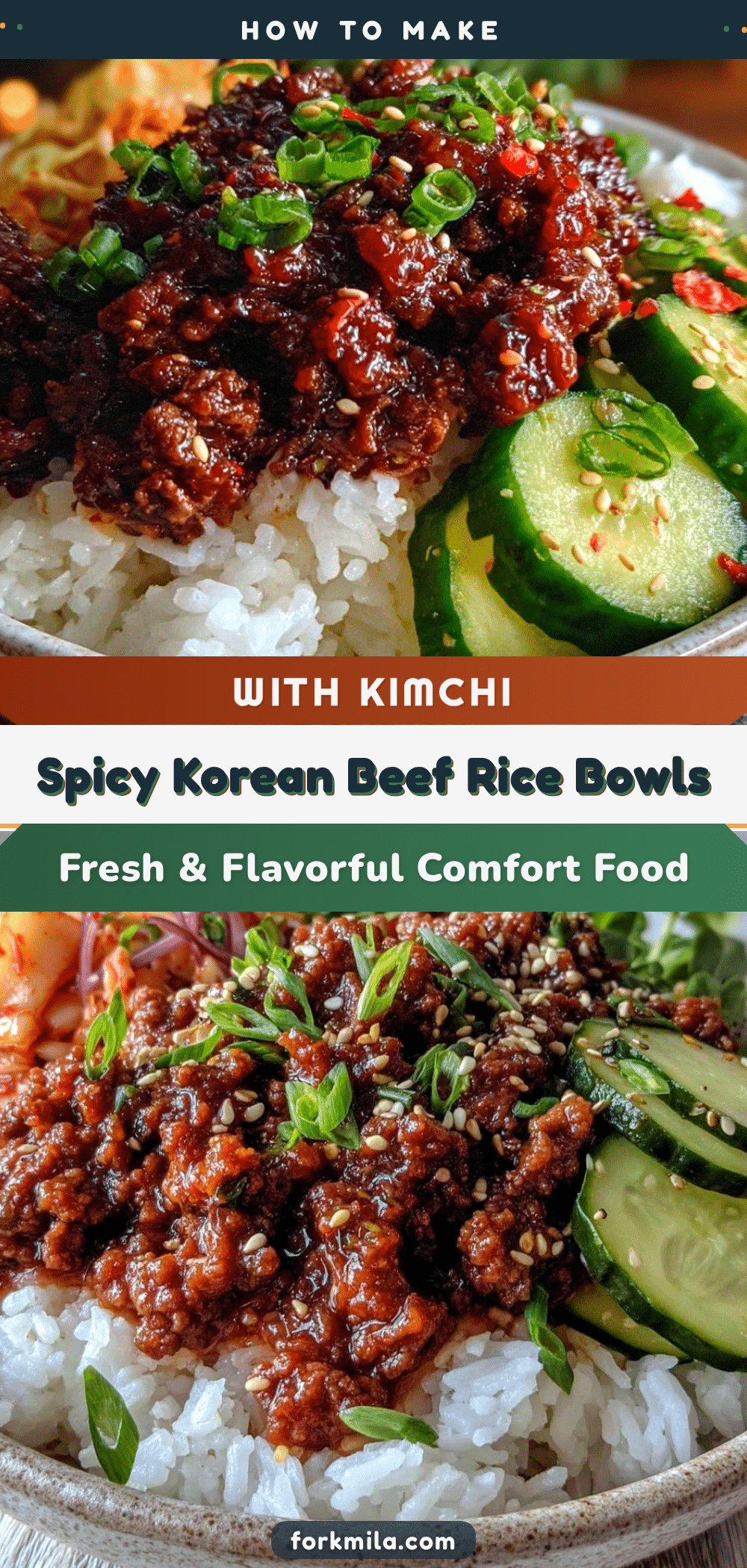
Flavorful Korean Beef Rice Bowls Recipe with Easy Gochujang Sauce and Kimchi
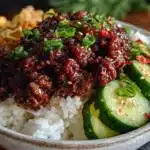
A quick and easy Korean beef rice bowl recipe featuring a bold gochujang sauce and tangy kimchi, perfect for weeknight dinners.
- Prep Time: 10 minutes
- Cook Time: 20 minutes
- Total Time: 30 minutes
- Yield: 4 servings 1x
- Category: Main Course
- Cuisine: Korean
Ingredients
- 1 lb (450g) ground beef (preferably 85% lean)
- 2 cloves garlic, minced
- 1 tablespoon freshly grated ginger
- 2 tablespoons soy sauce
- 1 tablespoon sesame oil
- 2 tablespoons gochujang (Korean chili paste)
- 1 tablespoon honey or brown sugar
- 1 tablespoon rice vinegar
- 1 teaspoon soy sauce
- 1 teaspoon toasted sesame seeds (optional)
- 3 cups cooked white or brown rice (about 1 cup uncooked)
- 1 cup kimchi
- 2 scallions, thinly sliced
- Optional: sliced cucumber or shredded carrots
Instructions
- Rinse 1 cup (190g) of rice under cold water until the water runs clear. Cook according to package instructions or in a rice cooker (about 20 minutes).
- In a medium bowl, combine 2 tablespoons soy sauce, 1 tablespoon sesame oil, minced garlic, and grated ginger. Stir well.
- Add 1 lb (450g) ground beef to the marinade and mix thoroughly, breaking up any clumps. Let it sit for 10 minutes if possible.
- In a small bowl, whisk together 2 tablespoons gochujang, 1 tablespoon honey, 1 tablespoon rice vinegar, and 1 teaspoon soy sauce until smooth. Set aside.
- Heat a large skillet over medium-high heat. Add the marinated beef, spreading it out evenly. Let it brown for 3-4 minutes undisturbed, then stir and cook for another 4-5 minutes until fully cooked and slightly caramelized.
- Pour the gochujang sauce over the cooked beef. Stir to coat evenly and cook for another 2 minutes, letting the sauce thicken.
- Divide the cooked rice into 4 bowls. Spoon the beef mixture over the rice. Top each bowl with kimchi, sliced scallions, and optional veggies like cucumbers or shredded carrots.
- Sprinkle toasted sesame seeds on top for garnish. Serve immediately.
Notes
If the sauce is too thick, add a teaspoon of water to loosen it. Avoid stirring the beef too often to allow browning. For a vegetarian option, substitute beef with crumbled tofu or tempeh. Leftovers keep well for up to 3 days refrigerated; reheat with a splash of water or broth to keep moist.
Nutrition
- Serving Size: 1 bowl (approximatel
- Calories: 450
- Sugar: 8
- Sodium: 700
- Fat: 20
- Saturated Fat: 6
- Carbohydrates: 40
- Fiber: 3
- Protein: 25
Keywords: Korean beef, gochujang sauce, kimchi, rice bowls, quick dinner, spicy beef, weeknight meal