It was 8:47 PM on a rainy Thursday, and I was starving in that specific way where only something warm, buttery, and carb-loaded would do. I’d just gotten home from a long day, the kind where you’re running on fumes and caffeine, and the last thing I wanted was another sad bowl of cereal for dinner. I didn’t have the energy for a complicated sauce or a long ingredient list. But I did have a bag of frozen shrimp in the back of the freezer, a head of garlic that was starting to sprout, and half a box of linguine. Honestly, that felt like a win. I started boiling water before I even had a plan, which is usually how my best weeknight meals happen—on autopilot, with a grumbling stomach calling the shots.
Maybe you’ve been there, staring into the fridge, hoping a fully cooked meal will just materialize. I grabbed the butter, because butter is never a bad idea, and started thinking. The garlic went into the pan first, sizzling so loudly it drowned out the rain tapping against the window. The shrimp thawed under cold water in about two minutes flat. By the time the pasta was al dente, I had a glossy, garlicky sauce that came together in the time it took to set the table. That first twirl of pasta, coated in butter and studded with tender shrimp, was exactly what I needed. It wasn’t fancy. It wasn’t planned. But it was the kind of dinner that makes you forget the long day entirely.
Why You’ll Love This Recipe
This quick garlic butter shrimp pasta isn’t just another weeknight dinner—it’s the one you’ll keep coming back to when you need something fast, satisfying, and genuinely delicious. I’ve tested this recipe about a dozen times, tweaking the garlic-to-butter ratio and testing different pasta shapes, and I can confidently say this version is the sweet spot. It’s proof that you don’t need a dozen ingredients or an hour in the kitchen to make a meal that feels special.
- Quick & Easy: From start to finish, this dish comes together in under 15 minutes. That’s faster than takeout delivery, and way more satisfying.
- Simple Ingredients: You probably already have butter, garlic, pasta, and lemon in your kitchen. The shrimp is the only fresh ingredient you might need to pick up.
- Perfect for Busy Weeknights: Whether it’s a Tuesday after work or a lazy Sunday when you just don’t feel like cooking, this recipe has your back.
- Crowd-Pleaser: I’ve served this to picky eaters, seafood lovers, and even my friend who “doesn’t really like shrimp.” Every single plate came back clean.
- Unbelievably Delicious: There’s something magical about the way garlic browns in butter, coating every strand of pasta with rich, savory flavor. The shrimp stays tender and juicy, not rubbery or overcooked.
What makes this recipe different from the dozens of shrimp pasta recipes out there? It’s the timing. Most recipes overcook the shrimp or let the garlic burn. This method teaches you to cook the shrimp just until pink, then toss everything together off the heat so the garlic butter coats the pasta without turning bitter. It’s a small technique, but it makes all the difference between a good pasta and a great one.
What Ingredients You Will Need
This recipe uses a short list of everyday ingredients that come together to create something truly special. Most of these are pantry staples, which means you’re probably only a quick shrimp thaw away from dinner.
- Shrimp (1 lb, large or jumbo, peeled and deveined): I prefer raw shrimp for this recipe because you control the cooking time. Frozen works perfectly—just thaw them under cold running water for a few minutes. Look for shrimp that are firm and smell fresh, not fishy. I usually grab wild-caught when I can find them on sale.
- Linguine or spaghetti (8 oz / 225 g): Long, thin pasta works best here because it holds onto the garlic butter sauce beautifully. You can use fettuccine, angel hair, or even bucatini if that’s what you have. Gluten-free pasta works too—just cook it a minute less than the package says.
- Unsalted butter (4 tbsp / 56 g): Butter is the star of this sauce, so use a good one. I like Kerrygold for its rich flavor, but any unsalted butter works. Salted butter is fine too—just adjust the added salt at the end.
- Garlic (5-6 cloves, minced): Don’t skimp on the garlic. It mellows as it cooks, becoming sweet and nutty rather than sharp. Fresh garlic is non-negotiable here—skip the jarred stuff, which tends to be bitter and watery.
- Lemon juice (2 tbsp, fresh): Fresh lemon juice brightens up the butter and cuts through the richness. Bottled lemon juice has a flat, artificial taste that doesn’t do this dish justice. Trust me on this one.
- Red pepper flakes (¼ tsp, or to taste): This adds a gentle warmth, not intense heat. If you’re sensitive to spice, use just a pinch or leave it out entirely.
- Fresh parsley (¼ cup, chopped): Parsley adds a fresh, herbaceous note and a pop of green color. Flat-leaf (Italian) parsley has more flavor than curly, but either works.
- Salt and black pepper (to taste): Season the pasta water generously—it should taste like the sea. That’s your chance to season the pasta from the inside out.
- Grated Parmesan cheese (for serving, optional): A sprinkle of Parmesan adds a salty, nutty finish. I love it, but my husband prefers it without—so this one’s up to you.
Equipment Needed
You don’t need any fancy gadgets for this recipe. Here’s what you’ll need:
- Large pot (for boiling pasta): A 5-6 quart pot is ideal. Make sure it’s big enough for the pasta to move freely while cooking.
- Large skillet or sauté pan: A 12-inch skillet gives the shrimp enough room to cook in a single layer. Crowding the pan leads to steaming instead of searing.
- Colander: For draining the pasta. Pro tip: reserve a cup of pasta water before you drain—it’s liquid gold for thinning the sauce.
- Chef’s knife and cutting board: For mincing garlic and chopping parsley. A sharp knife makes the prep faster and safer.
- Measuring spoons and a citrus juicer: Accurate measurements matter here, and a citrus juicer makes squeezing lemons mess-free.
- Tongs: For tossing the pasta with the sauce. Tongs give you more control than a spoon.
If you don’t have a large skillet, a Dutch oven or even a wok will work. I’ve made this in a nonstick pan before and it turned out great—just be gentle with the shrimp so they don’t break apart.
Preparation Method
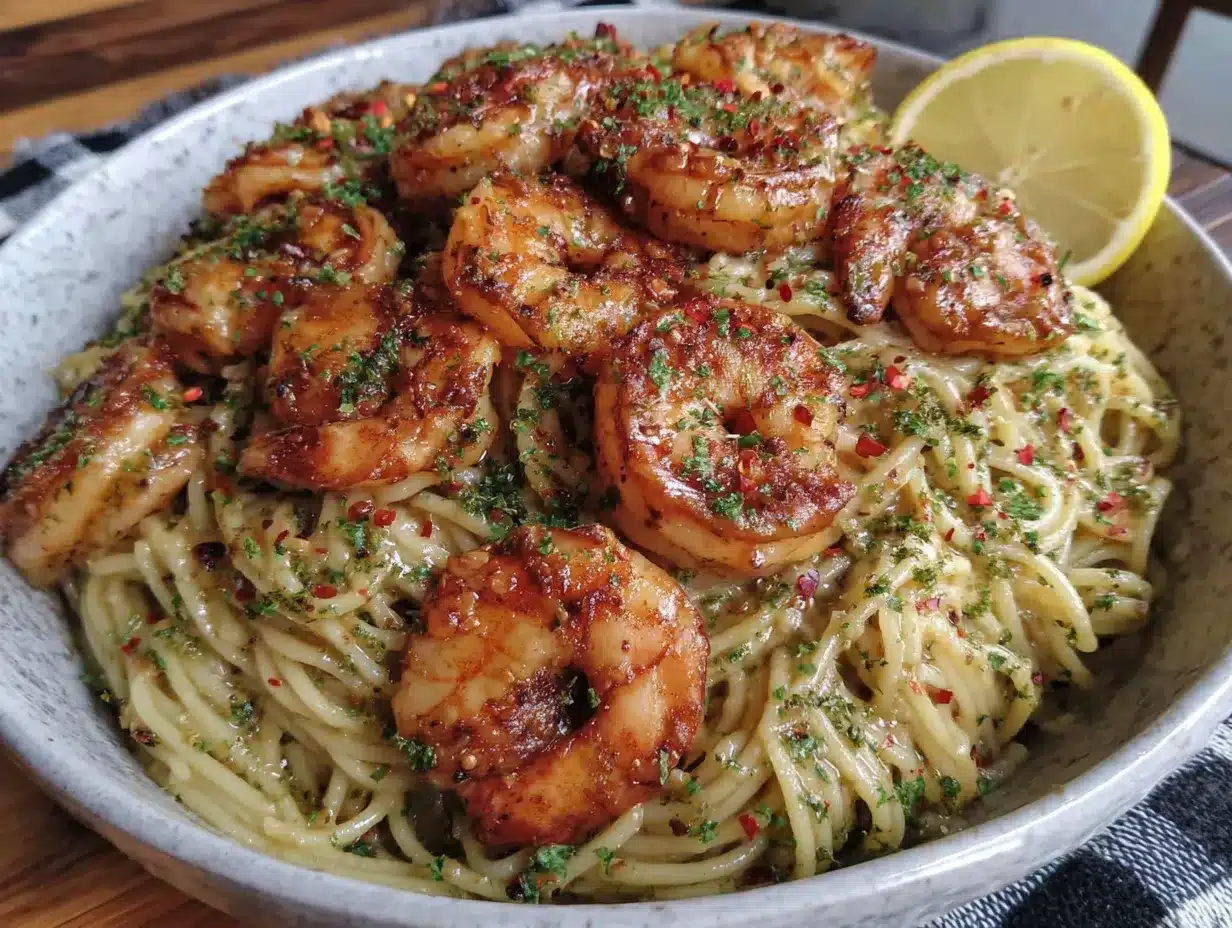
- Bring a large pot of salted water to a boil (5 minutes). Add about 2 tablespoons of salt to the water—it should taste briny, like seawater. This is your only chance to season the pasta itself. Drop in the linguine and cook according to package directions until al dente (usually 8-10 minutes). Stir occasionally to prevent sticking.
- While the pasta cooks, prepare the shrimp and aromatics (2 minutes). If using frozen shrimp, place them in a colander and run cold water over them for 2-3 minutes until thawed. Pat them very dry with paper towels—wet shrimp won’t brown properly. Season lightly with salt and pepper. Mince the garlic, chop the parsley, and halve the lemon.
- Heat the skillet over medium-high heat (1 minute). Add 2 tablespoons of the butter to the pan. Let it melt and foam slightly, but don’t let it brown. The butter should be hot enough that a drop of water sizzles on contact.
- Cook the shrimp (2-3 minutes). Add the shrimp to the skillet in a single layer. Cook for 1-2 minutes on the first side until pink and lightly golden on the edges. Flip each shrimp and cook for another 30-60 seconds. The shrimp should be opaque throughout and just barely curled. Remove them to a plate immediately—overcooked shrimp turn rubbery fast.
- Make the garlic butter sauce (2 minutes). Reduce the heat to medium-low. Add the remaining 2 tablespoons of butter to the same skillet. Once melted, add the minced garlic and red pepper flakes. Cook for 30-45 seconds, stirring constantly, until the garlic is fragrant but not browned. Burnt garlic tastes bitter and will ruin the sauce.
- Combine everything (1 minute). By now, the pasta should be done. Reserve ½ cup of pasta water, then drain the linguine. Add the drained pasta directly to the skillet with the garlic butter. Toss with tongs to coat evenly. If the sauce seems too thick, add a splash of the reserved pasta water—the starch helps it cling to the noodles.
- Finish and serve (1 minute). Return the cooked shrimp to the skillet. Squeeze the fresh lemon juice over everything and toss gently. Taste and adjust seasoning with salt and pepper. Sprinkle with chopped parsley and serve immediately with grated Parmesan on the side.
Sensory cues: The garlic should smell fragrant and sweet, not sharp or acrid. The shrimp should be pink with a slight golden crust. When you toss the pasta, it should look glossy and well-coated, not dry or greasy.
Cooking Tips & Techniques
I’ve made this recipe more times than I can count, and I’ve definitely learned a few things the hard way. Here are the tips that make the biggest difference:
Dry your shrimp thoroughly. This is the number one mistake I see people make. Wet shrimp release steam when they hit the pan, which prevents browning. Pat them dry with paper towels until they feel almost tacky to the touch. That dry surface is what gives you that beautiful golden crust.
Don’t crowd the pan. If you’re doubling the recipe, cook the shrimp in two batches. When too many shrimp are crammed into the skillet, they steam instead of sear. You lose that nice browned flavor, and the texture gets tough. I learned this after a particularly disappointing batch where every single shrimp turned out rubbery.
Reserve that pasta water. I cannot stress this enough. Pasta water is liquid gold—it’s starchy and salty, which helps the sauce cling to the noodles and seasons it from within. Add it a tablespoon at a time until the sauce reaches the consistency you want. I’ve forgotten to reserve it before, and the pasta was noticeably drier.
Cook garlic on low heat. Garlic burns in seconds on high heat. Keep the flame at medium-low when you add it to the butter, and stir constantly. If the garlic starts to brown before the shrimp are done, remove the pan from the heat temporarily. Burnt garlic tastes acrid and bitter—there’s no fixing it once it’s gone too far.
Taste before you serve. This sounds obvious, but I’ve definitely served under-seasoned pasta before. Taste a strand of linguine after you toss it with the sauce. Does it need more salt? More lemon? A pinch of red pepper flakes? Adjusting at the end makes all the difference between good pasta and great pasta.
Variations & Adaptations
One of the best things about this recipe is how easy it is to adapt. Here are a few variations I’ve tried and loved:
Spicy Garlic Shrimp Pasta: Double the red pepper flakes and add a pinch of cayenne pepper along with the garlic. I made this version for a friend who loves heat, and she said it was the best pasta she’d had in months. The warmth builds slowly without overwhelming the shrimp.
Creamy Garlic Butter Shrimp Pasta: After adding the garlic, stir in ¼ cup of heavy cream and let it simmer for a minute before adding the pasta. This turns the sauce into a luscious, velvety coating that feels extra indulgent. I make this version when I’m craving something richer, usually on a cold winter night.
Vegetable-Loaded Version: Sauté a handful of spinach or a cup of cherry tomatoes (halved) in the pan after cooking the shrimp. The tomatoes burst into the sauce, adding sweetness and acidity. Spinach wilts in seconds and adds a pop of green. This is my go-to when I want to pretend I’m eating a balanced meal.
Gluten-Free Adaptation: Use your favorite gluten-free pasta—I’ve had good luck with chickpea pasta and brown rice linguine. Cook it according to the package directions, but check it a minute early since gluten-free pasta can go from al dente to mushy quickly. The sauce works exactly the same.
Lemon-Herb Variation: Add a teaspoon of dried oregano or thyme along with the garlic, and increase the lemon juice to 3 tablespoons. The herbs complement the shrimp beautifully, and the extra lemon makes it taste brighter. This is my husband’s favorite version.
Serving & Storage Suggestions
This pasta is best served immediately, while the shrimp are tender and the sauce is glossy. I like to plate it in shallow bowls, twirling each portion into a neat nest with tongs. A generous sprinkle of fresh parsley and a few cracks of black pepper on top make it look restaurant-worthy.
What to serve alongside: A simple green salad with lemon vinaigrette is the perfect side—it cuts through the richness of the butter. Crusty bread is also great for sopping up any leftover garlic butter sauce. If you’re feeling fancy, a glass of crisp white wine like Sauvignon Blanc or Pinot Grigio pairs beautifully with the shrimp and garlic.
Storage: Leftovers keep in an airtight container in the refrigerator for up to 2 days. The shrimp will lose some of their texture upon reheating, so this isn’t a recipe I’d meal prep for the whole week. But if you have leftovers, they’re still delicious.
Reheating: The best way to reheat is in a skillet over medium-low heat with a splash of water or chicken broth. Toss gently until warmed through—about 3-4 minutes. Microwave works in a pinch, but it tends to overcook the shrimp. I’ve definitely eaten this cold straight from the fridge, and honestly, it’s not bad that way either.
The flavors actually meld together overnight, so day-old leftovers can taste even more garlicky and cohesive. Just don’t expect the shrimp to be as plump as they were fresh out of the pan.
Nutritional Information & Benefits
This quick garlic butter shrimp pasta is surprisingly balanced for a 15-minute meal. Here’s an approximate breakdown per serving (based on 4 servings):
- Calories: 480-520
- Protein: 28-32g
- Carbohydrates: 45-50g
- Fat: 18-22g
- Fiber: 2-3g
- Sodium: 600-800mg (varies based on added salt)
Health benefits: Shrimp is an excellent source of lean protein, providing about 20 grams per 3-ounce serving. It’s also rich in selenium, vitamin B12, and iodine. Garlic contains allicin, a compound linked to immune support and heart health. The lemon juice adds a dose of vitamin C, and the parsley provides vitamin K and antioxidants.
Dietary considerations: This recipe is naturally nut-free and can be made gluten-free with your choice of pasta. It’s relatively low in carbs compared to cream-based pasta dishes, and the protein content makes it satisfying without being heavy. If you’re watching your sodium, use unsalted butter and go easy on the added salt in the pasta water.
Conclusion
This quick garlic butter shrimp pasta has saved my dinner more times than I can count. It’s the recipe I turn to when I’m tired, when I’m hungry, and when I need something that feels like comfort without taking all evening. The magic is in the simplicity—good butter, fresh garlic, tender shrimp, and perfectly cooked pasta. No complicated techniques, no obscure ingredients, just honest food that tastes like you spent way more effort than you actually did.
I hope you give this recipe a try, and I hope it becomes your weeknight hero the way it’s become mine. Feel free to make it your own—add more garlic if you’re brave, toss in some spinach if you’re feeling virtuous, or sprinkle on extra Parmesan because why not. Cooking should be flexible, and this recipe is forgiving enough to handle your tweaks.
If you make this quick garlic butter shrimp pasta, I’d love to hear how it turned out. Drop a comment below and let me know if you added your own twist, or share a photo if you’re proud of your plate. Happy cooking, and here’s to more 15-minute dinners that don’t taste like a compromise!
Frequently Asked Questions
Can I use pre-cooked shrimp for this recipe?
Yes, but the texture won’t be quite the same. Pre-cooked shrimp only need to be warmed through, so add them at the very end after the pasta is coated in sauce. Cook them for just 30-60 seconds, or they’ll turn rubbery. I prefer raw shrimp because you have more control over the doneness.
What if I don’t have fresh garlic?
Fresh garlic really is best here—it has a sweetness and depth that jarred minced garlic or garlic powder can’t replicate. If you’re in a pinch, use about 1 teaspoon of garlic powder, but know that the flavor will be more one-dimensional. I’ve done it before, and it’s still edible, just not as good.
Can I make this dairy-free?
Absolutely. Substitute the butter with a high-quality vegan butter or olive oil. I like using extra virgin olive oil for a fruitier flavor. The garlic and lemon will still shine, and the shrimp will be just as tender. Skip the Parmesan, or use a dairy-free alternative.
How do I prevent the shrimp from getting rubbery?
The number one rule is don’t overcook them. Shrimp cook very quickly—usually 2-3 minutes total. Remove them from the pan as soon as they turn pink and curl slightly. They’ll finish cooking when you toss them back in with the hot pasta at the end. Also, pat them dry before cooking to ensure a good sear rather than steaming.
What can I use instead of linguine?
Any long pasta works well here—spaghetti, fettuccine, angel hair, or bucatini are all great options. Short pasta like penne or fusilli works too, though the sauce might not cling as well. I’ve even made this with zucchini noodles for a low-carb version, and it was surprisingly good—just cook the zoodles for 1-2 minutes instead of boiling them.
Pin This Recipe!
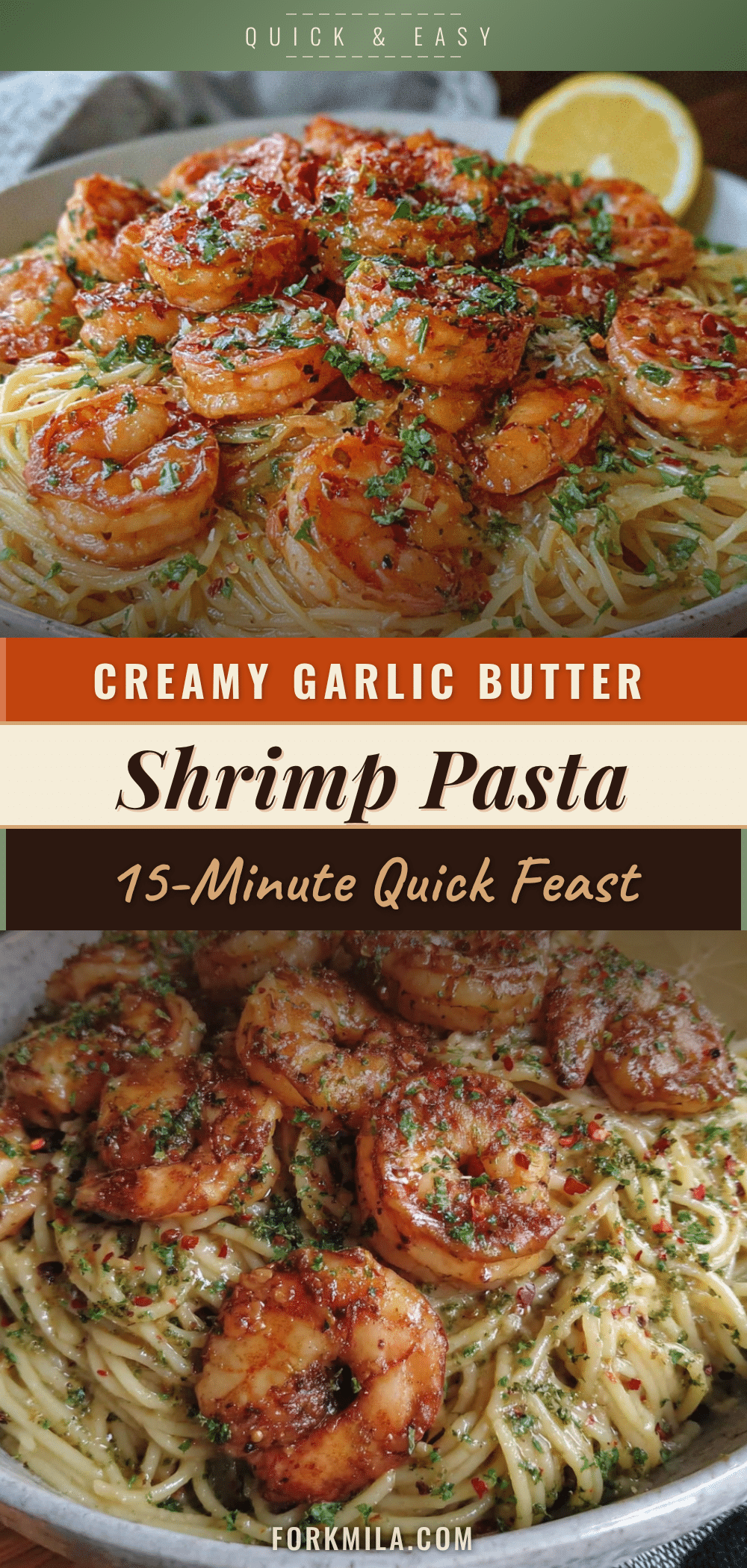
Quick Garlic Butter Shrimp Pasta: Easy 15-Minute Dinner
This quick garlic butter shrimp pasta is the perfect weeknight dinner, coming together in under 15 minutes with simple ingredients like butter, garlic, shrimp, and pasta. It’s a satisfying, crowd-pleasing meal that feels special without requiring hours in the kitchen.
- Prep Time: 5 minutes
- Cook Time: 10 minutes
- Total Time: 15 minutes
- Yield: 4 servings 1x
- Category: Main Course
- Cuisine: Italian-American
Ingredients
- 1 lb (450 g) large or jumbo shrimp, peeled and deveined
- 8 oz (225 g) linguine or spaghetti
- 4 tbsp (56 g) unsalted butter
- 5–6 cloves garlic, minced
- 2 tbsp fresh lemon juice
- ¼ tsp red pepper flakes (or to taste)
- ¼ cup fresh parsley, chopped
- Salt and black pepper to taste
- Grated Parmesan cheese for serving (optional)
Instructions
- Bring a large pot of salted water to a boil (about 5 minutes). Add 2 tablespoons of salt to the water. Cook the linguine according to package directions until al dente (usually 8-10 minutes). Stir occasionally to prevent sticking.
- While the pasta cooks, prepare the shrimp and aromatics (about 2 minutes). If using frozen shrimp, thaw them under cold running water for 2-3 minutes. Pat the shrimp very dry with paper towels and season lightly with salt and pepper. Mince the garlic, chop the parsley, and halve the lemon.
- Heat a large skillet over medium-high heat (about 1 minute). Add 2 tablespoons of the butter. Let it melt and foam slightly, but don’t let it brown.
- Cook the shrimp (2-3 minutes). Add the shrimp to the skillet in a single layer. Cook for 1-2 minutes on the first side until pink and lightly golden. Flip each shrimp and cook for another 30-60 seconds until opaque and just barely curled. Remove to a plate immediately.
- Make the garlic butter sauce (2 minutes). Reduce heat to medium-low. Add the remaining 2 tablespoons of butter to the same skillet. Once melted, add the minced garlic and red pepper flakes. Cook for 30-45 seconds, stirring constantly, until fragrant but not browned.
- Combine everything (1 minute). Reserve ½ cup of pasta water, then drain the linguine. Add the drained pasta directly to the skillet with the garlic butter. Toss with tongs to coat evenly. If the sauce seems too thick, add a splash of the reserved pasta water.
- Finish and serve (1 minute). Return the cooked shrimp to the skillet. Squeeze fresh lemon juice over everything and toss gently. Taste and adjust seasoning with salt and pepper. Sprinkle with chopped parsley and serve immediately with grated Parmesan on the side.
Notes
Pat shrimp dry thoroughly for best browning. Reserve pasta water to adjust sauce consistency. Cook garlic on low heat to prevent burning. Shrimp are done when pink and just curled; avoid overcooking. For best results, serve immediately.
Nutrition
- Serving Size: 1 serving (about 1/4
- Calories: 500
- Sugar: 2
- Sodium: 700
- Fat: 20
- Saturated Fat: 12
- Carbohydrates: 47
- Fiber: 2
- Protein: 30
Keywords: garlic butter shrimp pasta, quick shrimp pasta, 15-minute dinner, easy weeknight meal, shrimp linguine