There used to be a little diner off Highway 17 called The Rusty Skillet that made a breakfast casserole I still dream about. When they closed—suddenly, with a handwritten sign taped to the door saying “Thanks for the memories”—I honestly felt a little lost. That casserole was my go-to for holiday mornings, lazy Sundays, and that one time I needed comfort food after a truly awful week. After twelve tries—some burnt, some soggy, one that my husband politely called “interesting”—I finally got it.
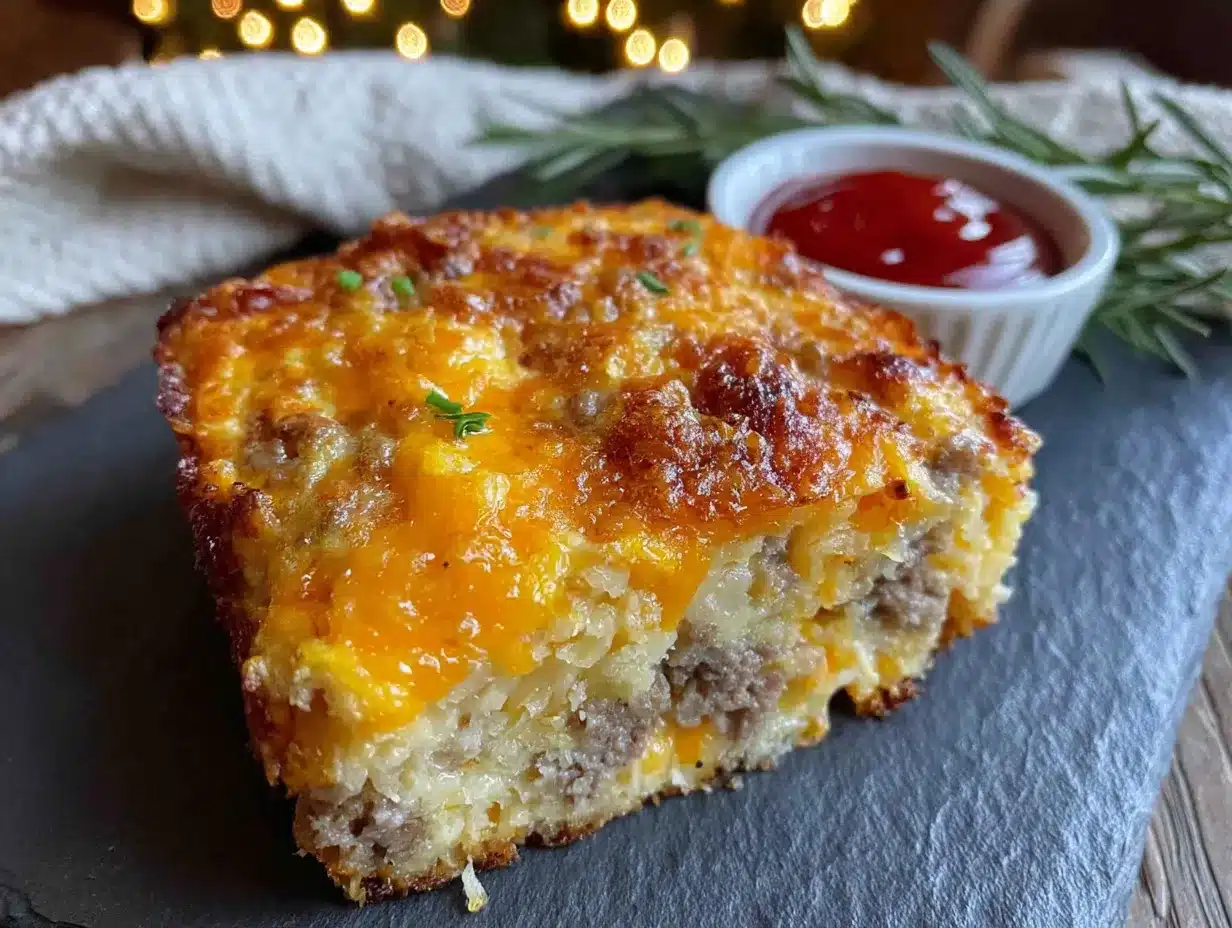
This easy make-ahead breakfast casserole with sausage and hashbrowns is my love letter to that diner. It has the same golden, crispy edges, the same creamy, cheesy middle, and that satisfying sausage flavor that made you close your eyes after the first bite. I mean, I literally stood in my kitchen at 10 PM on a Tuesday, pulling a test batch out of the oven, and I knew. This was it. The hashbrowns get perfectly crispy on top while staying tender underneath, and the eggs set up like a fluffy cloud around everything.
Maybe you’ve been there—chasing a recipe that feels just out of reach, tweaking and testing until your family starts rolling their eyes. Honestly, it’s worth every single attempt. This breakfast casserole is the kind of dish that makes your whole house smell like Sunday morning, even if you’re making it on a frantic Wednesday. I keep making it because it brings people together, and that’s something worth waking up for.
Why You’ll Love This Recipe
This isn’t just another breakfast casserole. After testing this recipe for months—and yes, eating a lot of mediocre casseroles along the way—I can tell you exactly why this one works. It’s the perfect balance of convenience and incredible flavor.
- Make-Ahead Magic: Assemble it the night before, pop it in the fridge, and bake it fresh in the morning. No early morning scrambling, I promise.
- Simple Ingredients: You probably have most of these in your kitchen right now. No fancy grocery store trips required.
- Perfect for Holidays: Christmas morning, Easter brunch, or a lazy Saturday—this casserole handles them all without stress.
- Crowd-Pleaser: My picky nephew, my dairy-free sister-in-law (with a small swap), and my dad who “doesn’t do casseroles” all went back for seconds.
- Unbelievably Delicious: The texture is what gets me every time. Crispy hashbrowns on top, creamy eggs in the middle, and savory sausage throughout. It’s next-level comfort food.
What makes this different from the dozens of other breakfast casseroles out there? It’s the technique. I pre-cook the hashbrowns just enough to remove excess moisture, which stops the casserole from turning into a watery mess. The cheese is layered strategically—some in the middle, some on top—so every bite has that gooey, melted goodness. This isn’t just another version; it’s my best version after months of trial and error.
This recipe is the kind that makes you close your eyes after the first bite. It’s comfort food reimagined—hearty, satisfying, but without the heavy feeling that some breakfast casseroles leave you with. Perfect for impressing overnight guests without breaking a sweat, or turning a simple family breakfast into something truly memorable.
What Ingredients You Will Need
This recipe uses simple, wholesome ingredients that come together to create something truly special. Most of these are pantry staples, but I’ve included a few notes to help you pick the best options.
For the Casserole Base
- 1 pound breakfast sausage (I prefer Jimmy Dean or a local butcher brand for the best flavor; avoid overly lean sausage as it can dry out)
- 1 tablespoon olive oil (for browning the sausage, adds a little richness)
- 1 medium yellow onion, diced (about 1 cup; adds sweetness and depth)
- 1 red bell pepper, diced (optional, but adds color and a slight sweetness)
- 3 cloves garlic, minced (because garlic makes everything better)
For the Hashbrown Layer
- 1 (20-ounce) bag frozen shredded hashbrowns (thawed; I recommend Ore-Ida for consistent results—avoid the cubed style for this recipe)
- 2 tablespoons unsalted butter, melted (helps the hashbrowns get golden and crispy)
- ½ teaspoon salt (enhances the potato flavor)
- ¼ teaspoon black pepper
For the Egg Mixture
- 8 large eggs (room temperature if possible, helps them blend more smoothly)
- 1½ cups whole milk (you can use 2% or even unsweetened almond milk, but whole milk gives the creamiest texture)
- ½ cup sour cream (this is my secret ingredient—adds tanginess and prevents the eggs from getting rubbery)
- 1 teaspoon Dijon mustard (don’t skip this! It adds a subtle kick that balances the richness)
- ½ teaspoon salt
- ¼ teaspoon black pepper
- ¼ teaspoon smoked paprika (optional, but adds a lovely smoky note)
For the Cheese Layer
- 2 cups shredded cheddar cheese (sharp cheddar gives the best flavor; I shred my own from a block because pre-shredded has anti-caking agents that don’t melt as smoothly)
- 1 cup shredded Monterey Jack cheese (adds creaminess; you can swap for mozzarella if needed)
For the Topping
- ¼ cup chopped fresh parsley (for garnish and a fresh pop of color)
- 2 green onions, sliced (optional, but adds a nice mild onion kick)
Ingredient Selection Tips: For the sausage, look for one that’s about 80/20 meat-to-fat ratio. Too lean, and it gets dry and crumbly. For the hashbrowns, thaw them completely and then press them between paper towels to remove as much moisture as possible—this is the key to avoiding a soggy casserole. If you’re in a pinch, you can use refrigerated shredded potatoes, just make sure to squeeze them dry.
Substitution Guidance: For a gluten-free version, this recipe is naturally gluten-free as written—just double-check your sausage label. For a dairy-free option, use unsweetened almond milk, dairy-free sour cream, and your favorite shredded dairy-free cheese (I’ve had good luck with Violife cheddar shreds). You can swap the pork sausage for turkey sausage or even a plant-based sausage crumble if that’s your preference.
Equipment Needed
You don’t need a fancy kitchen to pull this off, which is one of the reasons I love this recipe so much. Here’s what you’ll need:
- 9×13-inch baking dish (glass or ceramic works best; metal can sometimes cause the edges to brown too quickly)
- Large skillet (for browning the sausage and sautéing the vegetables)
- Large mixing bowl (for whisking the egg mixture)
- Medium mixing bowl (for tossing the hashbrowns with butter and seasoning)
- Whisk (a fork works in a pinch, but a whisk gives you a smoother egg mixture)
- Cutting board and sharp knife (for dicing the onion and bell pepper)
- Measuring cups and spoons
- Paper towels (for drying the thawed hashbrowns—this step is non-negotiable)
- Aluminum foil (for covering the casserole while it bakes, and for the overnight storage)
- Cooling rack (optional, but helps the casserole cool evenly if you’re letting it rest before serving)
I’ve made this casserole in a disposable aluminum pan when traveling to a friend’s cabin, and it worked fine—just keep an eye on the baking time as metal pans cook a bit faster. My favorite dish for this is a deep 9×13-inch ceramic baker I picked up at a kitchen supply store years ago. It distributes heat evenly and cleans up like a dream.
Preparation Method
Let me walk you through this step by step. I’ve included all the little details I wish someone had told me when I was first figuring this out.
- Preheat your oven to 350°F (175°C). While it’s heating, lightly grease your 9×13-inch baking dish with butter or non-stick spray. Set it aside for now.
- Cook the sausage. Heat 1 tablespoon of olive oil in a large skillet over medium-high heat. Add the breakfast sausage and cook, breaking it up with a wooden spoon, until it’s browned and cooked through—about 6-8 minutes. Don’t rush this step; you want some nice brown bits on the bottom of the pan for extra flavor. Use a slotted spoon to transfer the cooked sausage to a plate lined with paper towels. Leave about 1 tablespoon of drippings in the pan.
- Sauté the vegetables. Reduce the heat to medium and add the diced onion and bell pepper to the same skillet. Cook for 4-5 minutes, stirring occasionally, until the onion is translucent and the pepper has softened. Add the minced garlic and cook for another 30 seconds until fragrant. Transfer the vegetables to the plate with the sausage and let everything cool slightly.
- Prepare the hashbrowns. Place the thawed hashbrowns in a clean kitchen towel or between several layers of paper towels. Squeeze firmly to remove as much moisture as possible—this is the most important step, honestly. I learned this the hard way after making a soggy casserole that broke my heart. Transfer the dried hashbrowns to a medium bowl, drizzle with the melted butter, and toss with ½ teaspoon salt and ¼ teaspoon pepper.
- Make the egg mixture. In a large mixing bowl, whisk together the eggs, milk, sour cream, Dijon mustard, ½ teaspoon salt, ¼ teaspoon pepper, and smoked paprika if using. Whisk until everything is completely smooth and the sour cream has fully incorporated—about 30 seconds of vigorous whisking. The mixture should look pale yellow and slightly frothy on top.
- Layer the casserole. Spread the prepared hashbrowns evenly across the bottom of your greased baking dish. Sprinkle the cooked sausage and sautéed vegetables over the hashbrowns in an even layer. Top with 1½ cups of the shredded cheddar and all of the Monterey Jack cheese—reserve the remaining ½ cup of cheddar for the top. Slowly pour the egg mixture over everything, making sure it seeps down through all the layers. Gently press down with a spatula if needed to help the liquid distribute.
- Add the finishing touches. Sprinkle the remaining ½ cup of cheddar cheese over the top. Cover the dish tightly with aluminum foil and place it in the refrigerator for at least 4 hours, or overnight for best results. If you’re baking it immediately, let it rest on the counter for 15 minutes while the oven finishes preheating.
- Bake the casserole. When you’re ready to bake, preheat your oven to 350°F (175°C) if it’s not already hot. Place the covered casserole in the oven and bake for 35 minutes. Remove the foil and bake for another 20-25 minutes, until the top is golden brown and the center is set—it should jiggle just slightly when you shake the dish, but not be liquidy. A knife inserted in the center should come out clean.
- Rest before serving. Let the casserole rest on a cooling rack for at least 10 minutes before cutting into it. This allows the eggs to finish setting and makes for cleaner slices. I know it’s tempting to dig in right away, but trust me on this one.
- Garnish and serve. Sprinkle the chopped fresh parsley and sliced green onions over the top before serving. Cut into squares and serve warm.
Timing Note: From start to finish, active prep time is about 25 minutes. Total bake time is 55-60 minutes. The overnight rest is where the magic happens, but you can get away with a minimum of 4 hours if you’re short on time.
Cooking Tips & Techniques
After making this breakfast casserole more times than I care to count, I’ve collected a few tricks that make all the difference. Let me share the ones that saved my sanity.
The Hashbrown Secret: I cannot stress this enough—dry those hashbrowns like your breakfast depends on it. Frozen hashbrowns are full of water, and if you don’t squeeze it out, you’ll end up with a watery, sad casserole. I once skipped this step because I was in a hurry, and the result was a casserole that looked like soup. Not my finest moment. Use a clean kitchen towel and really wring them out.
Room Temperature Ingredients: If you remember, let your eggs and milk sit out for about 15-20 minutes before mixing. Cold ingredients don’t blend as smoothly, and you might end up with streaks of egg white in your casserole. It’ll still taste fine, but it won’t look as pretty.
The Foil Trick: When you cover the casserole with foil for the first part of baking, make sure it’s sealed tightly but not pressing down on the cheese. You want steam to circulate without the foil sticking to the top. I spray the underside of the foil with a little non-stick spray just to be safe—learned that one after peeling off half the cheese layer.
Don’t Overbake: The casserole is done when the center is set but still has a slight jiggle. It will continue to cook as it rests. Overbaking leads to dry, rubbery eggs, and nobody wants that. I start checking mine at the 50-minute mark, just to be safe.
Multitasking Strategy: While the sausage is browning, dice your onion and bell pepper. While the vegetables are sautéing, whisk together your egg mixture. This way, everything comes together in about 25 minutes flat. I’ve got this down to a science now, and it makes the whole process feel almost effortless.
Variations & Adaptations
This recipe is wonderfully flexible, and I’ve tried quite a few variations over the years. Here are some of my favorites.
Vegetarian Version: Swap the sausage for 1½ cups of sautéed mushrooms and an extra bell pepper. The mushrooms add that savory, umami flavor that mimics the meatiness of sausage. I’ve also used plant-based sausage crumbles with great results—just make sure to brown them well.
Spicy Southwest Twist: Add 1 diced jalapeño (seeds removed if you want less heat) along with the onion and bell pepper. Use pepper jack cheese instead of Monterey Jack, and add ½ teaspoon of cumin and ¼ teaspoon of cayenne to the egg mixture. Top with fresh cilantro instead of parsley. This version is my husband’s absolute favorite.
Loaded Veggie Option: Add 1 cup of chopped spinach (frozen, thawed, and squeezed dry) and 1 cup of diced mushrooms to the vegetable mixture. You can also throw in some chopped broccoli florets—just blanch them first for 2 minutes so they’re tender. This is a great way to sneak in extra vegetables for picky eaters.
Dairy-Free Adaptation: Use unsweetened almond or oat milk, dairy-free sour cream (Tofutti or Kite Hill work well), and your favorite shredded dairy-free cheese. I’ve found that the casserole needs an extra 5-10 minutes of baking time with dairy-free cheese, and the texture is slightly less creamy but still delicious.
Gluten-Free Confirmation: As written, this recipe is naturally gluten-free. Just double-check your sausage label, as some brands add fillers that contain gluten. I’ve used Johnsonville and Bob Evans with no issues.
Personal Variation: Last Thanksgiving, I added ½ cup of leftover roasted butternut squash to the hashbrown layer, and it was incredible. The sweetness of the squash balanced the savory sausage perfectly. I’ve been doing it ever since when I have leftover roasted vegetables on hand.
Serving & Storage Suggestions
This casserole is forgiving and flexible, which makes it perfect for busy mornings. Here’s how to get the most out of it.
Serving Temperature: Serve warm, straight from the oven. The cheese should be melted and bubbly, and the edges should be golden and slightly crispy. I like to let it rest for exactly 10 minutes—any longer and it starts to cool down too much, any shorter and the slices fall apart.
Presentation Ideas: Cut into clean squares using a sharp knife, wiping the blade between cuts for the neatest slices. Arrange on a platter with fresh fruit, a side of toast or biscuits, and maybe some hot sauce for those who like a kick. It’s also gorgeous served straight from the baking dish on a trivet—very rustic and homey.
Complementary Dishes: This casserole pairs beautifully with a simple side salad dressed with lemon vinaigrette (the acidity cuts through the richness). Fresh fruit salad, roasted potatoes, or even just a bowl of mixed berries work wonderfully. For beverages, a pitcher of fresh orange juice, strong coffee, or a mimosa bar would be lovely.
Storage Instructions: Leftovers can be stored in an airtight container in the refrigerator for up to 4 days. The casserole actually gets better after a day or two as the flavors meld together. To freeze, wrap individual portions tightly in plastic wrap and then foil, or place them in a freezer-safe container. Freeze for up to 3 months.
Reheating Methods: For best results, reheat individual portions in the microwave for 1-2 minutes, or in a 350°F oven for about 10-15 minutes if you’re reheating a larger piece. If reheating from frozen, thaw overnight in the refrigerator and then reheat as usual. The texture is best when reheated gently—don’t blast it on high or the eggs can get rubbery.
Flavor Development: Honestly, this casserole tastes even better on day two. The flavors have time to meld, and the texture becomes more cohesive. I often make it specifically for the leftovers, packing a slice for lunch the next day.
Nutritional Information & Benefits
While this is definitely a comfort food recipe, it does offer some nutritional benefits worth noting. Here’s the breakdown per serving (based on 12 servings):
- Calories: Approximately 380-420
- Protein: 22g
- Fat: 28g
- Carbohydrates: 14g
- Fiber: 1g
- Sugar: 3g
- Sodium: 680mg
Health Benefits: The eggs provide high-quality protein and important nutrients like choline, which supports brain health. The bell peppers and onions add a good dose of vitamin C and antioxidants. If you use turkey sausage, you can reduce the fat content by about 30%. The hashbrowns offer resistant starch, especially if you let the casserole cool and reheat it, which is beneficial for gut health.
Dietary Considerations: This recipe can be made gluten-free and dairy-free with the substitutions mentioned above. It’s naturally nut-free. For a lower-carb option, you can replace the hashbrowns with 4 cups of riced cauliflower (thawed and squeezed dry), though the texture will be different.
Allergen Information: Contains eggs and dairy. If using store-bought sausage, check for potential allergens like wheat or soy in the ingredient list.
Personal Wellness Perspective: I think of this casserole as a “sometimes food” that’s worth every bite. It’s hearty enough to keep you full for hours, which means you’re less likely to snack on less nutritious options later in the day. Balance, right?
Conclusion
This easy make-ahead breakfast casserole with sausage and hashbrowns is more than just a recipe—it’s a solution to hectic mornings, a centerpiece for holiday gatherings, and a reminder that good food doesn’t have to be complicated. After all those failed attempts in my kitchen, chasing the memory of that diner casserole, I can honestly say this version is even better than the original.
I love that you can make it your own—swap in your favorite veggies, adjust the spice level, or make it dairy-free if that’s what your family needs. That’s the beauty of a good base recipe. It’s sturdy enough to handle your creativity but perfect as-is when you just want something that works.
I’d love to hear how yours turns out! Did you try a fun variation? Did your family go back for seconds? Drop a comment below and let me know—I read every single one, and your feedback helps me create better recipes for you. And if you loved this, don’t forget to share it with a friend who could use a little breakfast magic in their life. Happy cooking, friends!
Frequently Asked Questions
Can I make this breakfast casserole completely ahead of time and bake it the next morning?
Absolutely! That’s the beauty of this recipe. Assemble everything the night before, cover it tightly with foil, and store it in the refrigerator. In the morning, just pop it in the oven straight from the fridge—you might need to add 5-10 minutes to the baking time since it’s starting cold.
Can I use fresh potatoes instead of frozen hashbrowns?
You can, but it requires a little extra work. Shred about 3 medium potatoes using a box grater or food processor, then soak them in cold water for 10 minutes to remove excess starch. Drain and squeeze them dry in a kitchen towel—really dry, just like you would with frozen hashbrowns. The texture will be slightly different, but it works in a pinch.
How do I know when the casserole is fully cooked?
The center should be set but still have a slight jiggle when you shake the dish. Insert a knife into the center—if it comes out clean, it’s done. The internal temperature should reach 160°F (71°C) for food safety. Remember, it will continue to cook as it rests, so don’t overbake it.
Can I freeze this breakfast casserole?
Yes, and it freezes beautifully! Bake the casserole completely, let it cool, then cut it into individual portions. Wrap each portion tightly in plastic wrap and then foil, or place them in a freezer-safe container. Freeze for up to 3 months. To reheat, thaw overnight in the refrigerator and warm in the microwave or oven.
What’s the best way to reheat leftovers without drying them out?
The microwave is the quickest option—just cover the portion with a damp paper towel and heat for 1-2 minutes. For the oven, place the portion in a baking dish, cover with foil, and warm at 325°F for about 10-15 minutes. If you’re reheating from frozen, thaw first for the best texture.
Pin This Recipe!
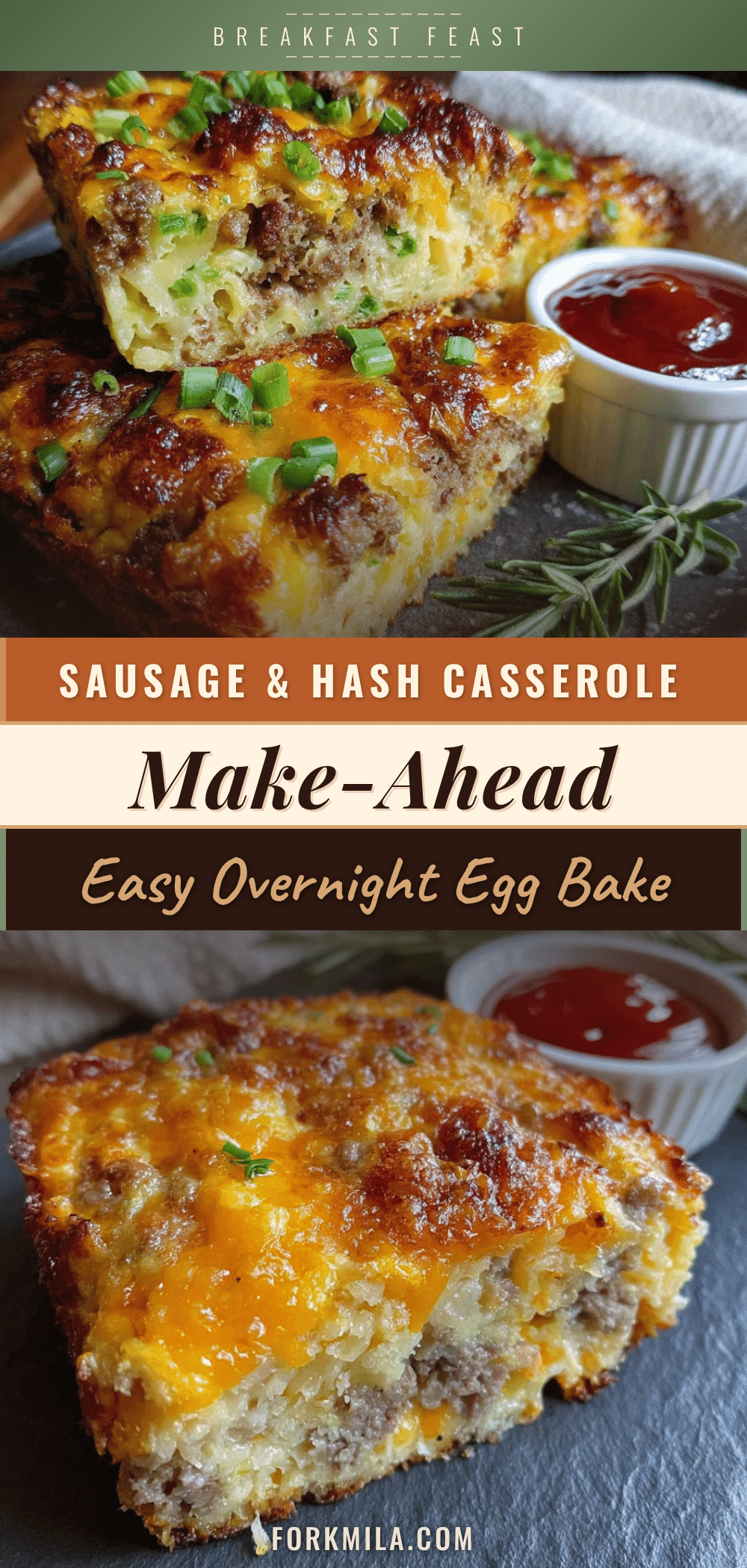
Easy Make-Ahead Breakfast Casserole with Sausage and Hashbrowns

This easy make-ahead breakfast casserole with sausage and hashbrowns is a love letter to a beloved diner classic. It has golden, crispy edges, a creamy, cheesy middle, and satisfying sausage flavor, perfect for holiday mornings or lazy Sundays.
- Prep Time: 25 minutes
- Cook Time: 55 minutes
- Total Time: 1 hour 20 minutes (plus overnight refrigeration)
- Yield: 12 servings 1x
- Category: Breakfast
- Cuisine: American
Ingredients
- 1 pound breakfast sausage
- 1 tablespoon olive oil
- 1 medium yellow onion, diced
- 1 red bell pepper, diced
- 3 cloves garlic, minced
- 1 (20-ounce) bag frozen shredded hashbrowns, thawed
- 2 tablespoons unsalted butter, melted
- ½ teaspoon salt
- ¼ teaspoon black pepper
- 8 large eggs
- 1½ cups whole milk
- ½ cup sour cream
- 1 teaspoon Dijon mustard
- ½ teaspoon salt
- ¼ teaspoon black pepper
- ¼ teaspoon smoked paprika (optional)
- 2 cups shredded cheddar cheese
- 1 cup shredded Monterey Jack cheese
- ¼ cup chopped fresh parsley
- 2 green onions, sliced
Instructions
- Preheat your oven to 350°F (175°C). Lightly grease a 9×13-inch baking dish with butter or non-stick spray.
- Cook the sausage: Heat 1 tablespoon olive oil in a large skillet over medium-high heat. Add the breakfast sausage and cook, breaking it up, until browned and cooked through (6-8 minutes). Transfer to a plate lined with paper towels, leaving about 1 tablespoon drippings in the pan.
- Sauté the vegetables: Reduce heat to medium. Add diced onion and bell pepper to the skillet. Cook for 4-5 minutes until onion is translucent and pepper is softened. Add minced garlic and cook for 30 seconds. Transfer to the plate with sausage and let cool.
- Prepare the hashbrowns: Place thawed hashbrowns in a clean kitchen towel or paper towels and squeeze firmly to remove as much moisture as possible. Transfer to a medium bowl, drizzle with melted butter, and toss with ½ teaspoon salt and ¼ teaspoon pepper.
- Make the egg mixture: In a large mixing bowl, whisk together eggs, milk, sour cream, Dijon mustard, ½ teaspoon salt, ¼ teaspoon pepper, and smoked paprika (if using) until smooth and slightly frothy.
- Layer the casserole: Spread the hashbrowns evenly in the greased baking dish. Sprinkle the cooked sausage and vegetables over the hashbrowns. Top with 1½ cups cheddar and all of the Monterey Jack cheese. Slowly pour the egg mixture over everything, pressing gently with a spatula to help it distribute.
- Add the finishing touches: Sprinkle the remaining ½ cup cheddar cheese on top. Cover tightly with aluminum foil and refrigerate for at least 4 hours or overnight.
- Bake the casserole: Preheat oven to 350°F (175°C) if not already hot. Bake covered for 35 minutes. Remove foil and bake for another 20-25 minutes until the top is golden brown and the center is set (slight jiggle is okay). A knife inserted in the center should come out clean.
- Rest before serving: Let the casserole rest on a cooling rack for at least 10 minutes before cutting.
- Garnish and serve: Sprinkle with chopped parsley and sliced green onions. Cut into squares and serve warm.
Notes
Dry the hashbrowns thoroughly to avoid a soggy casserole. Let eggs and milk come to room temperature for smoother blending. Cover foil with non-stick spray to prevent sticking. Do not overbake; the center should have a slight jiggle. The casserole tastes even better on day two.
Nutrition
- Serving Size: 1 square (1/12 of ca
- Calories: 400
- Sugar: 3
- Sodium: 680
- Fat: 28
- Saturated Fat: 12
- Carbohydrates: 14
- Fiber: 1
- Protein: 22
Keywords: breakfast casserole, make-ahead, sausage, hashbrowns, egg casserole, holiday breakfast