I wasn’t expecting cooking advice from my accountant, but there I was, knee-deep in tax paperwork at his cluttered office, listening to him describe exactly how to make the best salmon of my life. It was mid-April, I was stressed, and honestly, the last thing on my mind was dinner. But Mr. Henderson, a man who wore the same style of gray sweater vest every single day, suddenly looked up from my W-2s and said, “You know, the secret to salmon isn’t the fancy sauce. It’s the butter and the timing.”
He proceeded to scribble a recipe on the back of a receipt for office supplies. The handwriting was barely legible, but the words “lemon,” “dill,” and “cold butter” were clear. I nodded politely, stuffed the receipt in my bag, and promptly forgot about it. A week later, I found the crumpled paper while cleaning out my purse. I was skeptical—my accountant? Really? But I had a beautiful fillet of salmon in the fridge and no plan for dinner. So, with a shrug and a “what’s the worst that could happen,” I gave it a shot.
Let me tell you, that first bite was a revelation. The fish was impossibly flaky, the butter had mingled with the lemon and dill to create this light, almost brothy sauce that coated every single piece. It wasn’t heavy or greasy. It was, I kid you not, the most satisfying salmon I had ever made. I actually called my accountant the next day to thank him. He just grunted and said, “Told you.” Maybe you’ve been there—finding a gem of a recipe in the most unexpected place. This one, from the quiet man who does my taxes, is the one I keep coming back to. It’s simple, it’s smart, and it’s just so, so good.
Why You’ll Love This Recipe
This Flaky Lemon Dill Butter Salmon isn’t just another fish recipe. It’s the one I turn to when I want something that feels both indulgent and incredibly light. It’s the kind of meal that makes you feel good about eating well without feeling like you’re missing out on anything.
- Quick & Easy: From start to finish, this dish comes together in under 25 minutes. It’s the perfect solution for a busy weeknight when you want a healthy, delicious dinner without spending an hour in the kitchen.
- Simple Ingredients: You don’t need any fancy ingredients or a special trip to a gourmet market. Salmon, butter, lemon, dill, and a few pantry staples are all it takes to create something truly special.
- Perfect for a Light Dinner: This salmon is satisfying enough to be the star of the show, but it won’t weigh you down. It’s ideal for those evenings when you want a fresh, clean meal that still feels like a treat.
- Crowd-Pleaser: I’ve served this to friends who “don’t really like fish” and watched them go back for seconds. The bright, fresh flavors and the buttery, flaky texture win over even the biggest skeptics.
- Unbelievably Delicious: The magic here is in the simplicity. The combination of fresh dill, zesty lemon, and rich butter creates a sauce that’s light, flavorful, and perfectly coats the salmon without overwhelming it. It’s next-level comfort food that’s good for you.
This isn’t just another version of salmon. The technique of adding cold butter to the pan at the end creates an emulsified, silky sauce that clings to the fish beautifully. It’s a chef’s trick that feels fancy but is incredibly easy to do at home. This recipe is the one that makes you close your eyes after the first bite. It’s comfort food reimagined—healthier, faster, but with the same soul-soothing satisfaction.
What Ingredients You Will Need
This recipe uses simple, wholesome ingredients to deliver bold flavor and satisfying texture without the fuss. Most of these are pantry staples, making this a great go-to meal any day of the week.
- Salmon Fillets: 4 (6-ounce / 170g) fillets, skin-on or skinless. I prefer skin-on for extra flavor and to keep the fish moist, but either works great. Look for fillets that are bright in color and smell fresh, not fishy.
- Unsalted Butter: 4 tablespoons (60g), cold and cut into small cubes. This is key for creating that beautiful, emulsified sauce. I always use unsalted so I can control the salt level.
- Fresh Lemon Juice: 3 tablespoons (45ml), from about 1 large lemon. Fresh juice is non-negotiable here—bottled juice just won’t give you the same bright, clean flavor.
- Fresh Dill: 2 tablespoons, finely chopped. Fresh dill is a must for this recipe. Its delicate, slightly sweet flavor is what makes the sauce so special. Dried dill won’t have the same impact.
- Garlic: 2 cloves, minced. It adds a subtle savory depth that rounds out the lemon and dill beautifully.
- Shallot: 1 small, finely diced (about 2 tablespoons). Shallots are milder than onions and add a gentle sweetness to the sauce.
- Chicken or Vegetable Broth: 1/4 cup (60ml). This helps deglaze the pan and forms the base of the sauce. A good quality broth makes a difference.
- Olive Oil: 1 tablespoon (15ml), for searing the salmon.
- Salt and Black Pepper: To taste. I use flaky sea salt for finishing and freshly ground black pepper.
- Lemon Zest: From 1 lemon, for garnish. It adds a final pop of citrusy aroma and color.
Ingredient Tips & Substitutions: For the best texture, I recommend buying a whole salmon fillet and cutting it yourself, but pre-cut fillets are perfectly fine. If you don’t have shallots, you can use a small amount of finely diced white onion. For a dairy-free version, you can substitute the butter with a high-quality vegan butter, though the sauce will be slightly different. And if you’re out of fresh dill, try fresh parsley or chives for a different but still delicious flavor profile.
Equipment Needed
You don’t need a lot of fancy tools to make this recipe, which is part of its charm. Here’s what you’ll need:
- Large Non-Stick or Stainless Steel Skillet: A 10 to 12-inch skillet is ideal. Non-stick is easier for beginners, but a stainless steel pan will give you a better sear and more fond (the browned bits) for the sauce.
- Fish Spatula: This thin, slotted spatula is perfect for flipping delicate fish fillets without breaking them. A regular spatula can work, but a fish spatula is a game-changer.
- Cutting Board and Sharp Knife: For mincing garlic and dicing the shallot.
- Microplane or Zester: For getting that fine lemon zest without the bitter white pith.
- Measuring Spoons and Liquid Measuring Cup: For accuracy.
- Small Bowl: To hold your cubed butter.
If you don’t have a fish spatula, don’t worry. Just be extra gentle when flipping the salmon. A good quality non-stick pan is your next best friend for this recipe. I’ve used both, and I honestly prefer my stainless steel pan for the better sear, but the non-stick is a lifesaver when I’m in a hurry and don’t want to worry about sticking.
Preparation Method
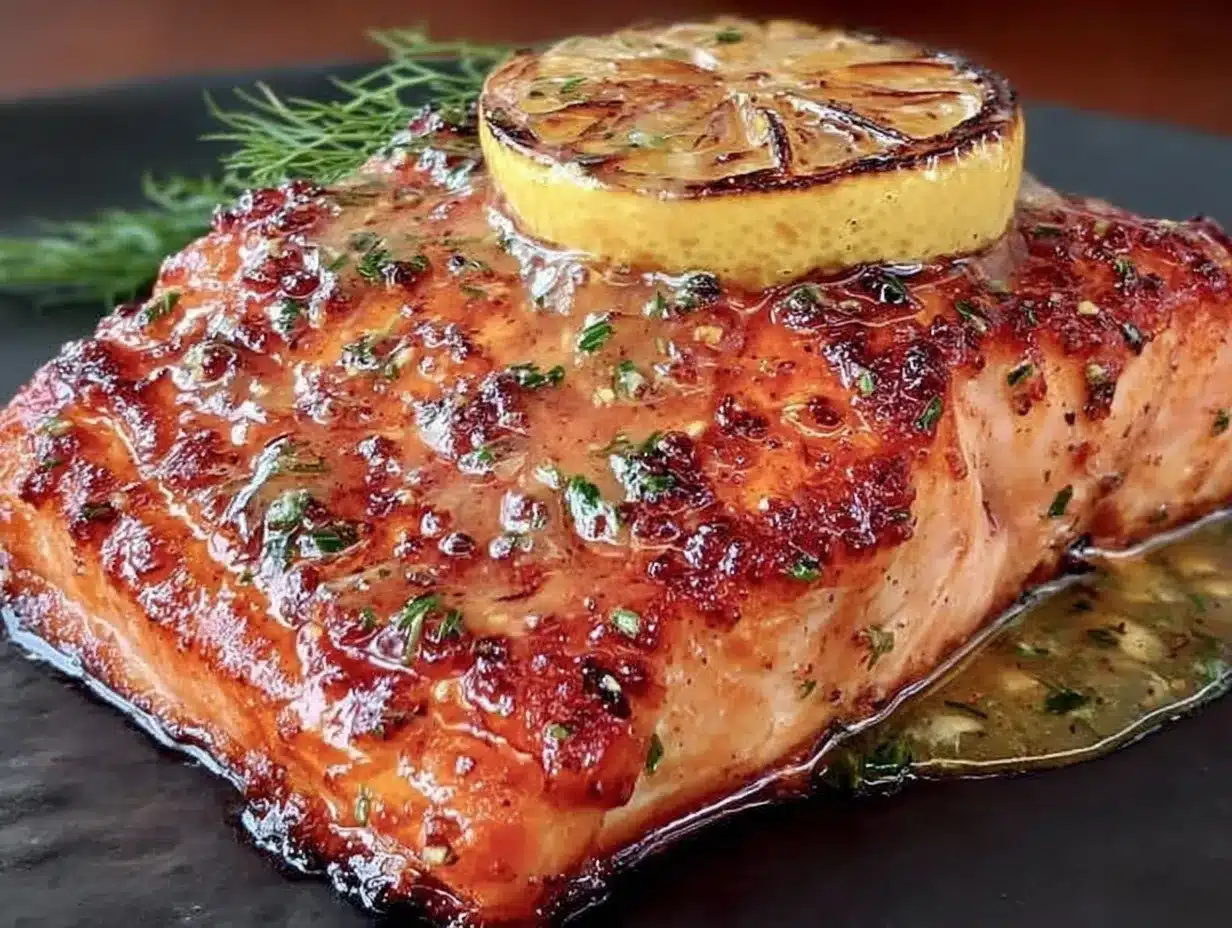
Let’s get cooking! This whole process takes about 20 minutes from start to finish, so have all your ingredients prepped and ready to go before you turn on the heat.
- Prep the Salmon: Pat the salmon fillets completely dry with paper towels. This is a crucial step for getting a beautiful golden-brown sear. Season both sides generously with salt and freshly ground black pepper. Let them sit at room temperature for 5-10 minutes while you prep the other ingredients.
- Start the Sear: Heat the olive oil in your large skillet over medium-high heat. When the oil is shimmering (but not smoking), carefully place the salmon fillets in the pan, skin-side down (if using skin-on). If using skinless, place them presentation-side down first. Don’t overcrowd the pan—cook in batches if needed. You want to hear a nice sizzle when the fish hits the pan.
- Cook the First Side: Cook the salmon undisturbed for 4-5 minutes. The skin should be golden and crispy. You can check by gently lifting a corner with your spatula. If it releases easily, it’s ready to flip. If it sticks, give it another 30 seconds.
- Flip and Finish: Carefully flip the salmon fillets using your fish spatula. Cook for another 2-3 minutes for medium, or 3-4 minutes for well-done. The internal temperature should reach 125°F (52°C) for medium, or 135°F (57°C) for well-done. Transfer the cooked salmon to a clean plate and tent loosely with foil to keep warm.
- Build the Sauce: Reduce the heat to medium-low. There should be about 1 tablespoon of rendered fat left in the pan. If there’s too much, pour some off. Add the diced shallot and cook, stirring constantly, for about 1 minute until it softens. Add the minced garlic and cook for another 30 seconds until fragrant.
- Deglaze the Pan: Pour in the chicken or vegetable broth and use a wooden spoon or spatula to scrape up all the browned bits (the fond) from the bottom of the pan. This is where so much flavor lives!
- Emulsify the Butter: Bring the broth to a gentle simmer. Add the cold butter cubes one at a time, whisking constantly. The cold butter will melt and emulsify with the broth, creating a creamy, silky sauce. This only takes about 1-2 minutes.
- Finish the Sauce: Remove the pan from the heat. Stir in the fresh lemon juice and the chopped fresh dill. Taste the sauce and adjust seasoning with a pinch more salt or pepper if needed. It should be bright, herby, and buttery.
- Combine and Serve: Return the cooked salmon fillets to the pan, spooning the luscious lemon dill butter sauce over the top. Let them warm through for just 30 seconds. Garnish with fresh lemon zest and a few extra sprigs of dill if you’re feeling fancy.
Troubleshooting Tip: If your sauce looks broken or greasy, don’t panic! It likely got too hot. Remove the pan from the heat, add a tablespoon of cold water, and whisk vigorously. This can help bring the emulsion back together.
Cooking Tips & Techniques
I’ve made this salmon more times than I can count, and I’ve learned a few things the hard way. Here are my best tips to ensure perfect results every time.
Don’t Overcook the Salmon. This is the number one mistake people make. Salmon goes from perfectly flaky to dry and sad in about 30 seconds. Use a meat thermometer if you have one. For me, I look for the visual cue: the fish will turn from a translucent deep orange to a more opaque, light pink color. It should still have a slightly darker, almost translucent center when you take it off the heat.
Pat the Salmon Dry. I cannot stress this enough. Wet salmon will steam, not sear. You want that beautiful, crispy golden crust. Take an extra 15 seconds to really dry those fillets with paper towels.
Use Cold Butter. This is the trick my accountant taught me (well, the spirit of it). Adding cold butter to a warm liquid, rather than melted butter, helps create a stable emulsion. It results in a sauce that’s creamy and glossy, not greasy and separated.
Don’t Skip the Rest. After you sear the salmon, letting it rest for a few minutes under foil allows the juices to redistribute. If you skip this step, those juices will run out onto your plate, leaving you with drier fish.
One Pan is Best. I used to cook the salmon and then make the sauce in a separate pan. What a waste of flavor! The browned bits left in the pan from searing the fish are pure gold. Deglazing that same pan builds a sauce with so much more depth and character.
Timing is Everything. Prep all your ingredients before you start cooking. The sauce comes together in just a few minutes, and you don’t want to be frantically chopping dill while your butter is melting. Trust me, I’ve been there, and it’s not pretty.
Variations & Adaptations
This recipe is a fantastic base, and I love playing around with it depending on my mood or what’s in my fridge. Here are a few of my favorite variations.
- Herb Swap: Not a dill fan? No problem. This works beautifully with fresh tarragon, chives, or parsley. A combination of chives and parsley gives it a lovely, fresh, green flavor. I once made it with a mix of basil and mint, and it was surprisingly amazing.
- Spicy Lemon Butter Salmon: Add a pinch of red pepper flakes along with the garlic, or stir in a teaspoon of sriracha or harissa paste at the end. The heat cuts through the richness of the butter beautifully.
- Creamy Version: For a richer, more decadent sauce, stir in 2 tablespoons of heavy cream or full-fat coconut milk at the end, after you’ve taken the pan off the heat. It turns the sauce into a luscious, creamy dream.
- Baked Version: If you prefer not to use the stove, you can bake the salmon. Place the seasoned fillets on a baking sheet lined with parchment paper. Bake at 400°F (200°C) for 12-15 minutes. While it bakes, make the lemon dill butter sauce in a small saucepan on the stove. It’s a great hands-off approach.
- Citrus Twist: Swap half the lemon juice for fresh orange or lime juice. Orange and dill is a surprisingly classic and delicious combination. Lime gives it a more tropical, zesty kick.
My personal favorite variation is the spicy one. I love the contrast of the cool, buttery sauce with a little bit of heat. It wakes up your taste buds in the best way possible.
Serving & Storage Suggestions
This Flaky Lemon Dill Butter Salmon is incredibly versatile when it comes to serving. Here are some of my favorite ways to enjoy it.
Serving Temperature: This salmon is best served immediately, while it’s still warm and the sauce is perfectly silky. The contrast of the warm fish with a cool, crisp side salad is just perfection.
What to Serve With It:
- Simple Sides: A bed of fluffy rice, quinoa, or couscous is perfect for soaking up that amazing sauce. Roasted asparagus, green beans, or a simple arugula salad with lemon vinaigrette are also fantastic choices.
- Starch Options: Creamy mashed potatoes or a crusty piece of bread to mop up every last drop of the sauce are never a bad idea. For a lighter option, try cauliflower rice or roasted sweet potatoes.
- Wine Pairing: A crisp, unoaked white wine like Sauvignon Blanc, Pinot Grigio, or a dry Riesling pairs beautifully with the bright lemon and dill flavors.
Storage Instructions: Store any leftover salmon in an airtight container in the refrigerator for up to 2 days. The flavors will meld together, and it can be delicious cold, flaked over a salad for lunch the next day.
Reheating Tips: The best way to reheat this salmon is gently. Place it in a skillet over low heat with a splash of water or broth, cover, and warm for 3-4 minutes. You can also reheat it in a 300°F (150°C) oven for about 10 minutes. Avoid the microwave, as it will dry out the fish and break the sauce.
The sauce will thicken as it sits in the fridge. When you reheat it, it may look a little separated, but a good whisk will bring it back together. Honestly, I think the leftovers are sometimes even better the next day, especially when flaked into a salad.
Nutritional Information & Benefits
This recipe is not just delicious—it’s packed with nutrients that make it a fantastic choice for a healthy, balanced meal. Here’s a quick look at the estimated nutritional profile per serving (based on 4 servings).
Estimated Nutritional Values (per serving):
- Calories: ~420
- Protein: 35g
- Fat: 28g (mostly healthy fats from salmon and butter)
- Carbohydrates: 4g
- Fiber: 0g
- Sugar: 1g
Health Benefits:
- Omega-3 Fatty Acids: Salmon is one of the best sources of omega-3s, which are essential for heart health, brain function, and reducing inflammation.
- High-Quality Protein: This recipe provides a generous amount of protein, which helps keep you feeling full and satisfied, and supports muscle health.
- Vitamin D: Salmon is a rare natural food source of vitamin D, which is crucial for bone health and immune function.
- Antioxidants: Fresh dill and lemon are both rich in antioxidants, which help protect your cells from damage.
Dietary Considerations: This recipe is naturally gluten-free, low-carb, and keto-friendly. It’s also a great option for those following a Mediterranean diet. For a dairy-free option, you can substitute the butter with a high-quality vegan butter or ghee (which is lactose-free).
Conclusion
This Flaky Lemon Dill Butter Salmon is proof that the best recipes often come from the most unexpected places. It’s simple, it’s quick, and it delivers on flavor in a way that feels both indulgent and incredibly light. Whether you’re looking for a healthy weeknight dinner that comes together in under 30 minutes or a dish impressive enough to serve to company, this one has you covered.
I love this recipe because it reminds me that you don’t need to overcomplicate things to make something truly special. It’s just good ingredients, treated with a little bit of care and a simple, clever technique. I hope you give it a try and make it your own—maybe add a little extra dill, a pinch more lemon zest, or a dash of heat.
I’d love to hear how it turns out for you! Did you make any fun variations? Drop a comment below and tell me all about it. And if you loved it, please share this recipe with a friend who needs a little more “light and satisfying” in their life. Happy cooking!
Frequently Asked Questions
Can I use frozen salmon for this recipe?
Yes, you can! Just make sure to thaw it completely in the refrigerator overnight. Pat it very dry with paper towels before cooking, as frozen fish tends to release more water. The cooking time may be slightly longer, so use a thermometer to check for doneness.
What if I don’t have fresh dill? Can I use dried?
Fresh dill is really the star of this dish, but if you’re in a pinch, you can use dried dill. Use about 1 teaspoon of dried dill for every 1 tablespoon of fresh. Keep in mind that the flavor will be less bright and vibrant. I’d recommend trying fresh parsley or chives as an alternative before using dried dill.
How do I know when the salmon is perfectly cooked?
The best way is to use an instant-read thermometer. For medium-cooked salmon, the internal temperature should reach 125°F (52°C). For well-done, aim for 135°F (57°C). Visually, the fish will turn from translucent deep orange to opaque light pink. It should flake easily with a fork but still look moist in the center.
Can I make the sauce ahead of time?
I don’t recommend making the sauce ahead of time, as it’s best enjoyed fresh and silky. However, you can prep all the ingredients—juice the lemon, chop the dill, mince the garlic, and cube the butter—up to a day in advance. This makes the cooking process even faster and smoother.
Is this recipe good for meal prep?
Absolutely! While the salmon is best fresh, it holds up well for a day or two in the fridge. It’s fantastic flaked over a bed of greens for lunch, or served cold with a side of roasted vegetables. Just store the salmon and sauce together in an airtight container to keep it moist.
Pin This Recipe!
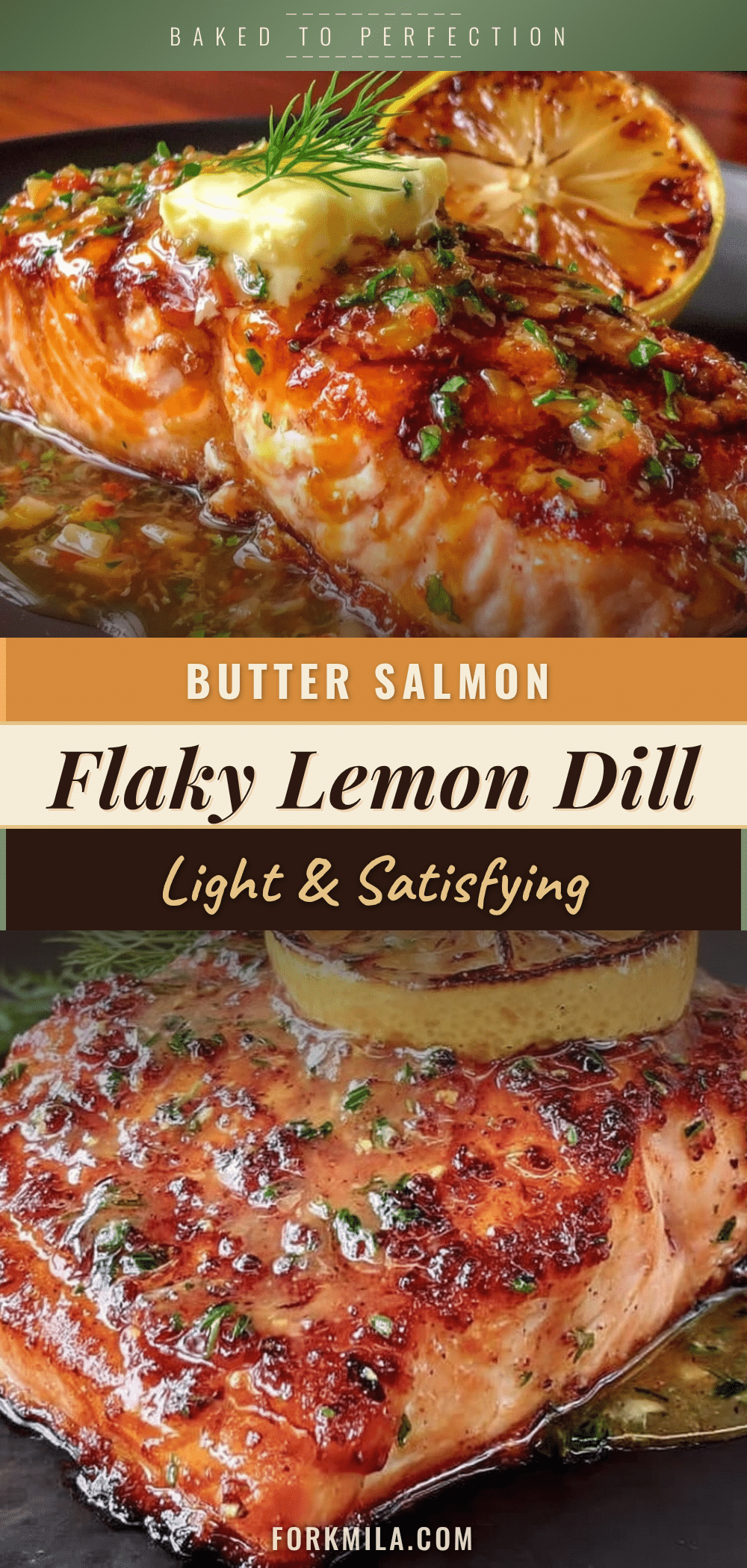
Easy Flaky Lemon Dill Butter Salmon: Perfect Light Dinner
This Flaky Lemon Dill Butter Salmon is a quick, easy, and healthy weeknight dinner that comes together in under 25 minutes. The combination of fresh dill, zesty lemon, and rich butter creates a light, silky sauce that perfectly coats the salmon without overwhelming it.
- Prep Time: 10 minutes
- Cook Time: 15 minutes
- Total Time: 25 minutes
- Yield: 4 servings 1x
- Category: Main Course
- Cuisine: American
Ingredients
- 4 (6-ounce / 170g) salmon fillets, skin-on or skinless
- 4 tablespoons (60g) unsalted butter, cold and cut into small cubes
- 3 tablespoons (45ml) fresh lemon juice (from about 1 large lemon)
- 2 tablespoons finely chopped fresh dill
- 2 cloves garlic, minced
- 1 small shallot, finely diced (about 2 tablespoons)
- 1/4 cup (60ml) chicken or vegetable broth
- 1 tablespoon (15ml) olive oil
- Salt and black pepper to taste
- Lemon zest from 1 lemon, for garnish
Instructions
- Prep the Salmon: Pat the salmon fillets completely dry with paper towels. Season both sides generously with salt and freshly ground black pepper. Let them sit at room temperature for 5-10 minutes while you prep the other ingredients.
- Start the Sear: Heat the olive oil in a large skillet over medium-high heat. When the oil is shimmering (but not smoking), carefully place the salmon fillets in the pan, skin-side down (if using skin-on). If using skinless, place them presentation-side down first. Don’t overcrowd the pan—cook in batches if needed.
- Cook the First Side: Cook the salmon undisturbed for 4-5 minutes. The skin should be golden and crispy. Check by gently lifting a corner with your spatula. If it releases easily, it’s ready to flip. If it sticks, give it another 30 seconds.
- Flip and Finish: Carefully flip the salmon fillets using a fish spatula. Cook for another 2-3 minutes for medium, or 3-4 minutes for well-done. The internal temperature should reach 125°F (52°C) for medium, or 135°F (57°C) for well-done. Transfer the cooked salmon to a clean plate and tent loosely with foil to keep warm.
- Build the Sauce: Reduce the heat to medium-low. There should be about 1 tablespoon of rendered fat left in the pan. If there’s too much, pour some off. Add the diced shallot and cook, stirring constantly, for about 1 minute until it softens. Add the minced garlic and cook for another 30 seconds until fragrant.
- Deglaze the Pan: Pour in the chicken or vegetable broth and use a wooden spoon or spatula to scrape up all the browned bits (the fond) from the bottom of the pan.
- Emulsify the Butter: Bring the broth to a gentle simmer. Add the cold butter cubes one at a time, whisking constantly. The cold butter will melt and emulsify with the broth, creating a creamy, silky sauce. This only takes about 1-2 minutes.
- Finish the Sauce: Remove the pan from the heat. Stir in the fresh lemon juice and the chopped fresh dill. Taste the sauce and adjust seasoning with a pinch more salt or pepper if needed.
- Combine and Serve: Return the cooked salmon fillets to the pan, spooning the lemon dill butter sauce over the top. Let them warm through for just 30 seconds. Garnish with fresh lemon zest and a few extra sprigs of dill if desired.
Notes
For the best texture, buy a whole salmon fillet and cut it yourself. If you don’t have shallots, use a small amount of finely diced white onion. For a dairy-free version, substitute the butter with a high-quality vegan butter. If you’re out of fresh dill, try fresh parsley or chives. If your sauce looks broken or greasy, remove from heat, add a tablespoon of cold water, and whisk vigorously to bring the emulsion back together.
Nutrition
- Serving Size: 1 fillet with sauce
- Calories: 420
- Sugar: 1
- Sodium: 350
- Fat: 28
- Saturated Fat: 12
- Carbohydrates: 4
- Protein: 35
Keywords: salmon, lemon dill butter salmon, easy salmon recipe, healthy dinner, quick weeknight dinner, flaky salmon, butter sauce, gluten-free, low-carb, keto-friendly