I was standing in the frozen foods aisle last November, staring at a bag of pre-cubed butternut squash, when the smell hit me. Not a real smell, you know—a memory smell. Sharp and sweet and warm all at once, like maple syrup hitting a hot pan and that dusty, almost-earthy scent of roasting squash. And suddenly I was nine years old in my Aunt Rita’s tiny kitchen in Vermont, watching her peel a butternut squash with a paring knife that looked way too big for her hands. She’d hum along to the radio, and the whole kitchen would get steamy and golden, and I’d sit on the counter because there wasn’t room for a chair. She passed away five years ago, and I haven’t been back to that house since. But last week, I bought three butternut squashes and a bottle of real maple syrup, and I was determined to get that feeling back. Honestly, the first batch was a disaster—I didn’t peel the squash well enough, and the pecans burned because I added them too early. Maybe you’ve been there, chasing a taste from childhood and ending up with a smoky kitchen and a slightly sad dinner. But the second time? That was it. That was the golden, sweet, salty, crunchy, creamy bite I’d been hunting for. And let me tell you, when I brought it to a friend’s potluck last Saturday, the bowl was empty in fifteen minutes. This maple roasted butternut squash with pecans and feta isn’t just a side dish—it’s a time machine, and it’s the dish that makes people close their eyes and go quiet for a second. That’s the kind of recipe worth keeping.
Why You’ll Love This Recipe
This isn’t your average roasted vegetable situation. This maple roasted butternut squash with pecans and feta is the kind of dish that makes you look like you spent hours in the kitchen when really, you just let the oven do the heavy lifting. I’ve tested this recipe six times now, tweaking the roasting time, the maple quantity, the feta-to-pecan ratio—and this version is the one that gets the most “oh my god, what is this?” reactions.
- Incredibly Easy: You only need about 15 minutes of active prep. The oven does the rest. Perfect for when you’re hosting and have a million other things to juggle.
- Simple Ingredients: Butternut squash, maple syrup, pecans, feta, olive oil, and a few pantry spices. No weird specialty items. You probably have most of this already.
- Perfect for Entertaining: This dish is a showstopper on any holiday table, potluck spread, or dinner party menu. It’s fancy-looking without being fussy.
- Crowd-Pleaser: I’ve served it to kids, grandparents, and picky eaters—everyone goes back for seconds. The sweet-savory combo is universally loved.
- Unbelievably Delicious: The caramelized edges of the squash, the toasted crunch of the pecans, the salty tang of the feta—it’s a textural and flavor party in every bite.
What makes this version different from the dozens of roasted squash recipes out there? It’s the balance. I use just enough maple syrup to enhance the squash’s natural sweetness without making it cloying. The pecans are added halfway through roasting so they toast perfectly without burning. And the feta goes on after roasting, so it stays creamy and doesn’t turn into a melted mess. It’s comfort food that feels special—healthier than most holiday sides, but with the same soul-soothing satisfaction. Honestly, this is the dish I bring when I want to impress without stress. And it always, always works.
What Ingredients You Will Need
This recipe relies on simple, wholesome ingredients that come together to create something truly memorable. Most of these are pantry staples or easy to find at any grocery store. Here’s what you’ll need:
For the Roasted Squash
- 1 large butternut squash (about 3 pounds), peeled, seeded, and cut into 1-inch cubes (about 6 cups) — (look for one that feels heavy for its size; that means it’s fresher)
- 3 tablespoons olive oil — (use a good-quality extra virgin for better flavor, but regular works fine)
- 3 tablespoons pure maple syrup — (not pancake syrup! I recommend Grade A Dark Amber for the deepest flavor)
- 1 teaspoon kosher salt — (if using table salt, reduce to ¾ teaspoon)
- ½ teaspoon black pepper, freshly ground
- ½ teaspoon smoked paprika — (adds a subtle warmth that complements the maple beautifully)
- ¼ teaspoon cayenne pepper — (optional, but I love the tiny hint of heat; skip it if you’re serving kids)
For the Topping
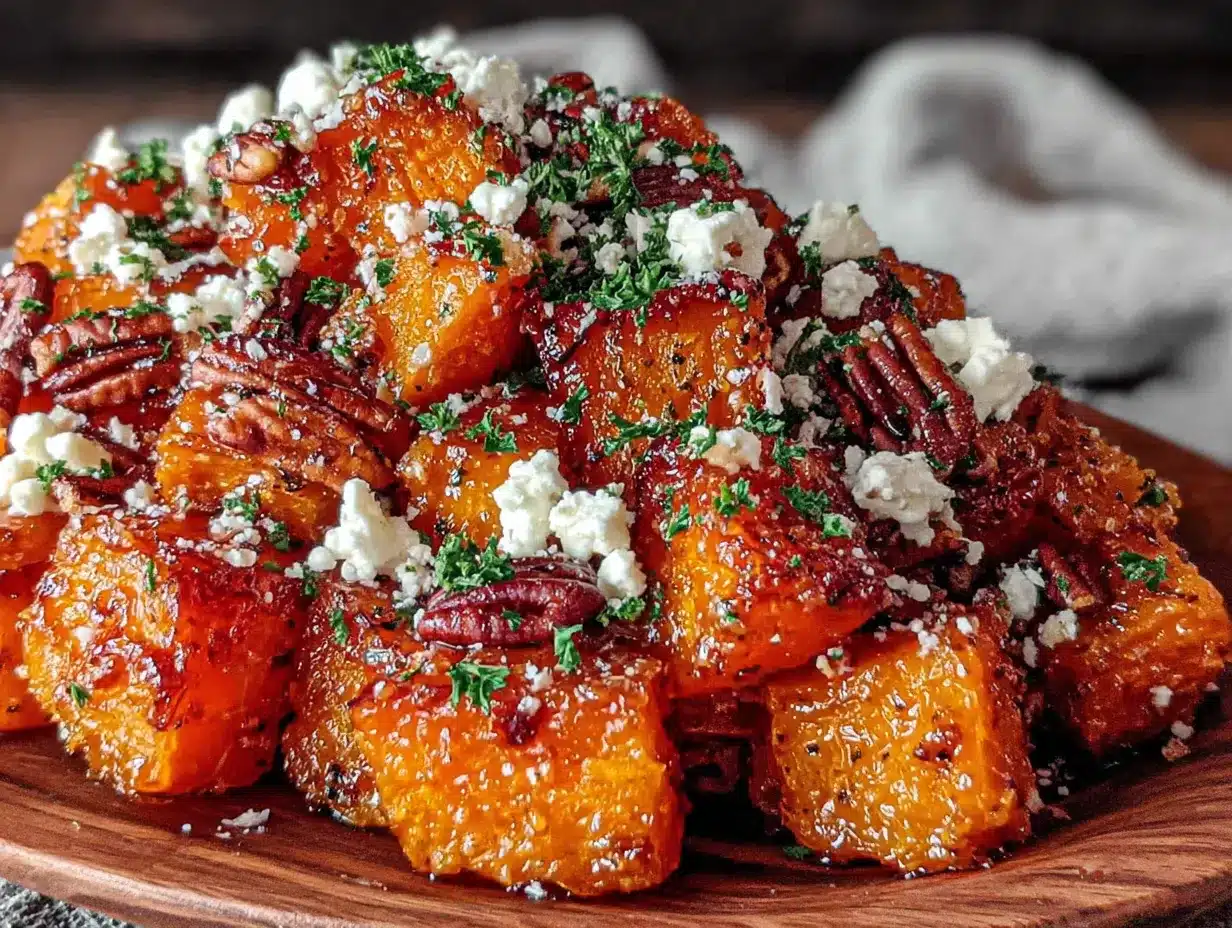
- ¾ cup pecan halves — (I prefer raw pecans so they toast in the oven; you can use chopped, but watch them closely so they don’t burn)
- ½ cup crumbled feta cheese — (buy a block and crumble it yourself—it’s creamier and less dry than pre-crumbled)
- 2 tablespoons fresh parsley, chopped — (optional, but adds a nice pop of color and freshness)
- 1 tablespoon maple syrup — (for drizzling at the end; it’s optional but makes it look gorgeous)
Ingredient Notes & Substitutions: If you’re dairy-free, you can skip the feta or use a plant-based feta alternative—just be aware the texture will be different. For a nut-free version, swap the pecans for pumpkin seeds (pepitas); they toast up beautifully and add a similar crunch. No butternut squash? You can use cubed sweet potatoes or even acorn squash—just adjust the roasting time slightly. And if you only have honey on hand, it works as a substitute for maple syrup, though the flavor profile will shift a bit. I’ve tried it both ways, and honestly, the maple version is my favorite—it just has that deep, woodsy sweetness that feels right for fall and winter entertaining.
Equipment Needed
You don’t need a fancy kitchen to pull this off, which is part of why I love this recipe so much. Here’s what you’ll need:
- Large baking sheet (half-sheet pan, about 18×13 inches) — (I use a rimmed one to catch any maple syrup drips; a non-stick or lined pan works best for easy cleanup)
- Parchment paper or silicone baking mat — (optional but highly recommended; the caramelized maple syrup can be sticky)
- Sharp chef’s knife — (peeling and cubing butternut squash requires a good, sharp knife—please don’t use a dull one, you’ll thank me later)
- Vegetable peeler — (a Y-peeler is my go-to for butternut squash; it’s faster and safer than using a knife)
- Large bowl — (for tossing the squash with oil and seasonings)
- Spatula or tongs — (for flipping the squash halfway through roasting)
- Small skillet — (if you want to toast the pecans separately, though I just add them to the baking sheet)
Budget-Friendly Tips: If you don’t have a silicone baking mat, parchment paper is cheap and works just as well. No rimmed baking sheet? You can use a 9×13 baking dish, but the squash won’t brown as evenly since the sides are higher. I’ve made this in a pinch with a cast-iron skillet, and it actually works beautifully—just keep an eye on it as cast iron retains heat differently. And honestly, if you’re really short on time, many grocery stores sell pre-cubed butternut squash. It’s a bit more expensive, but it saves you the knife work and peeling drama.
Preparation Method
Let’s get cooking! This recipe comes together in about an hour, with most of that time being hands-off roasting. Here’s how to nail it every time.
- Preheat your oven to 400°F (200°C). Line a large baking sheet with parchment paper or a silicone mat. This makes cleanup so much easier, and it prevents the maple syrup from sticking and burning onto the pan.
- Prep the butternut squash. Using a sharp chef’s knife, cut off both ends of the squash. Stand it upright on one flat end and slice down the middle to split it in half. Scoop out the seeds and stringy bits with a spoon (you can save the seeds and roast them later—they’re delicious!). Use a vegetable peeler to remove the skin. Then cut the squash into 1-inch cubes. Aim for uniform pieces so they cook evenly. This is the most time-consuming part, but it gets easier with practice. I usually put on a podcast and zone out.
- Toss with oil and seasonings. In a large bowl, combine the cubed squash, olive oil, 3 tablespoons maple syrup, kosher salt, black pepper, smoked paprika, and cayenne (if using). Toss everything together until every cube is evenly coated. Don’t be shy—use your hands if you need to; it’s faster and more thorough.
- Spread on the baking sheet. Arrange the squash in a single, even layer on the prepared baking sheet. Make sure the pieces aren’t touching each other too much—crowding them will cause them to steam instead of roast, and you want those beautiful caramelized edges. If your pan is too small, use two pans or roast in batches.
- Roast for 20 minutes. Place the pan in the preheated oven and roast for 20 minutes. The squash should be starting to soften and brown on the bottom edges.
- Add the pecans. After 20 minutes, remove the pan from the oven. Sprinkle the pecan halves evenly over the squash. Toss everything gently with a spatula to redistribute. This is the trick—adding the pecans too early means they burn; adding them now means they toast perfectly alongside the squash for the remaining cooking time.
- Roast for another 15-20 minutes. Return the pan to the oven and continue roasting until the squash is tender when pierced with a fork and has deep golden-brown caramelized spots. The pecans should be fragrant and lightly toasted. Total roasting time is usually 35-40 minutes, but ovens vary, so start checking at the 30-minute mark.
- Cool slightly and top. Remove the pan from the oven and let it cool for about 5 minutes. Transfer the roasted squash and pecans to a serving platter or bowl. Sprinkle the crumbled feta cheese evenly over the top. The warmth of the squash will slightly soften the feta, making it creamy and delicious. Garnish with fresh parsley if using, and drizzle with the remaining 1 tablespoon of maple syrup for a glossy, gorgeous finish.
- Taste and adjust. Give everything a gentle toss and taste. Need more salt? A pinch more. Want it sweeter? Another drizzle of maple. This is your moment to dial it in perfectly.
Pro Tip from My Kitchen: The first time I made this, I forgot to flip the squash halfway through, and the bottom layer got a bit too dark while the top was still pale. Now I set a timer for 20 minutes, add the pecans, and give the pan a good shake. It makes all the difference. Also, if your squash cubes are on the smaller side, reduce the roasting time by 5 minutes—you want tender, not mushy.
Cooking Tips & Techniques
I’ve made this maple roasted butternut squash with pecans and feta more times than I can count, and I’ve learned a few things the hard way. Here are my best tips to make sure yours turns out perfect every time.
Don’t skip the single layer. I know it’s tempting to pile everything on one pan to save dishes, but crowding the pan is the number one mistake people make. The squash needs space to caramelize, not steam. If it’s piled up, you’ll end up with soft, watery squash instead of those gorgeous golden-brown edges. Use two pans if you need to—it’s worth the extra dish.
Cut the squash uniformly. This is one of those things that seems fussy but actually matters. If your cubes are different sizes, the small ones will burn while the big ones are still raw. Aim for 1-inch cubes, and try to keep them consistent. I use a ruler the first few times until I got the hang of it—no shame in that!
Watch the pecans like a hawk. Pecans go from perfectly toasted to burnt in about 30 seconds. When you add them at the 20-minute mark, keep an eye on the oven toward the end. If they’re browning faster than the squash, you can remove the pan and take the pecans off, then return the squash to finish roasting. I’ve had to do this more than once, and it saves the batch every time.
Use room temperature maple syrup. Cold maple syrup is thick and doesn’t coat the squash as evenly. Let it sit out for 10 minutes before mixing, or warm it slightly in the microwave (just 10-15 seconds). It makes a real difference in how evenly the squash gets glazed.
Toast the feta? No, don’t. I tried adding the feta during the last 5 minutes of roasting once, thinking it would get all melty and delicious. It didn’t. It just turned into sad, rubbery crumbles. Feta is best added after roasting, while the squash is still warm. The residual heat softens it perfectly without ruining its texture.
Make it ahead for parties. If you’re hosting, you can roast the squash and pecans up to a day in advance. Store them separately in the fridge, then reheat in a 350°F oven for about 10 minutes before adding the feta and serving. This is a lifesaver when you’re juggling multiple dishes for a dinner party or holiday meal.
Variations & Adaptations
One of the best things about this recipe is how easy it is to adapt. Here are some of my favorite variations—I’ve tried most of them myself, and they’re all delicious in their own way.
Maple Roasted Vegetables Medley: Not a fan of butternut squash alone? Mix it up! Add cubed sweet potatoes, carrots, and parsnips to the pan. They all roast at a similar temperature and time, so you can toss them all together. The combination of colors and flavors is stunning on a holiday table. I did this for Thanksgiving last year, and my sister-in-law asked for the recipe three times.
Savory Herb Version: For a less sweet, more savory take, swap the maple syrup for honey and add fresh rosemary and thyme. Toss the squash with olive oil, honey, salt, pepper, and a tablespoon of chopped fresh rosemary and a teaspoon of fresh thyme leaves. Roast as directed, then top with crumbled goat cheese instead of feta. It’s earthy, fragrant, and pairs beautifully with roasted chicken or pork.
Spicy Maple Version: If you like a little heat (I do!), increase the cayenne pepper to ½ teaspoon or add a pinch of red pepper flakes along with the pecans. The heat cuts through the sweetness of the maple syrup and the richness of the feta, creating a really addictive sweet-spicy-salty combo. I served this at a game day party, and it was gone before the wings.
Vegan Adaptation: Simply omit the feta cheese, or use a high-quality vegan feta alternative. To add a savory note, sprinkle the finished dish with a handful of toasted pumpkin seeds and a pinch of flaky sea salt. The pumpkin seeds add crunch and a slightly nutty flavor that compensates for the missing cheese. I’ve made this version for vegan friends, and they always ask for the recipe.
Balsamic Glazed Version: Replace 1 tablespoon of the maple syrup with balsamic vinegar. The acidity of the balsamic balances the sweetness and adds a deeper, more complex flavor. Top with crumbled gorgonzola or blue cheese instead of feta for an adult twist. This is my go-to version when I’m serving something fancy, like a roast beef dinner.
Serving & Storage Suggestions
This dish is incredibly versatile when it comes to serving. Here’s how I like to present it and how to handle leftovers (if there are any!).
Serving Temperature: This maple roasted butternut squash with pecans and feta is best served warm, right after roasting. The feta is soft, the pecans are crunchy, and the squash is tender and caramelized. However, it’s also delicious at room temperature—I’ve brought it to potlucks and picnics, and it holds up beautifully for a couple of hours.
Presentation Tips: Transfer the roasted squash and pecans to a wide, shallow serving platter instead of a deep bowl. This shows off the beautiful colors and textures. Sprinkle the feta and parsley on top, then drizzle with that final tablespoon of maple syrup right before serving. A few extra pecan halves arranged artfully on top make it look restaurant-quality. For holiday dinners, I like to serve it in a rustic wooden bowl—it just feels cozier.
What to Serve Alongside: This dish is a natural side for roasted turkey, chicken, or pork. It also pairs beautifully with a simple green salad with a tangy vinaigrette (the acidity cuts the sweetness). For a vegetarian main, serve it over a bed of warm quinoa or farro, with a dollop of Greek yogurt on top. I’ve even used it as a topping for crostini with a smear of ricotta—it’s an incredible appetizer.
Storage Instructions: Store any leftovers in an airtight container in the refrigerator for up to 4 days. The feta will soften and the pecans will lose some crunch, but the flavor is still fantastic. I actually love eating it cold straight from the fridge—it’s like a sweet and savory salad.
Reheating Methods: To reheat, spread the leftovers on a baking sheet and warm in a 350°F oven for 5-7 minutes. This helps restore some of the caramelization and crunch. You can also microwave it, but the texture will be softer. If you’re reheating for a party, add a fresh sprinkle of feta and a drizzle of maple syrup to revive it.
How Flavors Develop: Honestly, this dish tastes even better the next day. The maple syrup soaks into the squash a little more, and the flavors meld together beautifully. If you’re planning ahead, you can roast the squash and pecans a day in advance, then reheat and add the feta just before serving. It’s a great make-ahead option for busy hosts.
Nutritional Information & Benefits
This recipe isn’t just delicious—it’s packed with nutrients that make you feel good about eating it. Here’s a rough breakdown per serving (based on 6 servings):
- Calories: Approximately 320-350 per serving
- Fat: 18g (mostly from olive oil, pecans, and feta—healthy fats!)
- Carbohydrates: 38g
- Fiber: 6g
- Protein: 7g
- Vitamin A: Over 200% of the daily value (butternut squash is a superstar for eye health and immunity)
- Vitamin C: About 35% of the daily value
- Calcium: 15% of the daily value (thanks to the feta)
Health Benefits: Butternut squash is rich in antioxidants, fiber, and vitamins A and C, which support immune function and healthy skin. Pecans are loaded with healthy monounsaturated fats and magnesium, which is great for heart health and reducing inflammation. Maple syrup contains antioxidants and minerals like zinc and manganese. And yes, feta cheese has calcium and protein—plus, a little goes a long way, so you’re not overdoing the dairy.
Dietary Considerations: This recipe is naturally gluten-free and vegetarian. To make it vegan, simply omit the feta or use a plant-based alternative. It’s also relatively low in added sugar compared to many holiday side dishes—the sweetness comes mostly from the squash and a modest amount of maple syrup. If you’re watching your sodium, you can reduce the salt to ½ teaspoon and use a low-sodium feta.
Potential Allergens: This recipe contains tree nuts (pecans) and dairy (feta). It does not contain gluten, eggs, or soy. Always check your ingredient labels to be sure.
Conclusion
This maple roasted butternut squash with pecans and feta has become my signature dish for gatherings, and for good reason. It’s simple enough to make on a random Tuesday, but impressive enough to steal the show at Thanksgiving. It’s the kind of recipe that makes people ask for the card before they’ve even finished eating. And honestly, it’s the kind of recipe that makes me feel connected to my Aunt Rita, even though she’s gone. Every time I smell that maple-roasted squash, I’m nine years old again, sitting on her counter, watching her cook. And that feeling? That’s worth more than any perfect recipe.
I hope you make this and love it as much as I do. Don’t be afraid to customize it—add more spice, swap the nuts, try it with goat cheese. The best recipes are the ones you make your own. And if you do try it, I’d love to hear about it. Leave a comment below and let me know how it turned out, or share a photo of your creation. Did you serve it at a holiday dinner? Did your picky eater go back for thirds? I want to know all about it.
Until next time, happy cooking—and don’t forget the extra drizzle of maple syrup at the end. Trust me on that one.
Frequently Asked Questions
Can I use frozen butternut squash for this recipe?
Yes, you can use frozen cubed butternut squash, but you’ll need to adjust the cooking time. Frozen squash releases more water, so it won’t caramelize as well. To get the best results, thaw the squash first and pat it very dry with paper towels before tossing with the oil and seasonings. You may also need to roast it for an extra 5-10 minutes to get those golden-brown edges. Fresh squash is always my preference for the best texture and flavor, but frozen works in a pinch.
How do I prevent the pecans from burning?
The key is timing. Add the pecans halfway through the roasting process—not at the beginning. I roast the squash alone for the first 20 minutes, then add the pecans and continue roasting for another 15-20 minutes. This gives the pecans enough time to toast without burning. Also, keep an eye on them during the last 5 minutes of roasting. Every oven is different, and pecans can go from perfect to burnt very quickly. If they’re browning too fast, you can remove just the pecans from the pan and let the squash finish roasting alone.
Can I make this recipe ahead of time for a party?
Absolutely! This is one of my favorite make-ahead dishes for entertaining. You can roast the squash and pecans up to a day in advance. Let them cool completely, then store them in separate airtight containers in the refrigerator. When you’re ready to serve, reheat the squash and pecans together on a baking sheet in a 350°F oven for about 10 minutes, or until warmed through. Then add the feta and fresh parsley right before serving. This way, you get the fresh, creamy texture of the feta and the crunch of the pecans without any sogginess.
What can I substitute for feta cheese?
There are several great options! Goat cheese is my favorite substitute—it’s creamy and tangy, and it pairs beautifully with the maple and pecans. You can also use crumbled gorgonzola or blue cheese for a stronger, more pungent flavor. For a dairy-free option, look for a plant-based feta alternative made from almonds or tofu. If you want to skip the cheese entirely, try sprinkling the finished dish with toasted pumpkin seeds and a pinch of flaky sea salt for a similar salty crunch.
How do I peel and cut butternut squash safely?
Butternut squash can be tricky to handle because of its tough skin and odd shape. Here’s my safe method: First, use a sharp chef’s knife to cut off both ends of the squash. Stand it upright on one flat end and slice it in half lengthwise. Scoop out the seeds with a spoon. Then use a sharp vegetable peeler (a Y-peeler works best) to remove the skin in long, downward strokes. Once peeled, lay each half flat on the cutting board and cut into 1-inch cubes. Always use a sharp knife—a dull knife is more dangerous because it can slip. And if you’re really nervous, many grocery stores sell pre-peeled and cubed butternut squash in the produce section. No shame in taking the shortcut!
Pin This Recipe!
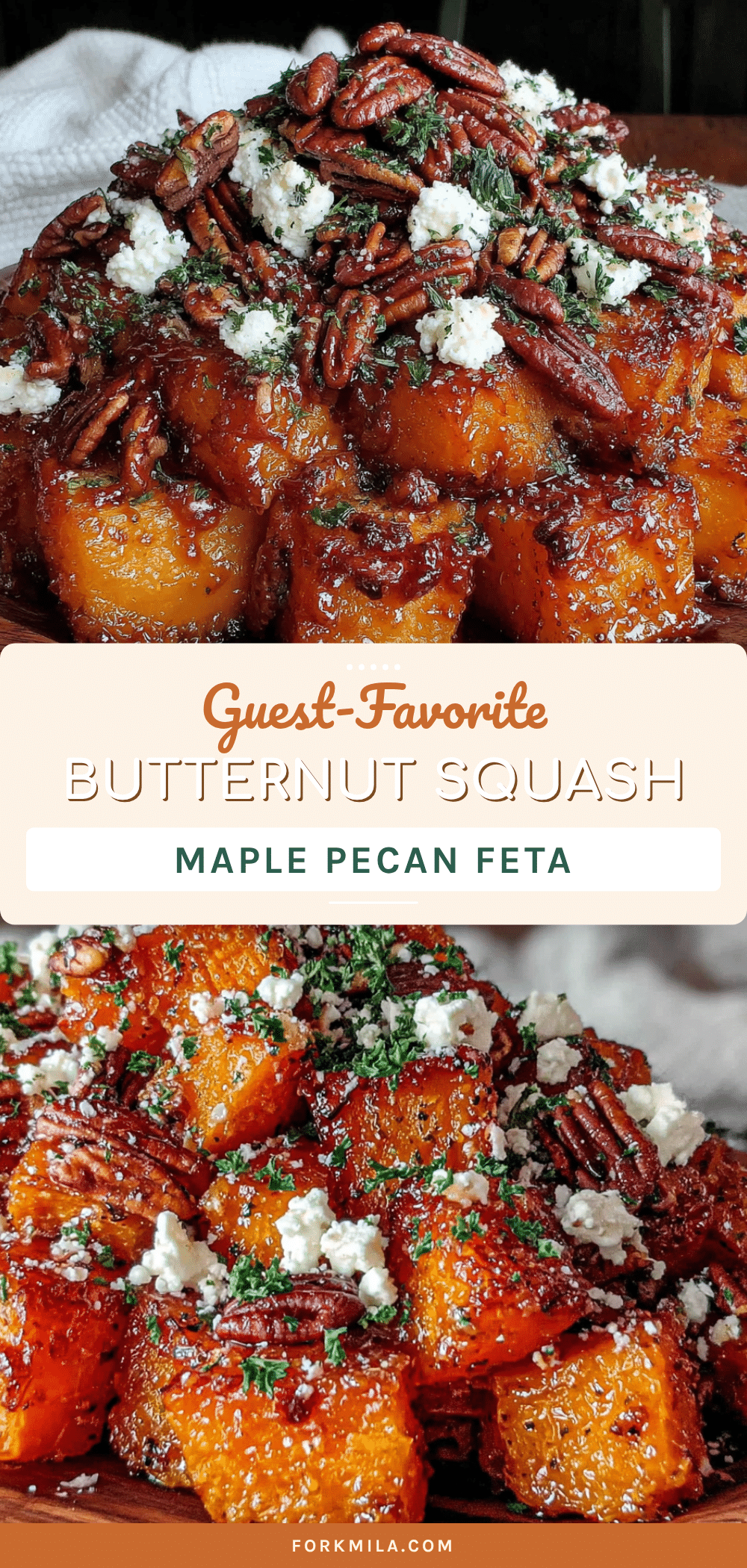
Best Maple Roasted Butternut Squash with Pecans and Feta

This maple roasted butternut squash with pecans and feta is a sweet and savory side dish that’s incredibly easy to make and perfect for entertaining. The caramelized squash, toasted pecans, and creamy feta create a flavor and texture party in every bite.
- Prep Time: 15 minutes
- Cook Time: 35-40 minutes
- Total Time: 50-55 minutes
- Yield: 6 servings 1x
- Category: Side Dish
- Cuisine: American
Ingredients
- 1 large butternut squash (about 3 pounds), peeled, seeded, and cut into 1-inch cubes (about 6 cups)
- 3 tablespoons olive oil
- 3 tablespoons pure maple syrup
- 1 teaspoon kosher salt
- ½ teaspoon black pepper, freshly ground
- ½ teaspoon smoked paprika
- ¼ teaspoon cayenne pepper (optional)
- ¾ cup pecan halves
- ½ cup crumbled feta cheese
- 2 tablespoons fresh parsley, chopped (optional)
- 1 tablespoon maple syrup (for drizzling)
Instructions
- Preheat your oven to 400°F (200°C). Line a large baking sheet with parchment paper or a silicone mat.
- Prep the butternut squash: Cut off both ends, stand upright, slice in half lengthwise, scoop out seeds, peel, and cut into 1-inch cubes.
- In a large bowl, toss the cubed squash with olive oil, 3 tablespoons maple syrup, kosher salt, black pepper, smoked paprika, and cayenne (if using) until evenly coated.
- Spread the squash in a single, even layer on the prepared baking sheet. Avoid crowding.
- Roast for 20 minutes.
- After 20 minutes, remove the pan from the oven. Sprinkle the pecan halves evenly over the squash and toss gently with a spatula.
- Return to the oven and roast for another 15-20 minutes, until the squash is tender and caramelized, and the pecans are toasted.
- Remove from the oven and let cool for about 5 minutes. Transfer to a serving platter.
- Sprinkle crumbled feta cheese over the top. Garnish with fresh parsley if using, and drizzle with the remaining 1 tablespoon of maple syrup.
- Taste and adjust seasoning if needed. Serve warm or at room temperature.
Notes
For best results, cut squash into uniform 1-inch cubes. Add pecans halfway through roasting to prevent burning. Add feta after roasting to keep it creamy. This dish can be made ahead: roast squash and pecans up to a day in advance, reheat in a 350°F oven for 10 minutes, then add feta before serving.
Nutrition
- Serving Size: 1 serving (about 1 c
- Calories: 335
- Sugar: 14
- Sodium: 480
- Fat: 18
- Saturated Fat: 4
- Carbohydrates: 38
- Fiber: 6
- Protein: 7
Keywords: maple roasted butternut squash, roasted butternut squash with pecans and feta, easy butternut squash recipe, holiday side dish, vegetarian side dish, gluten-free side dish