My dad swore he hated stuffing for thirty-seven years. Not just disliked it, mind you—he’d push it around his plate like a kid forced to eat liver, muttering about “soggy bread pretending to be a side dish.” Every Thanksgiving, my mom would set out a beautiful bowl of it, and every Thanksgiving, he’d take a polite spoonful, eat exactly one bite, and declare himself “full.” We all just accepted it. That was Dad’s thing. He was a meat-and-potatoes man, and stuffing was a foolish, unnecessary complication.
Then, two years ago, I made this cornbread stuffing with sausage and sage for a Friendsgiving potluck. I’d been experimenting with a new recipe—cornbread instead of white bread, spicy sausage for kick, and enough sage to make a garden weep. I made a massive batch, packed it in a disposable tin, and left the rest at my parents’ house on the way out of town. “Just try it,” I told my mom. “If Dad doesn’t want it, freeze it.”
I got a text the next morning. It was a blurry photo of an empty baking dish with a single crumb on it. The caption read: “Your dad ate the whole thing. Cold. Standing at the counter at 11 PM.” I called him, laughing. “I thought you hated stuffing.” There was a long pause. “I hate other stuffing,” he said, like that made perfect sense. “This is different. This is good.”
And honestly? That’s exactly how this recipe feels. It’s not trying to be the stuffing your grandma made, or the one from a box, or the one that’s been passed down for generations. It’s its own thing—cornbread-based, savory-sweet, packed with crumbled sausage and fragrant sage. It’s the stuffing that converts people. Maybe you’ve been that person, pushing stuffing around your plate, wondering what the fuss was about. Or maybe you’re looking for the one recipe that’ll finally earn a spot on your holiday table. Either way, this is it. This is the one that changed my dad’s mind—and it might just change yours too.
Why You’ll Love This Recipe
This isn’t just another stuffing recipe. I’ve tested this version more times than I can count, tweaking the ratios, the baking time, the type of cornbread. It’s been approved by a family of stuffing skeptics, a crowd of hungry friends, and my own very picky self. Here’s why it stands out:
- Quick & Easy: From start to table in about an hour, with most of that time being hands-off baking. Perfect for a busy holiday morning or a cozy Sunday supper.
- Simple Ingredients: You don’t need a specialty grocery store run. Cornbread mix, sausage, onion, celery, sage—these are pantry and fridge staples.
- Perfect for Thanksgiving or Any Cozy Dinner: It’s the ultimate side dish for turkey, roast chicken, or even a simple pork chop. It makes any meal feel like a celebration.
- Crowd-Pleaser: Even the stuffing haters in your life (like my dad) will go back for seconds. It’s got enough texture and flavor to win over the toughest critics.
- Unbelievably Delicious: The crispy edges, the tender center, the savory sausage, the earthy sage—it’s the kind of comfort food that makes you close your eyes after the first bite.
What makes this recipe different from the rest? It’s the technique. Instead of using stale bread, I use a slightly dry cornbread that soaks up the broth without turning into mush. The sausage is browned first, rendering its fat and creating a flavorful base for the vegetables. And the sage? It’s not just sprinkled in—it’s bloomed in the hot fat, releasing its essential oils and infusing the entire dish. This isn’t a dump-and-stir recipe. It’s a little bit of love, a little bit of science, and a whole lot of flavor.
This is the kind of dish that makes you feel like a good cook, even if you’re just following instructions. It’s forgiving, it’s flexible, and it’s absolutely delicious. Perfect for impressing guests without stress, or turning a simple weeknight meal into something memorable.
What Ingredients You Will Need
This recipe uses simple, wholesome ingredients to deliver bold flavor and satisfying texture without the fuss. Most of these are pantry staples, but I’ve included a few notes on how to choose the best options.
- For the Cornbread:
- 1 box (15-16 ounces) cornbread mix (I recommend Jiffy or Krusteaz for a slightly sweet, tender crumb)
- 1 large egg
- 1/3 cup milk (whole milk works best, but 2% is fine)
- 2 tablespoons melted butter (unsalted, to control the salt level)
- For the Stuffing:
- 1 pound bulk pork sausage (I use Jimmy Dean’s mild or hot, depending on my mood. Hot gives it a nice little kick.)
- 4 tablespoons unsalted butter (divided)
- 1 large yellow onion, diced (about 1 1/2 cups)
- 3 celery stalks, diced (about 1 cup)
- 3 cloves garlic, minced
- 2 tablespoons fresh sage, chopped (or 1 tablespoon dried sage, but fresh is really worth it here)
- 1 teaspoon fresh thyme leaves (or 1/2 teaspoon dried)
- 1/2 teaspoon kosher salt (plus more to taste)
- 1/4 teaspoon black pepper
- 1 1/2 cups low-sodium chicken broth (plus more if needed)
- 2 large eggs, lightly beaten
- Optional: 1/4 cup chopped fresh parsley for garnish
Ingredient Tips & Substitutions:
- Cornbread: You can absolutely use homemade cornbread if you have a favorite recipe. Just make sure it’s a day old or slightly dried out. Fresh cornbread will turn mushy. If you’re in a pinch, you can cube the fresh cornbread and bake it at 300°F for 10 minutes to dry it out.
- Sausage: Italian sausage (sweet or spicy) works beautifully here. Just remove the casings and crumble it as it cooks. For a lighter option, use ground turkey or chicken sausage, but add an extra tablespoon of oil since they’re leaner.
- Sage: Fresh sage has a milder, more complex flavor than dried. If you’re using dried, remember it’s more concentrated—start with 1 tablespoon and taste. You can always add more.
- Broth: Low-sodium is key here because the sausage and cornbread mix already have salt. If you only have regular broth, skip the added salt until the very end, then adjust.
- Dairy-Free: Use a dairy-free cornbread mix (check the label), substitute the milk with unsweetened almond milk, and use vegan butter or olive oil. The texture will be slightly different, but still delicious.
Equipment Needed
You don’t need a lot of fancy equipment for this recipe, which is part of its charm. Here’s what you’ll need:
- 9×13-inch baking dish: This is the standard size for a generous batch of stuffing. A 3-quart casserole dish works too.
- Large skillet: For browning the sausage and sautéing the vegetables. A 12-inch skillet is ideal.
- Large mixing bowl: For combining the cornbread, sausage mixture, broth, and eggs.
- Wooden spoon or spatula: For stirring and breaking up the sausage.
- Chef’s knife and cutting board: For dicing the onion, celery, and chopping the herbs.
- Measuring cups and spoons: Standard set for accurate measurements.
- Whisk: For beating the eggs.
- Aluminum foil: For covering the dish during the first part of baking.
Alternatives & Tips:
- No 9×13-inch dish? Use a 10-inch cast-iron skillet (it adds a great crust) or two smaller baking dishes. Just adjust the baking time slightly.
- I prefer a metal baking dish for even browning, but glass or ceramic work fine. Just note that glass retains heat longer, so your stuffing might stay hotter after you pull it from the oven.
- If you have a food processor, you can use it to chop the onion and celery, but I find hand-chopping gives you more control over the texture. I like my vegetables in small, even dice—not a paste.
- A bench scraper is my secret weapon for transferring chopped vegetables from the cutting board to the skillet. No more spilled onion bits on the counter!
Preparation Method

Let’s get cooking. This recipe comes together in three main stages: making the cornbread, preparing the sausage mixture, and assembling the stuffing.
- Make the Cornbread (Day Before or 2 Hours Ahead):
- Preheat your oven to 400°F (200°C). Grease an 8×8-inch baking pan or a 9-inch cast-iron skillet.
- In a medium bowl, combine the cornbread mix, egg, milk, and melted butter. Stir until just combined—a few lumps are fine. Overmixing makes it tough.
- Pour the batter into the prepared pan and bake for 15-20 minutes, or until the top is golden and a toothpick inserted in the center comes out clean.
- Let the cornbread cool completely. Then, cut it into 1-inch cubes. Spread the cubes on a baking sheet and let them sit out, uncovered, for at least 2 hours to dry out. If you’re using day-old cornbread, you can skip this step.
- Brown the Sausage:
- In your large skillet, cook the sausage over medium-high heat, breaking it up with a wooden spoon, until it’s browned and cooked through, about 6-8 minutes.
- Use a slotted spoon to transfer the cooked sausage to a plate, leaving the rendered fat in the skillet. This fat is flavor gold—don’t pour it out!
- Sauté the Vegetables:
- Reduce the heat to medium. Add 2 tablespoons of the butter to the skillet with the sausage fat. Once it’s melted, add the diced onion and celery.
- Cook, stirring occasionally, until the vegetables are soft and translucent, about 6-8 minutes. They should be tender but not browned.
- Add the minced garlic and cook for one more minute, until fragrant. Your kitchen should smell amazing at this point.
- Bloom the Herbs:
- Add the remaining 2 tablespoons of butter to the skillet. Once it’s melted, stir in the chopped sage and thyme.
- Cook for 30 seconds, stirring constantly. This “blooming” step releases the herbs’ essential oils, making their flavor much more pronounced. You’ll notice the smell change immediately.
- Season with the salt and pepper. Stir to combine.
- Combine the Ingredients:
- In your large mixing bowl, combine the dried cornbread cubes and the cooked sausage. Pour the vegetable-herb mixture over the top and toss gently to combine.
- In a separate small bowl or liquid measuring cup, whisk together the chicken broth and the beaten eggs.
- Pour the broth-egg mixture over the cornbread mixture. Gently fold everything together with a spatula until the cornbread is evenly moistened. Don’t overmix—you want some texture, not a paste.
- Let the mixture sit for 10 minutes. This allows the cornbread to absorb the liquid. If it looks dry after 10 minutes, add another 1/4 cup of broth.
- Bake the Stuffing:
- Preheat your oven to 350°F (175°C). Grease your 9×13-inch baking dish.
- Transfer the stuffing mixture to the prepared dish and spread it into an even layer.
- Cover the dish tightly with aluminum foil and bake for 30 minutes.
- After 30 minutes, remove the foil and bake for another 15-20 minutes, until the top is golden brown and crispy. The edges should be slightly crusty, and the center should be set.
- Let the stuffing rest for 5-10 minutes before serving. This helps it hold its shape.
Pro Tip: If you want extra-crispy edges, you can broil the stuffing for the last 2-3 minutes. Watch it carefully—it can go from golden to burnt in seconds.
Cooking Tips & Techniques
I’ve made this stuffing more times than I can count, and I’ve learned a few things the hard way. Here are my best tips for stuffing success:
- Don’t skip drying the cornbread. I know it seems like an extra step, but it’s the single most important factor in avoiding mushy stuffing. Dried cornbread acts like a sponge, absorbing the broth without falling apart. Fresh cornbread just turns into a sad, soggy mess.
- Season as you go. This is a lesson I learned from a chef friend. Don’t just dump all the salt in at the end. Season the sausage as it cooks, season the vegetables, and season the broth. Layering the seasoning creates a more complex, well-rounded flavor.
- Use a light hand when mixing. I’m guilty of overmixing everything—muffins, meatballs, you name it. But with stuffing, you want to be gentle. Fold the ingredients together until they’re just combined. Overworking the mixture will break down the cornbread and make it dense.
- Taste before you bake. The stuffing is fully cooked before it goes in the oven (the sausage is cooked, the vegetables are sautéed), so you can taste it raw. This is your chance to adjust the seasoning. Just remember that the flavors will meld and mellow as it bakes, so go a little heavier on the salt and herbs than you think you need.
- Let it rest. I know it’s hard to wait when the house smells like Thanksgiving, but letting the stuffing rest for 5-10 minutes after baking is crucial. It allows the structure to set, so you get clean slices instead of a crumbly pile.
- Don’t be afraid of the crispy bits. The best part of any stuffing is the crusty, golden-brown edges. If you’re feeding a crowd, you can spread the stuffing into two smaller dishes to maximize the surface area for crispy bits. Or, just fight your family for the corner pieces like I do.
My Biggest Failure: The first time I made this, I used fresh cornbread straight out of the oven. I was in a hurry, and I thought, “How bad could it be?” It was bad. It was a dense, wet, cornbread-flavored brick. I learned my lesson. Now, I always make the cornbread the day before, or at least a few hours ahead. Patience is a virtue, especially when stuffing is involved.
Variations & Adaptations
This recipe is a fantastic base for experimentation. Here are a few ways to make it your own:
- Vegetarian Version: Skip the sausage and add 8 ounces of cremini mushrooms, diced and sautéed with the onions and celery. Mushrooms have an umami-rich, meaty texture that’s a great substitute. You can also add a can of drained and rinsed cannellini beans for extra protein.
- Add Some Fruit: Diced apples (like Honeycrisp or Granny Smith) or dried cranberries add a lovely sweet-tart contrast to the savory sausage and sage. Add 1 cup of diced apple or 1/2 cup of dried cranberries along with the vegetables. I’ve done this for a Christmas dinner, and it was a huge hit.
- Spicy Kick: Use hot Italian sausage instead of mild, and add a pinch of red pepper flakes when you sauté the vegetables. For even more heat, stir in a diced jalapeño (seeds removed for less heat) along with the garlic.
- Herb Swap: Not a fan of sage? No problem. Use rosemary or marjoram instead. A combination of thyme and parsley is also lovely. Just stick with fresh herbs for the best flavor.
- Gluten-Free Option: Use a gluten-free cornbread mix (most are naturally gluten-free, but check the label). Ensure your sausage and broth are also gluten-free. The rest of the ingredients are naturally gluten-free, so this is an easy adaptation.
- Make it a Meal: This stuffing is hearty enough to be a main dish. Serve it with a side of roasted vegetables or a simple green salad. It’s my go-to for a cozy weeknight dinner when I’m craving comfort food.
Personal Variation: I once added a handful of chopped pecans and a tablespoon of maple syrup to the mix. It was an experiment for a “Thanksgiving in July” party, and it was surprisingly good. The nuts added crunch, and the maple syrup played off the sweetness of the cornbread and the savory sausage. I wouldn’t make it for a traditional Thanksgiving, but for a casual dinner? Absolutely.
Serving & Storage Suggestions
This stuffing is best served warm, straight from the oven. The contrast between the crispy top and the tender, moist interior is pure magic. Here’s how to serve and store it:
- Serving Temperature: Serve it hot, but not scorching. Let it rest for 5-10 minutes after baking. This allows the flavors to settle and the structure to firm up.
- Presentation: I like to serve it straight from the baking dish—it’s rustic and homey. For a fancier presentation, you can spoon it into a serving bowl and garnish with a sprinkle of fresh parsley or a few whole sage leaves.
- What to Serve With It: This is a natural partner for roast turkey or chicken, but it’s also fantastic with pork chops, roast beef, or even a simple roasted chicken. For a vegetarian meal, pair it with a hearty mushroom gravy and roasted root vegetables. A dollop of cranberry sauce on the side is never a bad idea.
- Storage: Leftover stuffing can be stored in an airtight container in the refrigerator for up to 4 days. The flavors actually get better as they meld overnight.
- Reheating: The best way to reheat stuffing is in the oven. Preheat your oven to 350°F (175°C), place the stuffing in an oven-safe dish, cover with foil, and bake for 15-20 minutes, or until heated through. Remove the foil for the last 5 minutes to re-crisp the top. You can also reheat it in a skillet over medium heat, stirring occasionally, but it won’t be as crispy.
- Freezing: This stuffing freezes beautifully. Let it cool completely, then transfer it to a freezer-safe container or zip-top bag. It will keep for up to 3 months. Thaw in the refrigerator overnight before reheating. You can also freeze it unbaked—just assemble the stuffing in the baking dish, cover tightly with foil, and freeze. Bake from frozen, adding about 20 minutes to the covered baking time.
Flavor Note: I honestly think this stuffing tastes even better the next day. The herbs have time to fully infuse the cornbread, and the textures meld together perfectly. If you can resist eating it all on day one, you’re in for a treat on day two.
Nutritional Information & Benefits
Let’s be real—stuffing is a comfort food, not a health food. But it does have some redeeming qualities, especially when made with wholesome ingredients.
Estimated Nutritional Values (per serving, based on 8 servings):
- Calories: 380
- Fat: 22g
- Saturated Fat: 9g
- Cholesterol: 95mg
- Sodium: 780mg
- Carbohydrates: 32g
- Fiber: 2g
- Sugar: 8g
- Protein: 14g
Health Highlights:
- Sausage: Provides a good amount of protein, which helps keep you full and satisfied. Choose a leaner sausage to reduce the fat content.
- Celery & Onion: These vegetables are low in calories and high in vitamins and antioxidants. Celery is a good source of vitamin K, and onions contain quercetin, a powerful anti-inflammatory compound.
- Sage: This herb isn’t just for flavor. It’s been used for centuries in traditional medicine for its antioxidant and anti-inflammatory properties. It’s also a good source of vitamin K.
- Cornbread: Made with cornmeal, it provides some fiber and complex carbohydrates for sustained energy.
Dietary Considerations:
- Gluten-Free: Easily adapted with gluten-free cornbread mix and sausage.
- Dairy-Free: Easily adapted with dairy-free cornbread mix, butter substitute, and milk alternative.
- Nut-Free: This recipe is naturally nut-free.
- Potential Allergens: This recipe contains eggs, dairy (milk, butter), and gluten (in the cornbread mix).
My Personal Take: I don’t believe in demonizing food. This stuffing is a celebration dish—it’s meant to be enjoyed without guilt. Make it for the people you love, savor every bite, and don’t worry about the calorie count. Life’s too short for bad stuffing.
Conclusion
This cozy cornbread stuffing with sausage and sage is more than just a side dish. It’s a recipe that changes minds, brings people together, and makes any meal feel like a special occasion. It’s the stuffing that my dad—a man who spent nearly four decades refusing to eat the stuff—now requests for his birthday dinner. It’s that good.
I hope you give this recipe a try, whether it’s for Thanksgiving, a holiday gathering, or just a random Tuesday when you need a little comfort. Don’t be afraid to make it your own—swap the herbs, add some fruit, or turn up the heat. The best recipes are the ones that adapt to your tastes.
When you make it, I’d love to hear how it turns out. Did you convert a stuffing hater in your life? Did you add your own special twist? Drop a comment below and let me know. And if you share a photo on Pinterest or Instagram, tag me—I want to see your beautiful, golden-brown creation. Happy cooking, friends. You’ve got this.
Frequently Asked Questions
Can I make this stuffing ahead of time?
Absolutely! You can assemble the stuffing completely (through step 6) up to 24 hours in advance. Cover and refrigerate. When you’re ready to bake, let it sit at room temperature for 30 minutes, then bake as directed. You may need to add 5-10 minutes to the baking time since it’s starting from cold.
Can I use boxed stuffing mix instead of homemade cornbread?
You can, but the texture and flavor will be different. Boxed stuffing mix is much finer and more processed, so it won’t have the same hearty, cornbread-like crumb. If you’re in a pinch, use a box of cornbread stuffing mix and follow the package directions, then stir in the cooked sausage and sage. It won’t be the same, but it’ll still be tasty.
Why is my stuffing soggy?
Soggy stuffing is usually the result of too much liquid or cornbread that wasn’t dried out enough. Make sure your cornbread cubes are thoroughly dry before you start. Also, be careful not to add too much broth—start with 1 1/2 cups and let the mixture sit for 10 minutes before adding more. The cornbread should be moist, not swimming in liquid.
Can I cook the stuffing inside a turkey?
I don’t recommend it. Cooking stuffing inside a turkey can be a food safety risk, as the stuffing may not reach a safe internal temperature (165°F) before the turkey is done. It also tends to be greasy and soggy from the turkey juices. This recipe is designed to be baked separately, where it develops a beautiful crispy top.
How do I make this stuffing extra crispy on top?
For maximum crispiness, make sure your cornbread is very dry before mixing. You can also bake the stuffing uncovered for the entire time (skip the foil), but watch it closely to prevent burning. The foil helps it cook through without drying out, so if you skip it, you might need to reduce the oven temperature to 325°F. Alternatively, you can broil it for the last 2-3 minutes for a perfectly golden crust.
Pin This Recipe!
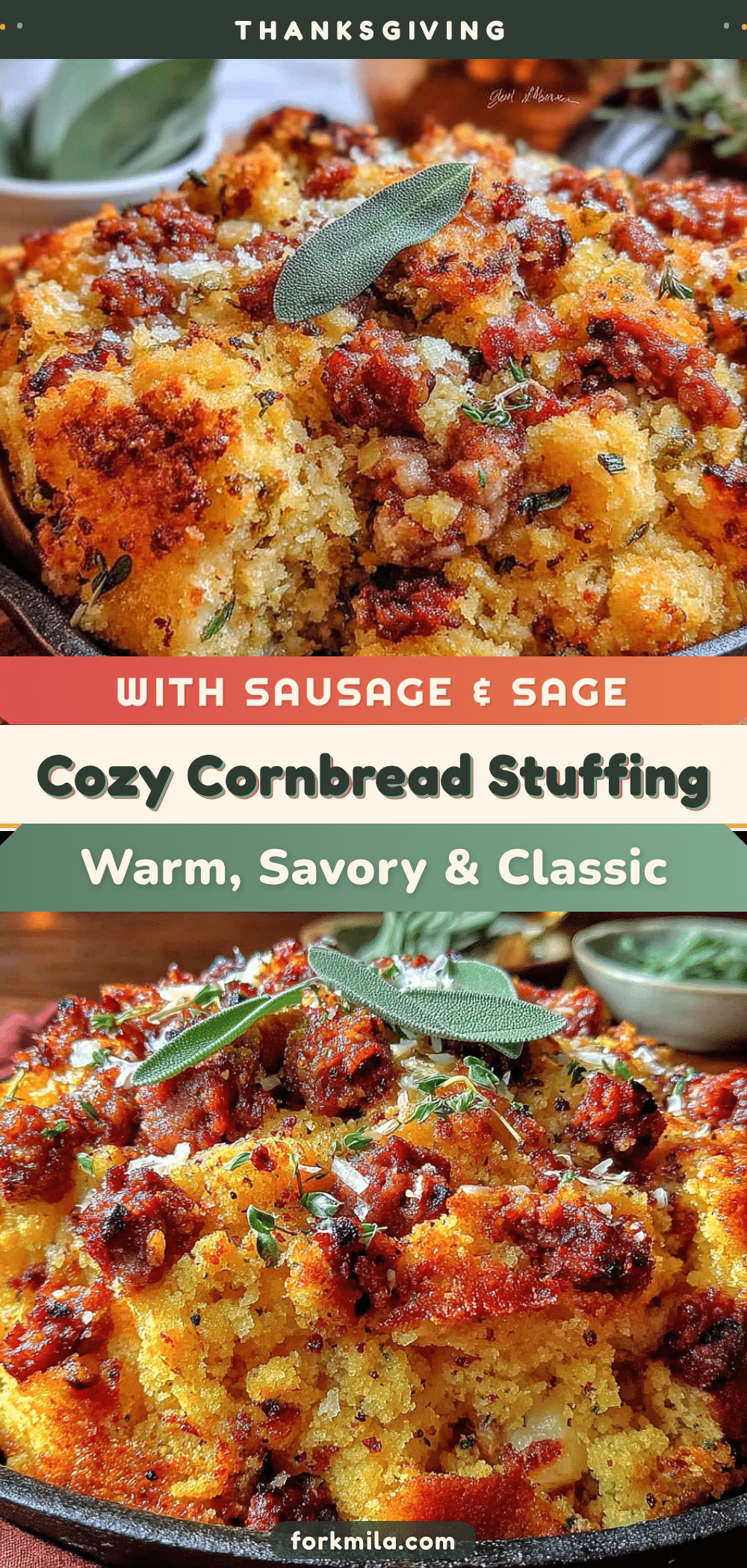
Easy Cozy Cornbread Stuffing with Sausage & Sage

This cornbread stuffing with sausage and sage is the ultimate side dish for Thanksgiving or any cozy dinner. It’s quick, easy, and packed with savory-sweet flavor that will convert even the biggest stuffing skeptics.
- Prep Time: 20 minutes
- Cook Time: 50 minutes
- Total Time: 1 hour 10 minutes (plus 2 hours for drying cornbread)
- Yield: 8 servings 1x
- Category: Side Dish
- Cuisine: American
Ingredients
- 1 box (15-16 ounces) cornbread mix (recommended: Jiffy or Krusteaz)
- 1 large egg
- 1/3 cup milk (whole milk preferred, 2% is fine)
- 2 tablespoons melted unsalted butter
- 1 pound bulk pork sausage (mild or hot, such as Jimmy Dean)
- 4 tablespoons unsalted butter, divided
- 1 large yellow onion, diced (about 1 1/2 cups)
- 3 celery stalks, diced (about 1 cup)
- 3 cloves garlic, minced
- 2 tablespoons fresh sage, chopped (or 1 tablespoon dried sage)
- 1 teaspoon fresh thyme leaves (or 1/2 teaspoon dried)
- 1/2 teaspoon kosher salt (plus more to taste)
- 1/4 teaspoon black pepper
- 1 1/2 cups low-sodium chicken broth (plus more if needed)
- 2 large eggs, lightly beaten
- Optional: 1/4 cup chopped fresh parsley for garnish
Instructions
- Make the Cornbread (Day Before or 2 Hours Ahead): Preheat oven to 400°F (200°C). Grease an 8×8-inch baking pan or 9-inch cast-iron skillet. In a medium bowl, combine cornbread mix, egg, milk, and melted butter. Stir until just combined (a few lumps are fine). Pour batter into prepared pan and bake for 15-20 minutes, until golden and a toothpick inserted in center comes out clean. Let cool completely, then cut into 1-inch cubes. Spread cubes on a baking sheet and let sit out, uncovered, for at le…
- Brown the Sausage: In a large skillet over medium-high heat, cook sausage, breaking it up with a wooden spoon, until browned and cooked through, about 6-8 minutes. Use a slotted spoon to transfer sausage to a plate, leaving rendered fat in the skillet.
- Sauté the Vegetables: Reduce heat to medium. Add 2 tablespoons butter to the skillet with the sausage fat. Once melted, add diced onion and celery. Cook, stirring occasionally, until soft and translucent, about 6-8 minutes. Add minced garlic and cook for 1 minute until fragrant.
- Bloom the Herbs: Add remaining 2 tablespoons butter to the skillet. Once melted, stir in chopped sage and thyme. Cook for 30 seconds, stirring constantly. Season with salt and pepper.
- Combine the Ingredients: In a large mixing bowl, combine dried cornbread cubes and cooked sausage. Pour vegetable-herb mixture over the top and toss gently to combine. In a separate bowl, whisk together chicken broth and beaten eggs. Pour broth-egg mixture over cornbread mixture and gently fold until evenly moistened. Let sit for 10 minutes. If dry, add another 1/4 cup broth.
- Bake the Stuffing: Preheat oven to 350°F (175°C). Grease a 9×13-inch baking dish. Transfer stuffing mixture to the dish and spread into an even layer. Cover tightly with aluminum foil and bake for 30 minutes. Remove foil and bake for another 15-20 minutes, until top is golden brown and crispy. Let rest for 5-10 minutes before serving.
Notes
For best results, dry the cornbread cubes thoroughly to avoid soggy stuffing. You can make the cornbread a day ahead. For extra crispy edges, broil for the last 2-3 minutes. Leftovers can be stored in an airtight container in the refrigerator for up to 4 days or frozen for up to 3 months.
Nutrition
- Serving Size: 1 serving (about 1 c
- Calories: 380
- Sugar: 8
- Sodium: 780
- Fat: 22
- Saturated Fat: 9
- Carbohydrates: 32
- Fiber: 2
- Protein: 14
Keywords: cornbread stuffing, sausage stuffing, Thanksgiving stuffing, sage stuffing, easy stuffing recipe, holiday side dish