My neighbor, a retired electrician named Frank, asked why I couldn’t just cook the salmon and asparagus in the same pan. I started to explain why that wouldn’t work—something about different cooking times and the asparagus getting soggy. Then I stopped. Frank isn’t a cook, but he’s fixed everything from my garbage disposal to my bicycle chain, and he has a way of cutting through unnecessary complexity. I honestly didn’t have a good reason. I was just following a habit I’d never questioned.
So, I tried it. I threw a fillet of salmon in a hot skillet, nestled some asparagus spears around it, and let the whole thing cook together. The result was so obvious in hindsight. The salmon released its rich, oily goodness into the pan, which the asparagus happily soaked up. The garlic butter, which I’d been making separately like a fool, became a simple, one-pan sauce that coated everything beautifully. I mean, it was a genuine “why didn’t I think of this sooner” moment, and I had to admit Frank was right.
Since then, this Easy One-Pan Garlic Butter Salmon with Asparagus has become my go-to for busy weeknights. It’s the kind of meal that feels fancy—like something you’d order at a nice restaurant—but comes together in under 30 minutes with almost no cleanup. You know that feeling when you want a healthy, delicious dinner but don’t want to spend an hour scrubbing dishes? This is the answer. It’s proof that sometimes the best cooking advice comes from the most unexpected places, and that a little bit of humility in the kitchen goes a long way. I keep making it because it works every single time, and it reminds me to question my own rules.
Why You’ll Love This Recipe
This isn’t just another salmon recipe. It’s the one that will make you look forward to Monday night dinner. I’ve tested this method more times than I can count, tweaking the heat and the timing to get that perfect flaky fish and tender-crisp asparagus. The feedback from friends and family has been unanimous—this is a keeper.
- Quick & Easy: From start to finish, this meal is on the table in about 25 minutes. It’s the perfect solution for those evenings when you’re staring at the fridge, completely out of ideas.
- Simple Ingredients: You likely already have garlic, butter, and lemon in your kitchen. The only thing you might need to pick up is the salmon and asparagus. No fancy grocery trips required.
- Perfect for a Busy Weeknight: This is a true one-pan wonder. Less time cooking means more time relaxing, and the single-skillet cleanup is a total game-changer.
- Crowd-Pleaser: Even people who claim they don’t like fish have been converted by this dish. The butter and garlic are a powerful combination, and the salmon stays incredibly moist.
- Unbelievably Delicious: The flavor is simple but deeply satisfying. The salmon gets a beautiful golden crust from the pan, while the asparagus soaks up all that garlicky, lemony butter. It’s comfort food that happens to be good for you.
What makes this recipe different is the technique. I don’t overcrowd the pan, and I start the asparagus just a minute before the salmon to ensure it gets a head start. It’s a small detail, but it makes a huge difference. This isn’t just another version of salmon and veggies—it’s the best version I’ve ever made.
What Ingredients You Will Need
This recipe relies on a handful of fresh, high-quality ingredients to create a meal that tastes far greater than the sum of its parts. The magic is in the simplicity, so choosing good ingredients really pays off here.
- Salmon Fillets (4 fillets, about 6 oz / 170g each): I prefer center-cut fillets for even cooking. Look for fillets that are bright in color and have a fresh, mild scent. If the skin is on, that’s fine—it will get wonderfully crispy in the pan.
- Asparagus (1 bunch, about 1 lb / 450g, trimmed): Fresh, bright green spears are best. I like to snap off the woody ends naturally—they break right where the tender part begins. Thicker spears hold up better to pan-roasting.
- Unsalted Butter (4 tablespoons / 60g): Butter is the base of our sauce. Using unsalted lets you control the sodium level. I use a good-quality European butter for a richer flavor, but regular butter works perfectly.
- Garlic (4-5 cloves, minced): Fresh garlic is non-negotiable here. Pre-minced stuff from a jar won’t give you the same pungent, aromatic punch. You want that garlic to sizzle gently in the butter, not burn.
- Lemon (1 large lemon): You’ll use both the juice and the zest. The zest adds a bright, floral note that you can’t get from juice alone. A little goes a long way.
- Olive Oil (2 tablespoons / 30ml): A good quality extra virgin olive oil helps the salmon skin get crispy and prevents the butter from burning. It also adds its own fruity flavor to the dish.
- Salt and Black Pepper (to taste): I use a flaky sea salt like Maldon for finishing, and freshly cracked black pepper. Don’t be shy with the seasoning—it’s what makes the flavors pop.
- Optional Garnish (Fresh dill or parsley): A sprinkle of fresh herbs right before serving adds a pop of color and a fresh, clean flavor that complements the richness of the salmon.
Equipment Needed
You don’t need a lot of fancy gear for this recipe. The right pan, however, makes all the difference. I’ve learned this the hard way after a few sticky situations.
- Large Oven-Safe Skillet (12-inch / 30cm): This is the most important tool. A cast-iron skillet is my top choice for its heat retention, but a stainless steel or heavy-duty non-stick pan works well too. Just make sure it’s oven-safe up to 400°F (200°C).
- Paper Towels: For patting the salmon dry. This is a crucial step for getting that beautiful golden crust.
- Chef’s Knife and Cutting Board: For mincing the garlic and trimming the asparagus.
- Measuring Spoons: For the olive oil and butter.
- Tongs: For flipping the salmon and moving the asparagus around the pan.
- Instant-Read Thermometer (Optional but Recommended): If you want perfectly cooked salmon every time, a thermometer is your best friend. It takes the guesswork out of it.
If you don’t have an oven-safe skillet, you can finish the cooking on the stovetop with a lid on. The results won’t be quite as even, but it will still be delicious. I’ve done it in a pinch, and no one ever complained.
Preparation Method
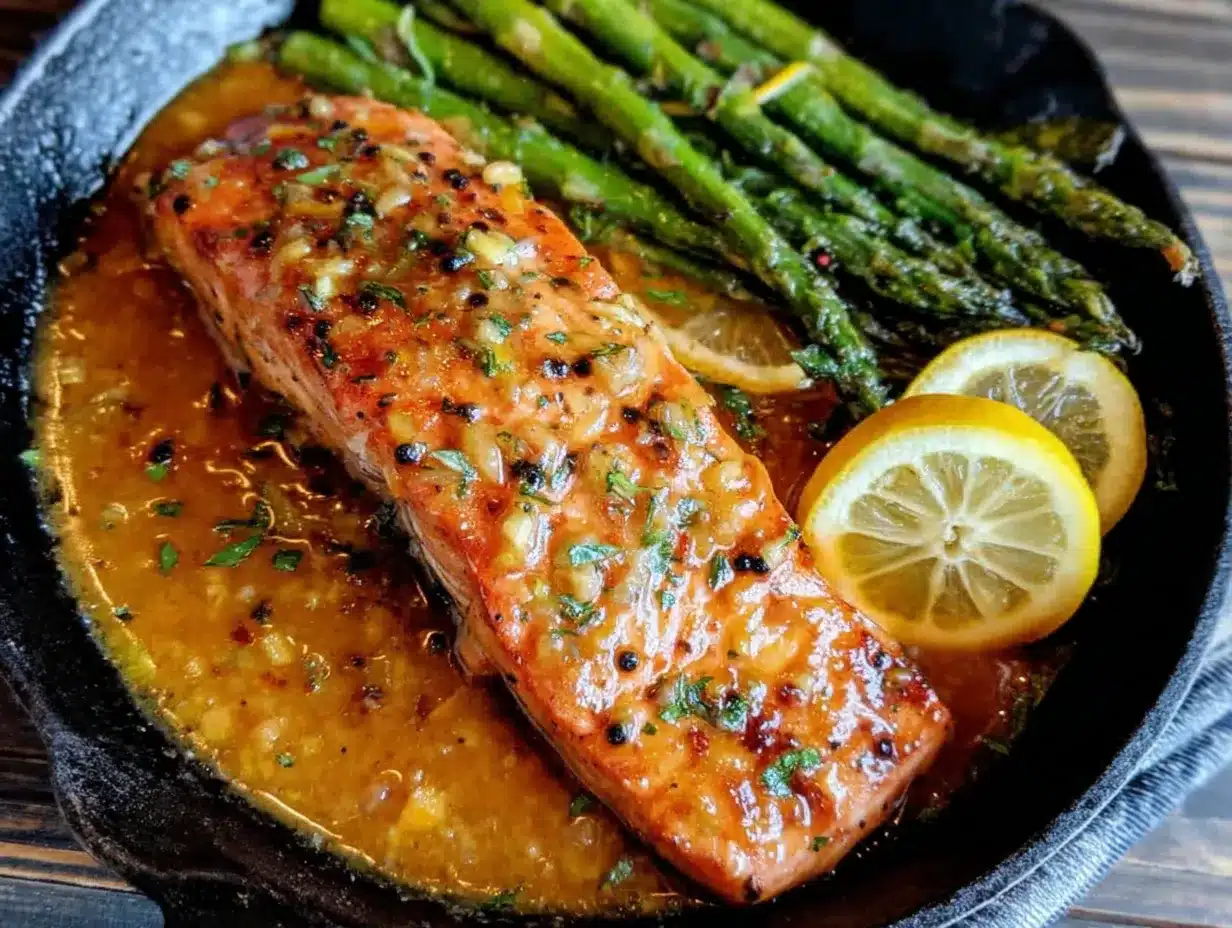
Let’s get cooking. This whole process is about 25 minutes from start to finish, and most of that is hands-off time. I’ll walk you through it step by step so you can nail it on your first try.
- Preheat and Prep (5 minutes): Preheat your oven to 400°F (200°C). While it’s heating, take your salmon fillets out of the fridge and pat them very dry with paper towels. This is a non-negotiable step for crispy skin. Season both sides generously with salt and pepper. Trim the woody ends off your asparagus—just bend each spear near the bottom until it snaps naturally.
- Start the Asparagus (2 minutes): Place your large oven-safe skillet over medium-high heat. Add 1 tablespoon of olive oil and let it get hot, shimmering but not smoking. Add the trimmed asparagus spears in a single layer. Let them cook undisturbed for 2 minutes. You want a little bit of char on them. This head start is the secret to perfectly cooked asparagus that isn’t mushy.
- Add the Salmon (2 minutes): Push the asparagus to the edges of the pan. Carefully place the seasoned salmon fillets skin-side down in the center of the skillet. If your pan is crowded, work in batches or use a larger pan. You want the fillets to have space to sear, not steam. Cook for 2 minutes without moving them. The skin should be golden and crispy.
- Make the Garlic Butter (1 minute): Reduce the heat to medium-low. Add the remaining 1 tablespoon of olive oil and the 4 tablespoons of butter to the pan. As the butter melts, add the minced garlic and the zest of your lemon. Stir it around the pan for about 30 seconds, until it’s fragrant. Be careful not to let the garlic burn—it can turn bitter very quickly.
- Baste and Bake (10-12 minutes): Use a spoon to baste the salmon fillets with the melted garlic butter. Pour the juice of half the lemon over everything. Transfer the entire skillet to the preheated oven. Bake for 10-12 minutes, depending on the thickness of your fillets. For medium-rare, the internal temperature should reach 120°F (49°C). For well-done, aim for 135°F (57°C). The asparagus should be tender and bright green.
- Rest and Serve (2 minutes): Carefully remove the hot skillet from the oven (use oven mitts!). Squeeze the remaining lemon half over the top. Let the pan rest for 2 minutes. This allows the juices to redistribute. Garnish with fresh dill or parsley if you’re using it. Serve directly from the skillet for a rustic look, or transfer the salmon and asparagus to a platter.
One thing I’ve learned is to trust your senses. If the salmon flakes easily with a fork, it’s done. If the asparagus is still a little too firm for your liking, give it another minute in the pan before serving. Cooking is about feeling, not just following a timer.
Cooking Tips & Techniques
Over the years, I’ve made every mistake you can imagine with this dish. I’ve overcooked the salmon until it was dry, burned the garlic into a bitter mess, and ended up with soggy, sad asparagus. Here’s how to avoid those pitfalls and get it right every time.
- Don’t Skip Drying the Salmon: This is the single most important tip. Moisture is the enemy of a good sear. If the skin is wet, it will steam instead of crisp up. Pat it dry, let it sit uncovered in the fridge for 10 minutes if you have time, then season it.
- Watch Your Heat: Medium-high heat is your friend for the initial sear, but you must lower it to medium-low when you add the garlic. Garlic burns in seconds over high heat, and burnt garlic ruins the whole dish. If you see it browning too fast, take the pan off the heat for a moment.
- Get the Right Pan Size: A crowded pan leads to steaming, not searing. If your salmon fillets are touching, they won’t get that beautiful golden crust. Use a 12-inch skillet, or cook the salmon in two batches. It’s worth the extra minute.
- Use a Thermometer: I know it feels fussy, but an instant-read thermometer is the only way to guarantee perfectly cooked salmon. The difference between 120°F (49°C) and 135°F (57°C) is the difference between a silky, buttery texture and a dry, mealy one. Trust the tool.
- Don’t Overcook the Asparagus: The asparagus will continue to cook slightly from the residual heat of the pan after you take it out of the oven. Aim for it to be just tender when you pull the pan out. A little bit of bite is better than mush.
I once forgot to lower the heat and ended up with a pan of blackened garlic and raw salmon. It was a total disaster. I had to scrape the whole thing into the trash and start over. That’s a mistake you only make once! Now, I always set a mental reminder to turn the heat down as soon as the garlic goes in.
Variations & Adaptations
This recipe is incredibly flexible. Once you have the basic technique down, you can adapt it to suit any craving or dietary need. Here are a few of my favorite twists.
- Herb Crust: Before searing the salmon, press a mixture of fresh dill, parsley, and lemon zest into the top of the fillets. It creates a beautiful, flavorful crust that looks impressive.
- Spicy Kick: Add 1/4 teaspoon of red pepper flakes along with the garlic. The heat pairs beautifully with the richness of the butter and the brightness of the lemon. It’s my personal favorite variation.
- Swap the Vegetable: No asparagus? No problem. Green beans, broccoli florets, or thick slices of zucchini all work wonderfully. Just adjust the initial cooking time on the stovetop. Broccoli might need an extra minute, while zucchini will need less.
- Dairy-Free Option: Substitute the butter with a high-quality vegan butter or ghee (if you can tolerate it). You can also use all olive oil, but you’ll lose some of that rich, nutty flavor from the butter.
- Add Some Mushrooms: Add a handful of sliced cremini or shiitake mushrooms to the pan with the asparagus. They’ll soak up all that garlic butter and become little flavor bombs.
I once tried this with a miso glaze instead of the garlic butter. I whisked together a tablespoon of white miso paste with a tablespoon of melted butter and a splash of sake. It was a completely different dish, but just as delicious. Don’t be afraid to experiment!
Serving & Storage Suggestions
This dish is beautiful on its own, but a few simple sides can turn it into a full feast. Here’s how I like to serve it and how to handle leftovers—if you have any.
- Serving Temperature: Serve the salmon and asparagus immediately after resting. It’s best hot, with the butter still slightly melted and glossy.
- Complementary Sides: A side of fluffy white rice, quinoa, or crusty bread is perfect for soaking up the leftover garlic butter sauce. A simple green salad with a lemon vinaigrette would also be lovely. For a low-carb option, serve it over a bed of sautéed spinach.
- Storage: Store any leftovers in an airtight container in the refrigerator for up to 2 days. The salmon will lose its crispy skin, but the flavor will still be great.
- Reheating: The best way to reheat this is in a skillet over medium-low heat with a splash of water or lemon juice. Cover the pan with a lid and heat for 2-3 minutes, until warmed through. Avoid the microwave, which will dry out the salmon and make the asparagus mushy.
- Flavor Development: Interestingly, the flavors meld together even more the next day. The asparagus will be softer, but the garlic and lemon will have infused the salmon more deeply. It’s a great cold lunch over a salad.
I often make a double batch of the asparagus because it’s just as good cold, tossed into a lunch salad the next day. The garlic butter dressing is basically a built-in vinaigrette.
Nutritional Information & Benefits
This isn’t just a delicious meal; it’s a powerhouse of nutrition. It’s one of those rare dishes that feels indulgent but is actually incredibly good for you. Here’s a quick look at what you’re getting.
- Estimated Values (per serving): Approximately 450-500 calories, 30g protein, 15g carbohydrates, 35g fat (mostly healthy fats), and 5g fiber. These values will vary based on the size of your fillets and the amount of butter used.
- Salmon’s Superpowers: Salmon is packed with omega-3 fatty acids, which are fantastic for heart and brain health. It’s also a great source of high-quality protein and vitamin D.
- Asparagus Benefits: Asparagus is a great source of fiber, folate, and vitamins A, C, and K. It’s also a natural diuretic, which can help reduce bloating.
- Dietary Considerations: This recipe is naturally gluten-free, low-carb, and keto-friendly. If you use a dairy-free butter substitute, it can easily be made vegan.
- Allergens: This recipe contains fish and dairy (butter). Be mindful of these if cooking for someone with allergies.
I love that I can serve this to my family knowing it’s packed with nutrients, and they just think they’re getting a treat. It’s a win-win in my book.
Conclusion
This Easy One-Pan Garlic Butter Salmon with Asparagus is more than just a recipe—it’s a solution to the eternal question of what to make for dinner when you’re short on time but still want something amazing. It’s proof that you don’t need a dozen ingredients or a sink full of dirty dishes to create a meal that feels special. The combination of crispy-skinned salmon, tender-crisp asparagus, and that luscious garlic butter is pure weeknight magic.
I really hope you give this a try. Don’t be afraid to make it your own—add a little more lemon, a pinch more red pepper, or swap in whatever vegetable you have on hand. The beauty of this dish is its simplicity and adaptability. It’s forgiving enough for a beginner and satisfying enough for a seasoned cook.
I’d love to hear how it turns out for you! Did you try a variation? Did your family love it? Drop a comment below and share your experience. And if you loved it, please share this post with a friend who needs a little more easy dinner inspiration in their life. Happy cooking!
Frequently Asked Questions
Can I use frozen salmon for this recipe?
Yes, you can, but you need to thaw it completely first. Pat it very dry before cooking to ensure a good sear. Frozen salmon tends to release more water, so it may not get as crispy as fresh salmon.
Can I make this recipe without an oven?
Absolutely. After searing the salmon and making the garlic butter on the stovetop, simply cover the skillet with a lid and cook over low heat for 8-10 minutes, until the salmon is cooked through. The result will be slightly less crispy, but still delicious.
How do I know when the salmon is done?
The easiest way is to use an instant-read thermometer. For medium-rare, the internal temperature should be 120°F (49°C). For medium, aim for 130°F (54°C). You can also check by gently pressing on the fillet—it should flake easily with a fork.
Can I use other types of fish?
Yes, this method works well with other firm-fleshed fish like cod, halibut, or sea bass. Adjust the cooking time based on the thickness of the fillet. Thinner fillets will cook faster.
How do I prevent the garlic from burning?
This is the most common mistake. Always add the garlic after you’ve reduced the heat to medium-low. Stir it constantly for about 30 seconds, until it’s fragrant, then add the lemon juice. If the pan is too hot, the garlic will burn and become bitter.
Pin This Recipe!
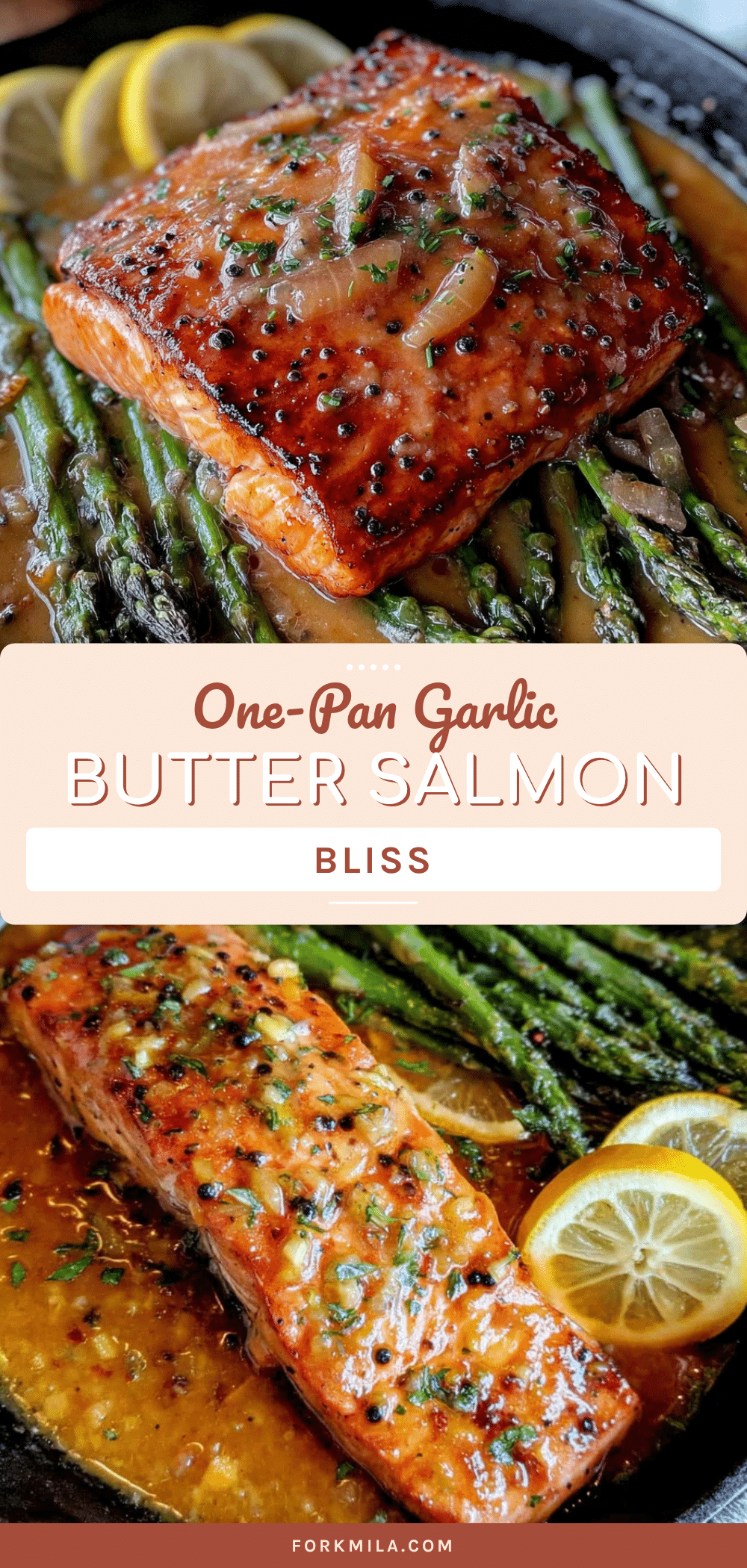
Easy One-Pan Garlic Butter Salmon with Asparagus
A quick and delicious one-pan meal featuring crispy-skinned salmon and tender-crisp asparagus in a luscious garlic butter sauce. Perfect for busy weeknights with minimal cleanup.
- Prep Time: 5 minutes
- Cook Time: 20 minutes
- Total Time: 25 minutes
- Yield: 4 servings 1x
- Category: Main Course
- Cuisine: American
Ingredients
- 4 salmon fillets (about 6 oz / 170g each)
- 1 bunch asparagus (about 1 lb / 450g), trimmed
- 4 tablespoons unsalted butter (60g)
- 4–5 cloves garlic, minced
- 1 large lemon (juice and zest)
- 2 tablespoons olive oil
- Salt and black pepper to taste
- Fresh dill or parsley for garnish (optional)
Instructions
- Preheat oven to 400°F (200°C). Pat salmon fillets dry with paper towels and season generously with salt and pepper. Trim woody ends off asparagus by bending each spear until it snaps naturally.
- Place a large oven-safe skillet over medium-high heat. Add 1 tablespoon olive oil. Add asparagus in a single layer and cook undisturbed for 2 minutes until lightly charred.
- Push asparagus to edges of pan. Place salmon fillets skin-side down in center. Cook for 2 minutes without moving, until skin is golden and crispy.
- Reduce heat to medium-low. Add remaining 1 tablespoon olive oil and 4 tablespoons butter. Once melted, add minced garlic and lemon zest. Stir for about 30 seconds until fragrant.
- Baste salmon with garlic butter. Pour juice of half the lemon over everything. Transfer skillet to preheated oven. Bake for 10-12 minutes, until salmon reaches desired doneness (120°F/49°C for medium-rare, 135°F/57°C for well-done). Asparagus should be tender and bright green.
- Remove skillet from oven. Squeeze remaining lemon half over top. Let rest for 2 minutes. Garnish with fresh dill or parsley if desired. Serve directly from skillet or transfer to platter.
Notes
Pat salmon very dry for crispy skin. Lower heat before adding garlic to prevent burning. Use a thermometer for perfectly cooked salmon. Asparagus continues to cook from residual heat, so remove from oven when just tender.
Nutrition
- Serving Size: 1 salmon fillet with
- Calories: 475
- Sugar: 4
- Sodium: 450
- Fat: 35
- Saturated Fat: 12
- Carbohydrates: 15
- Fiber: 5
- Protein: 30
Keywords: one-pan salmon, garlic butter salmon, asparagus, quick dinner, healthy, low-carb, keto, gluten-free