This was supposed to be a warm roasted vegetable bowl. The kind where everything gets tossed in oil, spread on a sheet pan, and emerges caramelized and tender. I had the butternut squash cubed, the Brussels sprouts halved, and the oven preheating to 400°F. Then my phone rang, my dog started barking at the mailman, and I completely forgot to set a timer. By the time I smelled something — not burning, but definitely *different* — the edges of the squash were deeply browned and the Brussels sprouts had gone from soft to genuinely crispy. I was already annoyed at myself for ruining dinner. But I pulled the pan out anyway, let it cool for a minute, and ate a piece of that crispy squash right off the sheet. Honestly? It was better than the soft version I had planned. That crunch, that concentrated sweetness — it was like the vegetable had caramelized into something entirely new. I grabbed a handful of fresh greens, tossed them with a quick maple vinaigrette I threw together in a jar, and piled the crispy veggies on top. That first bite stopped me mid-chew. The contrast between the cool, crisp greens and the warm, crunchy vegetables was exactly what I didn’t know I needed. Maybe you’ve been there — standing over a hot pan, convinced you ruined the meal, only to discover you accidentally made something better. That’s how this Crispy Fall Harvest Salad with Maple Vinaigrette was born. And three years later, I still make it exactly that way — on purpose now.
Why You’ll Love This Recipe
Let me be honest with you. I have made a lot of salads in my life. Some were good, some were forgettable, and a few ended up in the trash after one bite. This one is different. This one gets requested at Thanksgiving. This one makes people who say they “don’t like salads” ask for seconds. And the best part? It’s deceptively simple.
- Quick & Easy : From start to finish, this salad comes together in about 30 minutes. The oven does most of the work while you whisk together the dressing and wash the greens.
- Simple Ingredients : You don’t need to hunt down fancy specialty items. Apples, squash, Brussels sprouts, pecans — all things you can grab at any grocery store without a second thought.
- Perfect for Fall Gatherings : Whether it’s a weeknight dinner, a Friendsgiving potluck, or a holiday side dish, this salad fits right in. It’s hearty enough to stand alone but works beautifully alongside roasted meats or soups.
- Crowd-Pleaser : I’ve served this to toddlers, teenagers, grandparents, and picky in-laws. Everyone finds something to love. The crispy edges win over the skeptics every single time.
- Unbelievably Delicious : The magic here is the texture. Creamy goat cheese, crunchy pecans, crisp apples, and those deeply caramelized vegetables — every bite is a little different, and every bite is satisfying.
What makes this salad different from every other fall salad out there? It’s the roasting technique. Most recipes tell you to roast vegetables until tender. I’m telling you to go further — let them get dark, crispy, almost burnt on the edges. That’s where the flavor lives. That’s the difference between a good salad and a memorable one.
This is the kind of salad that makes you close your eyes after the first bite. It’s comfort food reimagined — healthier, faster, but with the same soul-soothing satisfaction you get from a warm bowl of soup on a chilly October evening.
What Ingredients You Will Need
This recipe uses simple, wholesome ingredients that come together to create something genuinely special. Most of these are fall pantry staples, which makes this salad incredibly easy to throw together whenever the craving hits.
- Butternut Squash — 3 cups, cubed into 1-inch pieces. Look for squash that feels heavy for its size with firm, unblemished skin. I prefer buying pre-cut cubes from the store when I’m short on time, but cutting your own saves money and gives you more control over the size. (Smaller cubes get crispier faster.)
- Brussels Sprouts — 2 cups, trimmed and halved. Choose sprouts that are bright green with tightly packed leaves. Smaller sprouts tend to be sweeter and less bitter. If you can find them still on the stalk, even better — they’re usually fresher.
- Honeycrisp Apple — 1 large, thinly sliced. Honeycrisp holds its shape well and provides the perfect sweet-tart balance. Fuji or Gala work too, but avoid Red Delicious — they get mealy and mushy. Leave the skin on for color and texture.
- Dried Cranberries — 1/3 cup. I recommend Craisins or any brand without added sugar if you can find them. They add a chewy, tart pop that cuts through the richness of the roasted vegetables.
- Pecans — 1/2 cup, roughly chopped. Toast them in a dry pan for 3-4 minutes before adding to the salad. It makes a huge difference in flavor. (I learned this the hard way after years of skipping this step.)
- Goat Cheese — 1/3 cup, crumbled. The tanginess balances the sweetness of the maple dressing. If goat cheese isn’t your thing, feta or blue cheese work beautifully too. For a dairy-free option, try a vegan feta or simply omit it.
- Mixed Greens — 5 ounces (about 5 cups). I use a blend of baby spinach and arugula. The spinach is mild, the arugula adds a peppery kick. Spring mix works too, but avoid iceberg or romaine — they’re too watery and don’t hold up to the warm vegetables.
For the Maple Vinaigrette:
- Pure Maple Syrup — 3 tablespoons. Please use the real stuff, not pancake syrup. Grade A dark amber has the strongest flavor and stands up best to the other ingredients. I buy mine from a local farm stand, but any pure maple syrup will do.
- Apple Cider Vinegar — 2 tablespoons. The acidity brightens everything up. White wine vinegar or champagne vinegar work in a pinch, but apple cider vinegar adds that extra fall flavor.
- Dijon Mustard — 1 teaspoon. This acts as an emulsifier, helping the dressing stay mixed instead of separating. Grey Poupon is my go-to, but any smooth Dijon works.
- Extra Virgin Olive Oil — 1/4 cup. Use a good quality oil here — it’s the base of the dressing and you’ll taste the difference. I like California Olive Ranch for everyday use.
- Salt and Black Pepper — to taste. Don’t be shy with the salt. It brings out all the other flavors.
- Shallot — 1 small, finely minced. Optional, but highly recommended. It adds a subtle oniony bite that makes the dressing feel more complex.
Equipment Needed
You don’t need a fancy kitchen to make this salad. Here’s what you’ll actually use:
- Large Sheet Pan — A half-sheet pan (18×13 inches) works perfectly. If you don’t have one, use two smaller pans to avoid overcrowding. Overcrowding = steaming instead of roasting = no crispy edges.
- Mixing Bowls — One large bowl for the greens and one medium bowl for the dressing. I use glass bowls because they don’t retain odors, but stainless steel works fine too.
- Chef’s Knife — A sharp 8-inch knife makes quick work of squash and Brussels sprouts. Dull knives are dangerous — they slip. Trust me on this one. I learned that lesson with a very bloody finger.
- Cutting Board — Go with a large wooden or plastic board. Avoid glass cutting boards — they dull your knives and slide around.
- Mason Jar with Lid — For shaking the dressing. You can whisk it in a bowl, but the jar method is faster and gives you a better emulsion. Plus, you can store leftovers right in the jar.
- Measuring Spoons and Cups — For accuracy. I’ve been cooking long enough to eyeball most things, but dressing ratios are finicky. Measure the maple syrup and vinegar until you know the ratio by heart.
- Vegetable Peeler — For the butternut squash if you’re cutting it yourself. A Y-shaped peeler is faster and more comfortable than the straight kind.
Preparation Method
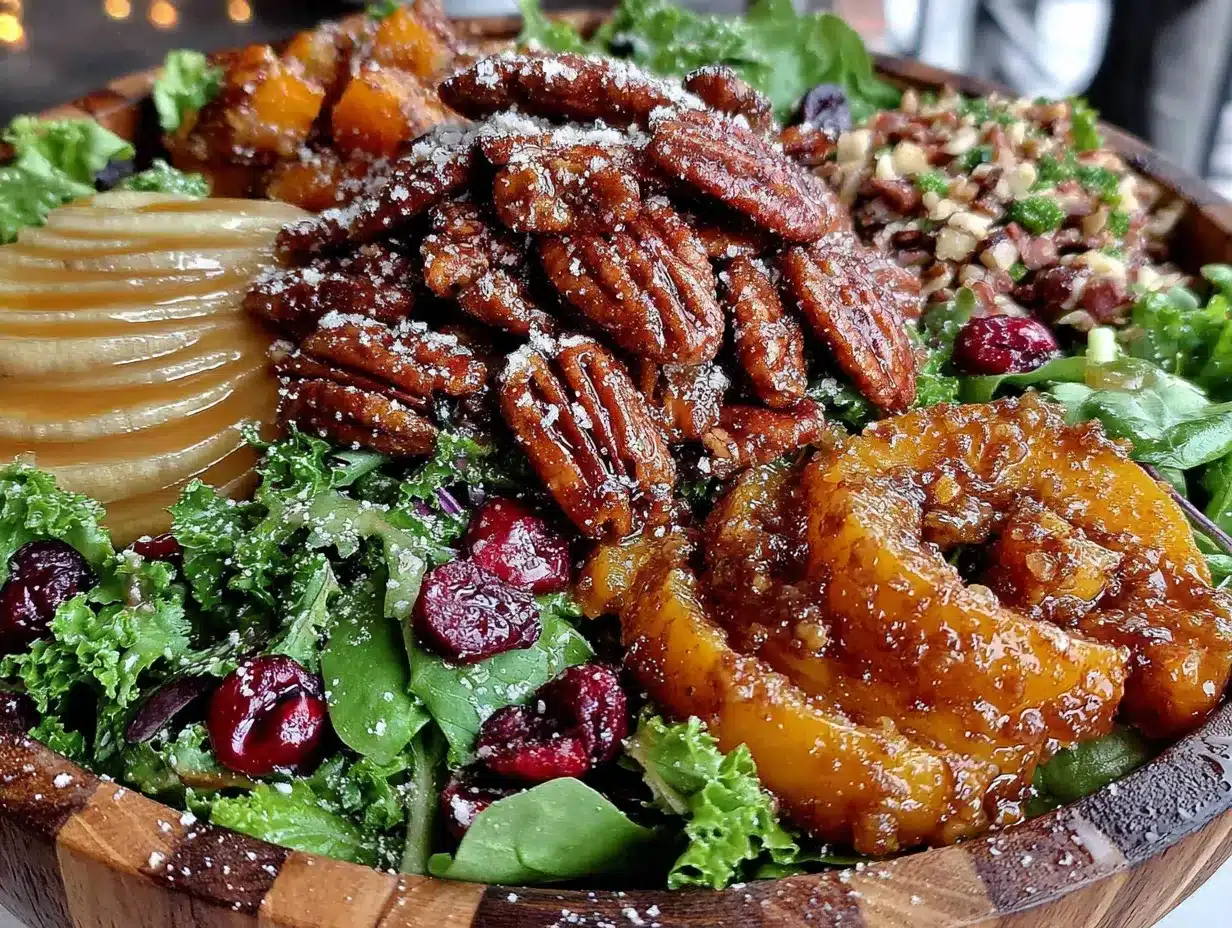
- Preheat your oven to 425°F. Yes, 425, not 400. Higher heat equals more caramelization. While the oven heats up, line a large sheet pan with parchment paper for easy cleanup. (Or don’t — the vegetables crisp up better directly on the pan. Your call.)
- Prepare the vegetables. If you’re using a whole butternut squash, cut off both ends, peel it with a vegetable peeler, slice it in half lengthwise, scoop out the seeds, and cut the flesh into 1-inch cubes. For the Brussels sprouts, trim the woody ends and cut each sprout in half from top to bottom. Toss both vegetables on the sheet pan with 2 tablespoons of olive oil, 1/2 teaspoon of salt, and 1/4 teaspoon of black pepper. Spread them in a single layer — give them room to breathe. If they’re crowded, they’ll steam instead of crisp.
- Roast for 25-30 minutes. Here’s the key: do not stir them halfway through. I know every recipe tells you to flip things halfway. Not this time. Let them sit undisturbed so the bottoms get deeply browned and crispy. At the 25-minute mark, check them. You’re looking for dark brown edges and a texture that’s firm-crisp, not soft. If they need more time, give them 5 more minutes. Don’t be afraid of the dark spots — that’s where the flavor is.
- While the vegetables roast, make the dressing. In a mason jar, combine 3 tablespoons of pure maple syrup, 2 tablespoons of apple cider vinegar, 1 teaspoon of Dijon mustard, 1 finely minced shallot (if using), and a pinch of salt and pepper. Screw the lid on tightly and shake until everything is combined. Then add 1/4 cup of olive oil and shake again until emulsified. Taste it and adjust — more maple syrup if you want it sweeter, more vinegar if you want it tangier. Set aside at room temperature.
- Toast the pecans. In a small dry skillet over medium heat, add the chopped pecans. Stir frequently for 3-4 minutes until they smell fragrant and look slightly darker. Watch them carefully — nuts burn fast. I’ve ruined more batches than I’d like to admit by walking away for “just a second.” Transfer them to a plate to cool.
- Assemble the salad. In a large mixing bowl, add the mixed greens. Drizzle with about half the dressing and toss gently to coat. You want every leaf lightly dressed, not drowning. Add the warm roasted vegetables (yes, warm — the heat slightly wilts the greens, which is exactly what you want), the sliced apple, dried cranberries, toasted pecans, and crumbled goat cheese. Drizzle with more dressing if needed.
- Serve immediately. This salad does not sit well once assembled. The warm vegetables will continue to wilt the greens, and the apples will start to brown. Serve it right away for the best texture and temperature contrast. If you’re making this ahead, keep all the components separate and assemble just before serving.
Cooking Tips & Techniques
Let me save you some trouble. I’ve made this salad probably forty times by now, and I’ve made every mistake you can imagine. Here’s what I’ve learned:
Don’t skip the high heat. I used to roast vegetables at 375°F because that’s what every recipe said. They came out soft and slightly sweet, which was fine. But 425°F changes everything. The sugars caramelize faster, the edges get crispy, and the texture becomes something you actually want to chew. It’s worth the extra heat.
Space is not optional. If your vegetables are piled on top of each other, they release steam and never get crispy. Use two sheet pans if you need to. I learned this the hard way when I tried to cram everything onto one pan and ended up with soggy, sad vegetables. Never again.
Let the vegetables cool for 5 minutes before adding to the greens. If you pile hot vegetables directly onto delicate greens, you’ll get a bowl of wilted, limp leaves. Five minutes on the counter is enough to bring them down to a temperature that wilts the greens just slightly without destroying them.
Toast your nuts. This is non-negotiable. Raw pecans are fine, but toasted pecans are exponentially better. The heat releases their natural oils and makes them crunchier. Three minutes in a dry pan is all it takes. Set a timer — I can’t stress this enough.
Dress the greens first, then add the toppings. If you dump everything in the bowl and then add dressing, the heavier ingredients sink to the bottom and the dressing doesn’t coat the greens evenly. Dress the greens first, toss, then add everything else on top. It’s a small step that makes a big difference.
Variations & Adaptations
One of the things I love about this salad is how flexible it is. Here are some variations I’ve tried and loved:
- Add Protein: Grilled chicken, roasted turkey, or crispy chickpeas turn this into a full meal. I’ve also added sliced steak on top for a heartier version that my husband requests regularly.
- Swap the Cheese: Not a goat cheese fan? Try crumbled feta for a saltier bite, blue cheese for a funkier flavor, or shaved Parmesan for a nutty finish. For a dairy-free version, omit the cheese entirely or use a vegan feta.
- Change the Nuts: Pecans are classic, but candied walnuts, sliced almonds, or even pumpkin seeds work beautifully. I made a version with honey-roasted almonds once and it was incredible.
- Switch Up the Fruit: No Honeycrisp apple? Use a Bosc pear, sliced fuyu persimmon, or even pomegranate arils for a different texture and flavor profile. In the summer, fresh peaches are amazing here.
- Make It Vegan: Omit the goat cheese and use a vegan maple dressing (which it already is!). Add some roasted chickpeas for extra protein and crunch. I’ve served this at a vegan potluck and it disappeared in minutes.
- Try Different Greens: Baby kale, arugula, or a spring mix all work. Avoid anything too watery like iceberg or butter lettuce — they’ll get soggy under the warm vegetables.
Serving & Storage Suggestions
This salad is best served immediately, warm from the oven. The contrast between the warm, crispy vegetables and the cool, crisp greens is the whole point. I like to serve it in a wide, shallow bowl so everything stays visible and doesn’t get crushed.
For a main dish, this salad serves 2-3 people. As a side dish, it serves 4-6. It pairs beautifully with roasted chicken, grilled salmon, or a bowl of butternut squash soup. I’ve also served it alongside a simple roast pork loin for a holiday dinner that felt special without being fussy.
Storage: If you have leftovers (which is rare in my house), store the components separately. The dressed greens will not keep — they’ll be soggy by morning. The roasted vegetables can be stored in an airtight container in the fridge for up to 3 days. Reheat them in a 400°F oven for 5 minutes to bring back some of the crispiness. The dressing keeps for up to a week in the fridge.
Make-Ahead Tips: You can roast the vegetables up to 2 days ahead and reheat them before serving. The dressing can be made up to a week ahead. The pecans can be toasted 3 days ahead. But please, for the love of good food, do not dress the greens or slice the apples until you’re ready to serve. Your future self will thank you.
Nutritional Information & Benefits
This salad is packed with nutrients, which makes me feel slightly less guilty about eating half the batch in one sitting. Here’s an approximate breakdown per serving (based on 4 servings):
- Calories: ~380
- Protein: 8g
- Fat: 24g
- Carbohydrates: 38g
- Fiber: 8g
- Sugar: 18g
Butternut squash is loaded with vitamin A, which is great for eye health and immune function. Brussels sprouts are high in vitamin C and fiber. The pecans add healthy fats and magnesium. And the apple provides a good dose of vitamin C and antioxidants. Even the maple syrup has trace minerals like zinc and manganese — though let’s be honest, we’re eating it because it tastes amazing.
This salad is naturally gluten-free and can easily be made dairy-free or vegan with a few simple swaps. It’s also relatively low in calories for how satisfying it is, which makes it a great option for anyone watching their intake without feeling deprived.
Conclusion
This Crispy Fall Harvest Salad with Maple Vinaigrette has become my go-to for everything from quiet weeknight dinners to holiday feasts. It started as a happy accident — a moment of distraction that turned into a revelation — and now it’s a recipe I make on purpose, every single fall. The combination of textures, temperatures, and flavors is just right. It’s hearty enough to be a meal, light enough to be a side, and impressive enough to serve to guests without breaking a sweat.
I hope you make this salad and love it as much as I do. And if you tweak it — add something, swap something, make it your own — please let me know in the comments. That’s the best part of cooking, honestly. Taking something good and making it yours. So go ahead. Grab that squash. Crank the oven to 425. And don’t be afraid of the dark spots. That’s where the magic is.
Frequently Asked Questions
Can I use frozen butternut squash for this recipe?
You can, but I don’t recommend it. Frozen squash releases a lot of water as it thaws, which means it will steam instead of roast. You’ll end up with soft, soggy pieces instead of crispy ones. If you’re in a pinch, thaw the squash completely and pat it dry with paper towels before roasting. It won’t be quite as good, but it’ll work.
How do I keep the apples from turning brown?
Toss the sliced apples in a little lemon juice or apple cider vinegar before adding them to the salad. The acid prevents oxidation and keeps them looking fresh. Alternatively, slice the apples right before serving — that’s what I usually do since it only takes a minute.
Can I make this salad ahead of time for a party?
Yes, but keep everything separate until you’re ready to serve. Roast the vegetables up to 2 days ahead, make the dressing up to a week ahead, and toast the pecans up to 3 days ahead. When it’s time to serve, reheat the vegetables, assemble the salad, and you’re good to go. Just don’t dress it until the last minute.
What can I substitute for goat cheese?
Feta is the most popular substitute — it has a similar tangy, crumbly texture. Blue cheese works well if you like bold flavors. Shaved Parmesan adds a nutty, salty finish. For a dairy-free option, try a vegan feta or simply omit the cheese. The salad is still delicious without it.
Is this salad gluten-free?
Yes, this salad is naturally gluten-free. All the ingredients — butternut squash, Brussels sprouts, apples, cranberries, pecans, goat cheese, greens, and the maple vinaigrette — are gluten-free. Just double-check your dried cranberries and Dijon mustard labels if you have a severe sensitivity, as some brands may contain trace gluten.
Pin This Recipe!
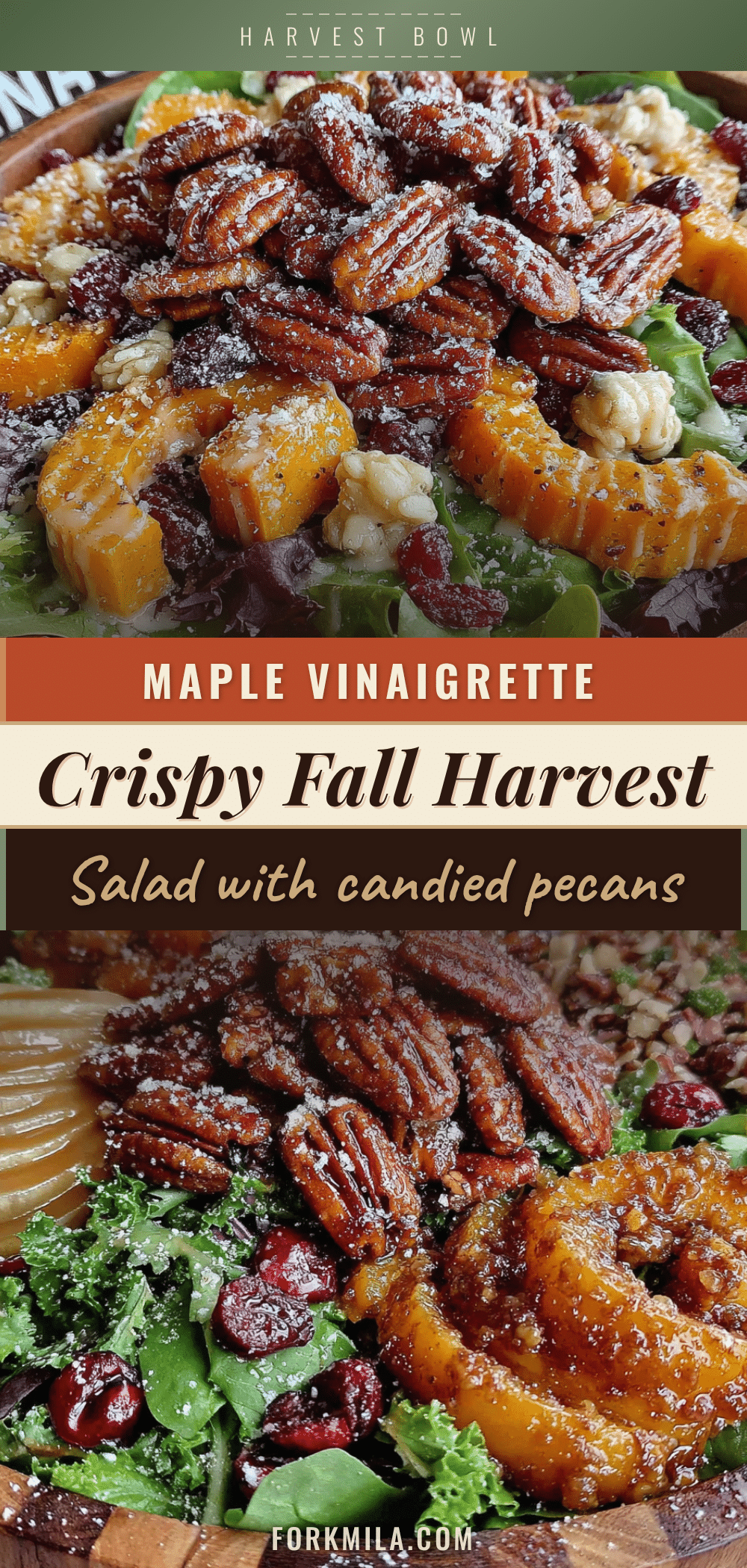
Best Easy Crispy Fall Harvest Salad with Maple Vinaigrette
A crispy fall harvest salad with roasted butternut squash and Brussels sprouts, tossed with a maple vinaigrette and topped with apples, pecans, cranberries, and goat cheese. Perfect for weeknight dinners or holiday gatherings.
- Prep Time: 15 minutes
- Cook Time: 30 minutes
- Total Time: 45 minutes
- Yield: 4 servings 1x
- Category: Salad
- Cuisine: American
Ingredients
- 3 cups butternut squash, cubed into 1-inch pieces
- 2 cups Brussels sprouts, trimmed and halved
- 1 large Honeycrisp apple, thinly sliced
- 1/3 cup dried cranberries
- 1/2 cup pecans, roughly chopped
- 1/3 cup goat cheese, crumbled
- 5 ounces mixed greens (baby spinach and arugula blend)
- 2 tablespoons olive oil (for roasting)
- 1/2 teaspoon salt
- 1/4 teaspoon black pepper
- 3 tablespoons pure maple syrup
- 2 tablespoons apple cider vinegar
- 1 teaspoon Dijon mustard
- 1/4 cup extra virgin olive oil (for dressing)
- 1 small shallot, finely minced (optional)
- Salt and black pepper to taste
Instructions
- Preheat your oven to 425°F. Line a large sheet pan with parchment paper (optional).
- Prepare the vegetables: If using a whole butternut squash, cut off both ends, peel, slice in half lengthwise, scoop out seeds, and cut into 1-inch cubes. Trim woody ends of Brussels sprouts and cut each in half. Toss both vegetables on the sheet pan with 2 tablespoons olive oil, 1/2 teaspoon salt, and 1/4 teaspoon black pepper. Spread in a single layer.
- Roast for 25-30 minutes without stirring, until deeply browned and crispy on the edges. Check at 25 minutes and add 5 more minutes if needed.
- While vegetables roast, make the dressing: In a mason jar, combine 3 tablespoons maple syrup, 2 tablespoons apple cider vinegar, 1 teaspoon Dijon mustard, minced shallot (if using), and a pinch of salt and pepper. Shake to combine. Add 1/4 cup olive oil and shake until emulsified. Adjust seasoning to taste.
- Toast the pecans: In a small dry skillet over medium heat, stir chopped pecans for 3-4 minutes until fragrant and slightly darker. Transfer to a plate to cool.
- Assemble the salad: In a large mixing bowl, add mixed greens. Drizzle with about half the dressing and toss gently. Add warm roasted vegetables, sliced apple, dried cranberries, toasted pecans, and crumbled goat cheese. Drizzle with more dressing if needed.
- Serve immediately.
Notes
Don’t skip the high heat (425°F) for maximum caramelization. Do not stir the vegetables during roasting to ensure crispy edges. Let roasted vegetables cool for 5 minutes before adding to greens to avoid over-wilting. Toast nuts for best flavor. Dress greens first, then add toppings. Serve immediately for best texture.
Nutrition
- Serving Size: 1 serving (about 2 c
- Calories: 380
- Sugar: 18
- Sodium: 350
- Fat: 24
- Saturated Fat: 5
- Carbohydrates: 38
- Fiber: 8
- Protein: 8
Keywords: fall harvest salad, crispy roasted vegetables, maple vinaigrette, butternut squash, Brussels sprouts, Thanksgiving salad, easy salad recipe