It was 10:47 PM on a rainy Thursday in October, and I had an aggressive craving for a warm, spiced apple cider donut. You know that feeling—when it’s too late to go to the store, but your brain has already decided you need that specific thing? I didn’t have a donut pan, I didn’t have the energy for deep frying, and honestly, I didn’t have the patience for a project that required piping batter into tiny molds. But I had a bottle of fresh apple cider in the fridge, a stick of butter on the counter, and one of those reckless ideas that only show up when you’re tired enough to ignore common sense. What if I just… made it into a cake? A bundt cake, specifically—something that would give me that same crispy, cinnamon-sugar outside and that tender, apple-cider-soaked inside, without the fuss of individual donuts. I grabbed my grandmother’s old bundt pan (the one with the scratched nonstick coating that I refuse to replace), and I just went for it. I mean, the worst that could happen was I’d have a pan of mediocre coffee cake, right? But let me tell you—the moment that cake came out of the oven, smelling like a fall festival, and I rolled that warm, golden dome in melted butter and cinnamon sugar, I knew I’d accidentally stumbled onto something special. This easy apple cider donut cake has become my favorite way to get that donut fix without the deep fryer, and maybe you’ve been there too—wanting the flavor of a seasonal treat but not the three-hour production.
Why You’ll Love This Recipe
This isn’t just another coffee cake pretending to be a donut. This is the real deal—a tender, moist cake that tastes exactly like the best apple cider donut you’ve ever had, just in a much more manageable form. After testing this recipe six times (yes, six—my family was very supportive), I can confidently say this is the version you want.
- Quick & Easy: From start to warm cake in your mouth, it takes about an hour. No yeast, no proofing, no deep frying—just mixing, baking, and coating.
- Simple Ingredients: You probably have most of these in your pantry right now. The star is fresh apple cider, which is easy to find in the fall, but the rest is basic baking stuff.
- Perfect for Fall Gatherings: This cake shows up at every apple-picking party, Thanksgiving brunch, and cozy weekend breakfast I host. It’s the first thing to disappear.
- Crowd-Pleaser: Kids love the cinnamon sugar crust, adults love the apple cider flavor, and everyone loves that it’s not a dry, boring cake.
- Unbelievably Delicious: That first bite—warm, with the crunchy sugar crust giving way to the soft, cider-infused crumb—is honestly the kind of moment that makes you close your eyes and forget where you are.
What makes this recipe different from other apple cider cakes is the reduction technique. I simmer the cider down to concentrate the flavor, so you get that intense, tangy apple taste without making the batter too liquid. It’s a small step that makes a huge difference. And that cinnamon sugar crust? It’s not just sprinkled on top—the cake gets a full bath in melted butter and cinnamon sugar while it’s still warm, just like a real donut. This is comfort food at its finest: nostalgic, unpretentious, and absolutely satisfying.
What Ingredients You Will Need
This recipe uses simple, wholesome ingredients that come together to create something truly special. Most of these are pantry staples, which is part of the beauty of this cake—you can decide to make it on a whim without a special trip to the store.
For the Cake Batter
- 1 cup fresh apple cider (not from concentrate, if you can find it—the flavor is brighter)
- 2 ½ cups all-purpose flour (spooned and leveled—don’t scoop directly from the bag)
- 1 ½ teaspoons baking powder
- ½ teaspoon baking soda
- 1 teaspoon ground cinnamon
- ½ teaspoon ground nutmeg (freshly grated is amazing, but pre-ground works fine)
- ¼ teaspoon ground cloves
- ½ teaspoon salt
- ½ cup unsalted butter, softened to room temperature (I use Kerrygold for the richness)
- 1 cup granulated sugar
- 2 large eggs, room temperature
- 1 teaspoon vanilla extract
- ½ cup buttermilk, room temperature (or make your own by adding ½ tablespoon lemon juice to ½ cup milk and letting it sit for 5 minutes)
For the Cinnamon Sugar Crust
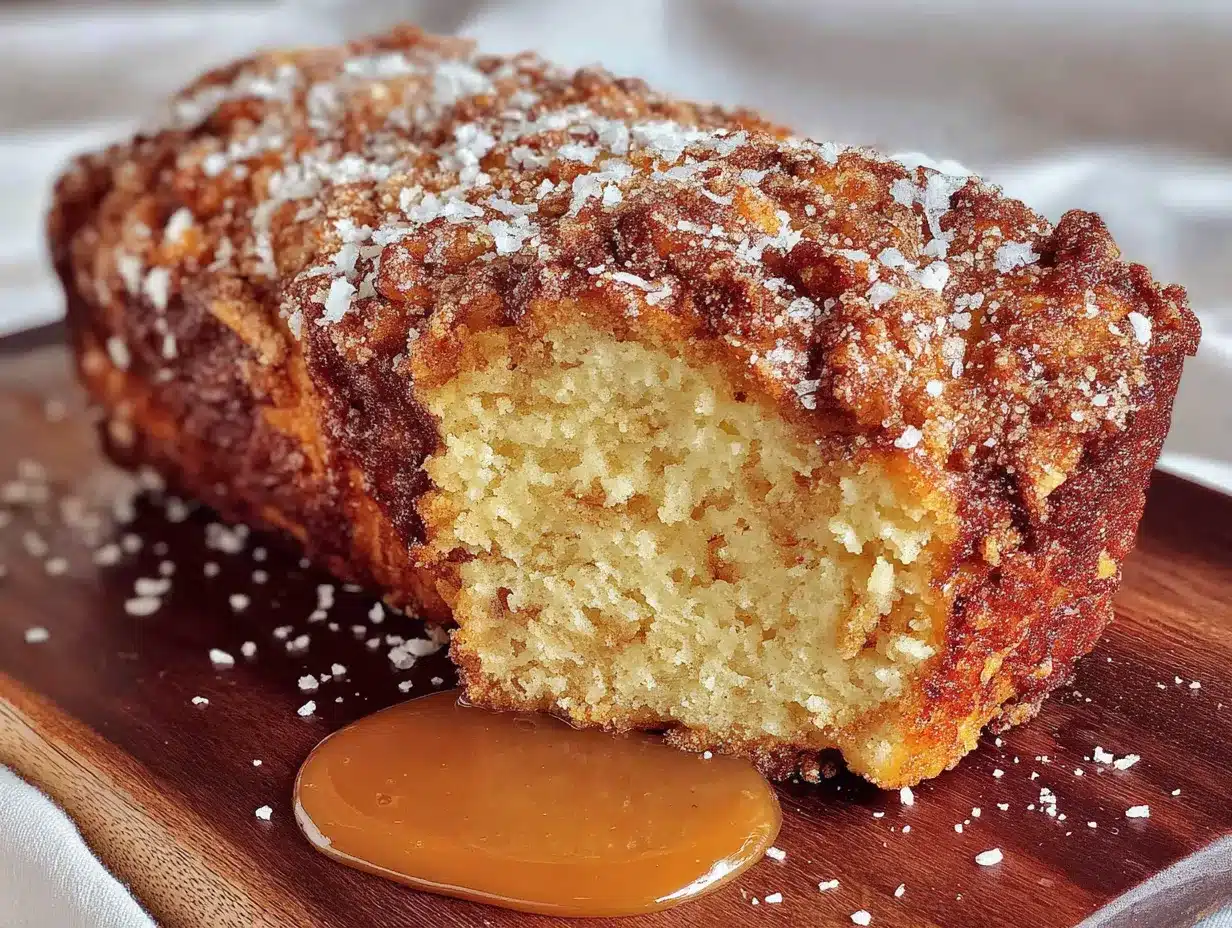
- ½ cup unsalted butter, melted
- ¾ cup granulated sugar
- 2 tablespoons ground cinnamon
Ingredient Tips: For the apple cider, look for the refrigerated kind in the produce section—it has a fresher, more vibrant flavor than the shelf-stable stuff. I’ve tried this recipe with both, and the refrigerated cider really does make a difference. If you’re dairy-free, you can substitute the butter with a good plant-based butter (I like Miyoko’s) and the buttermilk with a dairy-free milk mixed with lemon juice. The texture will be slightly different, but still delicious.
Equipment Needed
You don’t need a lot of fancy equipment for this cake, which is one of the reasons I love it. Here’s what you’ll need:
- A 10 to 12-cup bundt pan (this is non-negotiable—the shape is what gives you that perfect crust-to-cake ratio)
- A medium saucepan for reducing the apple cider
- A large mixing bowl and a medium mixing bowl
- An electric mixer (handheld or stand—I’ve used both, and they work equally well)
- A whisk for the dry ingredients
- A rubber spatula for scraping the bowl
- A pastry brush for applying the melted butter to the warm cake (or you can just use a spoon)
- A wire cooling rack
- A shallow dish or pie plate for the cinnamon sugar mixture
If you don’t have a bundt pan, you could technically use a 9×13 inch baking dish, but the bake time will be different (about 35-40 minutes) and you won’t get that same crust-to-cake ratio. I found my bundt pan at a thrift store for three dollars, so keep an eye out—they’re easy to find cheap. Just make sure to grease it really well, especially if it’s an older pan with scratches. I learned that lesson the hard way when half my first test cake stayed in the pan.
Preparation Method
Let’s walk through this step by step. I’ve included all the little details that make the difference between a good cake and a great one.
- Reduce the apple cider. Pour the 1 cup of apple cider into a small saucepan and bring it to a boil over medium-high heat. Reduce the heat to medium and let it simmer, stirring occasionally, until it reduces to about ¼ cup. This takes about 12-15 minutes. You’re looking for a syrupy consistency—it should coat the back of a spoon. Set it aside to cool while you prepare the rest. Don’t skip this step! It concentrates the apple flavor and removes excess liquid that would make your cake soggy.
- Preheat and prepare your pan. Preheat your oven to 350°F (175°C). Grease your bundt pan thoroughly with butter or non-stick baking spray—I use a baking spray that contains flour, and I’ve never had a sticking issue. Pay special attention to the center tube and all the crevices. If your pan has a lot of detail, use a pastry brush to get the butter into every groove.
- Mix the dry ingredients. In a medium bowl, whisk together the 2 ½ cups flour, 1 ½ teaspoons baking powder, ½ teaspoon baking soda, 1 teaspoon cinnamon, ½ teaspoon nutmeg, ¼ teaspoon cloves, and ½ teaspoon salt. Whisking aerates the flour and ensures everything is evenly distributed—no bites of pure baking powder.
- Cream the butter and sugar. In a large bowl, beat the ½ cup softened butter and 1 cup granulated sugar together with an electric mixer on medium speed until light and fluffy, about 3-4 minutes. You want it to look pale and almost doubled in volume. Scrape down the sides of the bowl halfway through.
- Add the eggs and vanilla. Add the 2 eggs one at a time, beating well after each addition. Then beat in the 1 teaspoon vanilla extract and the cooled, reduced apple cider. The mixture might look a little curdled at this point—that’s totally normal, don’t panic.
- Alternate adding dry ingredients and buttermilk. With the mixer on low speed, add about one-third of the dry ingredients, mixing just until combined. Then add half of the ½ cup buttermilk, mixing until incorporated. Repeat with another third of the dry ingredients, the remaining buttermilk, and finally the last of the dry ingredients. Mix until just combined—overmixing will make the cake tough. Use a rubber spatula to give it a few final folds, making sure you scrape the bottom of the bowl where unmixed flour likes to hide.
- Bake the cake. Pour the batter into the prepared bundt pan and spread it evenly. Bake at 350°F (175°C) for 40-45 minutes, or until a toothpick inserted near the center comes out clean or with just a few moist crumbs. The top should be golden brown and the cake should start pulling away from the edges of the pan slightly. Let the cake cool in the pan on a wire rack for exactly 10 minutes—no more, no less. If you let it cool too long, it will stick to the pan.
- Prepare the cinnamon sugar coating. While the cake is cooling, melt the ½ cup butter in a small bowl. In a shallow dish or pie plate, whisk together the ¾ cup sugar and 2 tablespoons cinnamon.
- Apply the crust. After 10 minutes, invert the cake onto the wire rack. While it’s still warm (this is crucial!), use a pastry brush to coat the entire cake with the melted butter. Then, working in sections, sprinkle or roll the buttered cake in the cinnamon sugar mixture. I like to hold the cake over the dish and use my hands to press the cinnamon sugar onto all the surfaces—the top, the sides, and especially the center hole area. Be generous; this is the best part.
- Cool completely. Let the cake cool completely on the wire rack before serving. The crust will set as it cools, creating that perfect crunchy shell.
Cooking Tips & Techniques
I’ve made this cake enough times to know where things can go wrong, so let me save you some trouble.
The biggest mistake is skipping the cider reduction. The first time I made this, I was impatient and just added the full cup of cider to the batter. The cake was dense and gummy—it never really baked through properly. Reducing the cider concentrates the apple flavor and removes the extra moisture that would ruin the texture. It takes 15 minutes, but it’s non-negotiable.
Room temperature ingredients matter. I know, I know—every recipe says this, and sometimes you just want to use cold butter straight from the fridge. But here’s the thing: cold butter doesn’t cream properly with sugar, which means your cake won’t have that light, tender crumb. Take the eggs and buttermilk out of the fridge 30 minutes before you start, and let the butter soften on the counter. Your cake will thank you.
The timing of the crust is everything. If you try to apply the butter and cinnamon sugar when the cake is too hot, the butter will just slide off and the sugar will melt into a sticky mess. If you wait too long, the cake will be cool and the butter won’t stick. That 10-minute cooling window in the pan is your sweet spot. I set a timer—no guessing.
Don’t overmix the batter. I’m guilty of this more than I’d like to admit. You want to mix just until the flour disappears. A few streaks of flour are fine; they’ll disappear as you fold. Overmixing develops the gluten and gives you a tough, rubbery cake. We want tender, not tough.
Grease your pan like you mean it. I cannot stress this enough. Use a pastry brush to get butter into every nook and cranny of your bundt pan. If you’re using a non-stick spray, make sure it’s the kind with flour in it. And if your pan is old and scratched, consider investing in a new one—or at least be extra generous with the grease. I lost a whole cake to a pan that looked fine but had hidden scratches. It was a sad day.
Variations & Adaptations
One of the best things about this cake is how adaptable it is. Here are some variations I’ve tried and loved:
- Gluten-Free Version: Substitute the all-purpose flour with a 1:1 gluten-free baking flour blend (I like King Arthur’s). The texture will be slightly more crumbly, but the flavor is still spot-on. Add ¼ teaspoon xanthan gum if your blend doesn’t already include it.
- Dairy-Free Version: Use plant-based butter in both the cake and the crust, and substitute the buttermilk with ½ cup dairy-free milk mixed with ½ tablespoon lemon juice. I’ve made this with oat milk and it worked beautifully.
- Spiced Apple Version: Fold in 1 cup of finely diced fresh apple (I use Honeycrisp or Granny Smith) into the batter before baking. It adds little pockets of tender apple throughout the cake. Just make sure the pieces are small—about ¼ inch—so they don’t sink to the bottom.
- Maple Glaze Version: Instead of the cinnamon sugar crust, make a simple glaze with 1 cup powdered sugar, 2 tablespoons maple syrup, and 1-2 tablespoons milk. Drizzle it over the cooled cake. It’s less crunchy but equally delicious.
- Mini Bundt Version: This batter makes about 6 mini bundt cakes. Bake them for 20-25 minutes instead of 40-45. They’re perfect for giving as gifts or for portion control (if that’s your thing).
My personal favorite variation is the spiced apple version with a little extra nutmeg. I made it for a fall potluck once, and someone asked me if I’d bought it from a bakery. That’s the kind of compliment you remember.
Serving & Storage Suggestions
This cake is best served warm, when the cinnamon sugar crust is still slightly crunchy and the inside is tender. But honestly, it’s fantastic at room temperature too—the flavors actually deepen as it sits.
How to serve: Slice the cake into wedges and serve it on its own, or with a dollop of lightly sweetened whipped cream. For an extra treat, warm individual slices in the microwave for 10-15 seconds before serving—it brings back that fresh-from-the-oven texture. This cake is also amazing with a hot cup of coffee or a glass of cold apple cider.
Storage: Store the cake in an airtight container at room temperature for up to 3 days. The crust will soften over time, but the flavor will still be wonderful. If you live in a humid environment, the crust might get sticky—just pop the slices in a 300°F oven for 5 minutes to re-crisp the outside.
Freezing: This cake freezes beautifully. Wrap the completely cooled cake (without the cinnamon sugar crust) tightly in plastic wrap, then in aluminum foil. Freeze for up to 3 months. When you’re ready to serve, thaw the cake at room temperature, then reheat it in a 350°F oven for 10 minutes. Brush with melted butter and coat with fresh cinnamon sugar just before serving. I’ve done this for Thanksgiving morning breakfast, and no one knew it wasn’t freshly baked.
Flavor development: Honestly, this cake is even better on day two. The apple cider flavor seems to mellow and deepen overnight, and the texture becomes even more tender. If you can resist eating it all on day one, you’re in for a treat.
Nutritional Information & Benefits
Let’s be real—this is a treat, not a health food. But that doesn’t mean it can’t have some redeeming qualities. Here’s the estimated nutritional breakdown per slice (based on 12 servings):
- Calories: 385
- Total Fat: 18g
- Saturated Fat: 11g
- Cholesterol: 75mg
- Sodium: 240mg
- Total Carbohydrates: 54g
- Dietary Fiber: 2g
- Sugars: 34g
- Protein: 5g
On the bright side, apple cider is a good source of antioxidants, particularly polyphenols, which can help reduce inflammation. Cinnamon has been shown to help regulate blood sugar levels, and nutmeg contains compounds that may support digestion. So while this isn’t a salad, it’s not completely devoid of redeeming qualities either. It’s a celebration cake, meant to be enjoyed in moderation with the people you love.
This recipe contains gluten, dairy, and eggs. For allergen-friendly options, check out the variations section above.
Frequently Asked Questions
Can I use apple juice instead of apple cider?
Technically yes, but the flavor won’t be as rich or tangy. Apple cider has a deeper, more complex flavor because it’s less filtered and often contains more apple solids. If you use apple juice, consider adding an extra ½ teaspoon of cinnamon to boost the apple pie flavor.
Why did my cake stick to the pan?
This usually happens for one of three reasons: the pan wasn’t greased well enough, the cake cooled too long in the pan, or the pan has scratches that create sticking points. Next time, use a pastry brush to get butter into every crevice, and set a timer for exactly 10 minutes of cooling before you invert the cake.
Can I make this cake ahead of time?
Absolutely! You can bake the cake a day ahead and store it wrapped tightly at room temperature. Just wait to apply the cinnamon sugar crust until the day you’re serving it—the crust stays crunchier that way. If you’ve already applied the crust and it’s softened, just reheat slices in a 300°F oven for 5 minutes.
How do I know when the cake is done baking?
The best test is a toothpick inserted near the center of the cake—it should come out clean or with just a few moist crumbs attached. The cake should also be golden brown on top and starting to pull away from the sides of the pan. If the top is browning too quickly but the center isn’t done, tent the pan loosely with aluminum foil for the last 10 minutes of baking.
Can I double this recipe?
Yes, it doubles beautifully. Use a 12-cup bundt pan or two 6-cup mini bundt pans. The bake time will be similar for a full-size pan, but start checking at 40 minutes. For mini bundts, bake for 20-25 minutes. Just make sure you have enough cinnamon sugar mixture—you’ll need about double for the coating.
Conclusion
This easy apple cider donut cake has become my go-to fall recipe for a reason. It captures everything I love about apple cider donuts—the warm spices, the tender crumb, that perfect crunchy cinnamon sugar crust—without the hassle of deep frying or dealing with a donut pan. It’s the kind of recipe that feels special enough for a holiday brunch but simple enough for a random Tuesday night craving (which is exactly how it came to be).
I hope you’ll make this cake your own. Maybe you’ll add a little extra cinnamon like I do, or maybe you’ll try the maple glaze version and fall in love with that instead. That’s the beauty of a simple, solid recipe—it leaves room for your own touches.
If you make this cake, I’d love to hear about it! Leave a comment below and let me know how it turned out, or share a photo of your creation. Did you try a variation? Did your family fight over the last slice? Tell me all about it. And if you’re looking for more fall baking inspiration, you might also love my crispy garlic chicken for a savory change of pace, or my pumpkin banana bread for another seasonal treat that disappears fast.
Happy baking, friends. May your kitchen smell like cinnamon and your coffee stay hot. 🍎
Pin This Recipe!
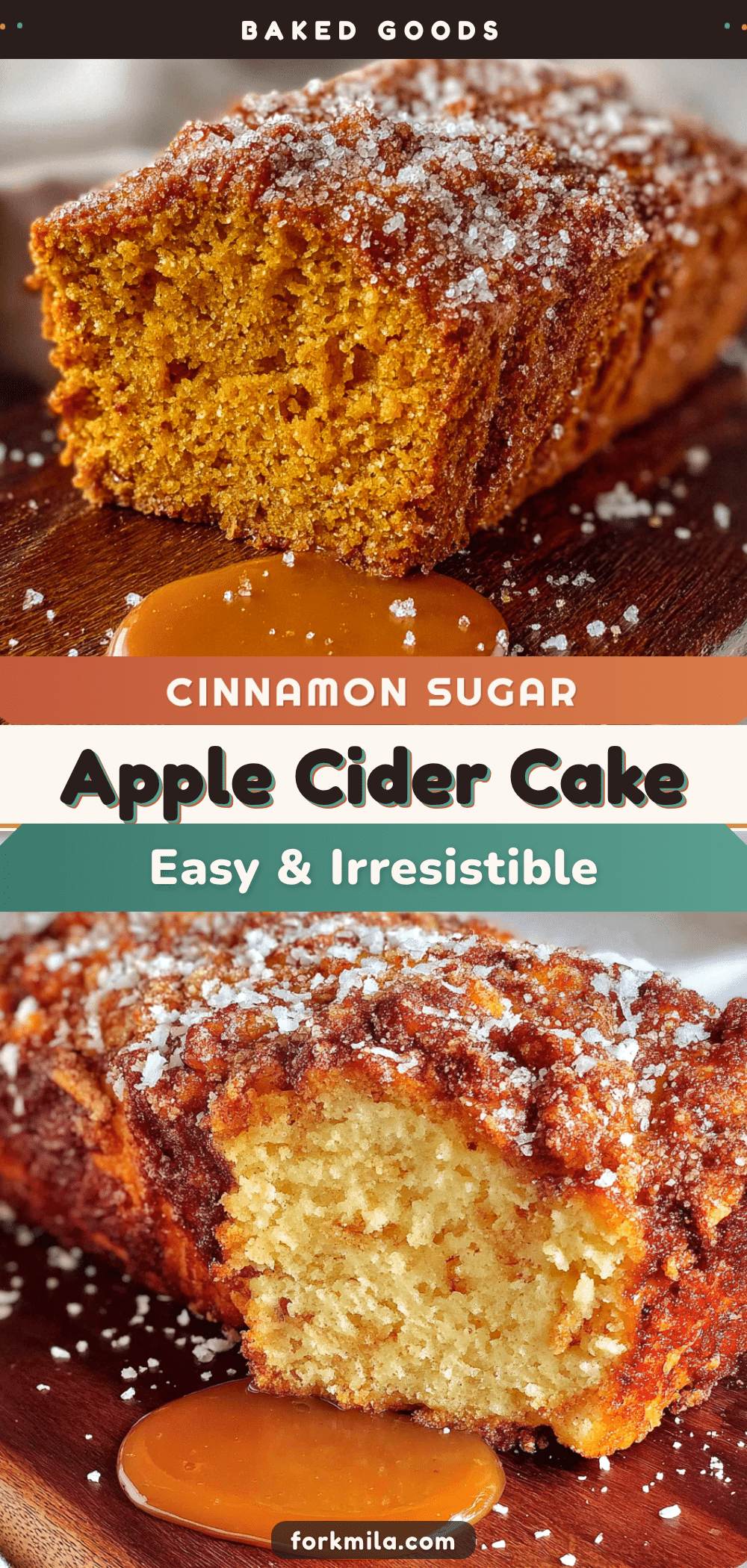
Easy Apple Cider Donut Cake with Perfect Cinnamon Crust
A tender, moist bundt cake that tastes exactly like the best apple cider donut, with a crunchy cinnamon sugar crust. No deep frying or donut pan needed—just simple ingredients and about an hour to warm, spiced perfection.
- Prep Time: 15 minutes
- Cook Time: 45 minutes
- Total Time: 1 hour
- Yield: 12 servings 1x
- Category: Dessert
- Cuisine: American
Ingredients
- 1 cup fresh apple cider
- 2 ½ cups all-purpose flour
- 1 ½ teaspoons baking powder
- ½ teaspoon baking soda
- 1 teaspoon ground cinnamon
- ½ teaspoon ground nutmeg
- ¼ teaspoon ground cloves
- ½ teaspoon salt
- ½ cup unsalted butter, softened
- 1 cup granulated sugar
- 2 large eggs, room temperature
- 1 teaspoon vanilla extract
- ½ cup buttermilk, room temperature
- ½ cup unsalted butter, melted (for crust)
- ¾ cup granulated sugar (for crust)
- 2 tablespoons ground cinnamon (for crust)
Instructions
- Reduce the apple cider: Pour 1 cup apple cider into a small saucepan and bring to a boil over medium-high heat. Reduce heat to medium and simmer, stirring occasionally, until reduced to about ¼ cup (12-15 minutes). Set aside to cool.
- Preheat oven to 350°F (175°C). Grease a 10-12 cup bundt pan thoroughly with butter or non-stick baking spray.
- In a medium bowl, whisk together flour, baking powder, baking soda, cinnamon, nutmeg, cloves, and salt.
- In a large bowl, beat softened butter and 1 cup sugar with an electric mixer on medium speed until light and fluffy (3-4 minutes).
- Add eggs one at a time, beating well after each. Beat in vanilla and cooled reduced apple cider (mixture may look curdled).
- With mixer on low, add dry ingredients in three additions, alternating with buttermilk, beginning and ending with dry ingredients. Mix just until combined; do not overmix.
- Pour batter into prepared bundt pan and spread evenly. Bake 40-45 minutes, until a toothpick inserted near center comes out clean or with a few moist crumbs.
- Cool cake in pan on a wire rack for exactly 10 minutes. Meanwhile, melt ½ cup butter for crust and mix ¾ cup sugar with 2 tablespoons cinnamon in a shallow dish.
- Invert cake onto wire rack. While still warm, brush entire cake with melted butter, then coat with cinnamon sugar mixture, pressing gently to adhere.
- Cool completely on wire rack before serving.
Notes
Don’t skip reducing the apple cider—it concentrates flavor and prevents a soggy cake. Room temperature ingredients are key for proper creaming. Apply the cinnamon sugar crust while the cake is still warm (after 10 minutes of cooling) for best adhesion. For a dairy-free version, use plant-based butter and buttermilk substitute. The cake freezes well without the crust for up to 3 months.
Nutrition
- Serving Size: 1 slice
- Calories: 385
- Sugar: 34
- Sodium: 240
- Fat: 18
- Saturated Fat: 11
- Carbohydrates: 54
- Fiber: 2
- Protein: 5
Keywords: apple cider donut cake, cinnamon sugar cake, fall dessert, bundt cake, apple cider recipe, easy cake