The smell hit me before I even got the front door open. I’d stopped by my neighbor Carla’s house to grab a book she’d promised to lend me, and honestly, I was only planning to stay five minutes. But that smell—warm peppers and onions caramelizing, chicken getting all crispy at the edges, something smoky and a little spicy in the air—it stopped me cold. I stood there in her entryway like a total weirdo, just inhaling.
Carla was in the kitchen, not even trying to impress anyone. She had on an old t-shirt, her hair was in a messy bun, and she was scrolling through her phone while something sizzled in the oven. “Oh, hey,” she said, like it was no big deal. “Grab that book off the counter. Want to stay for dinner? It’s just fajitas.” Just fajitas. She said it the way someone might say “just toast” or “just cereal.” But let me tell you, the way that kitchen smelled? That was not “just” anything.
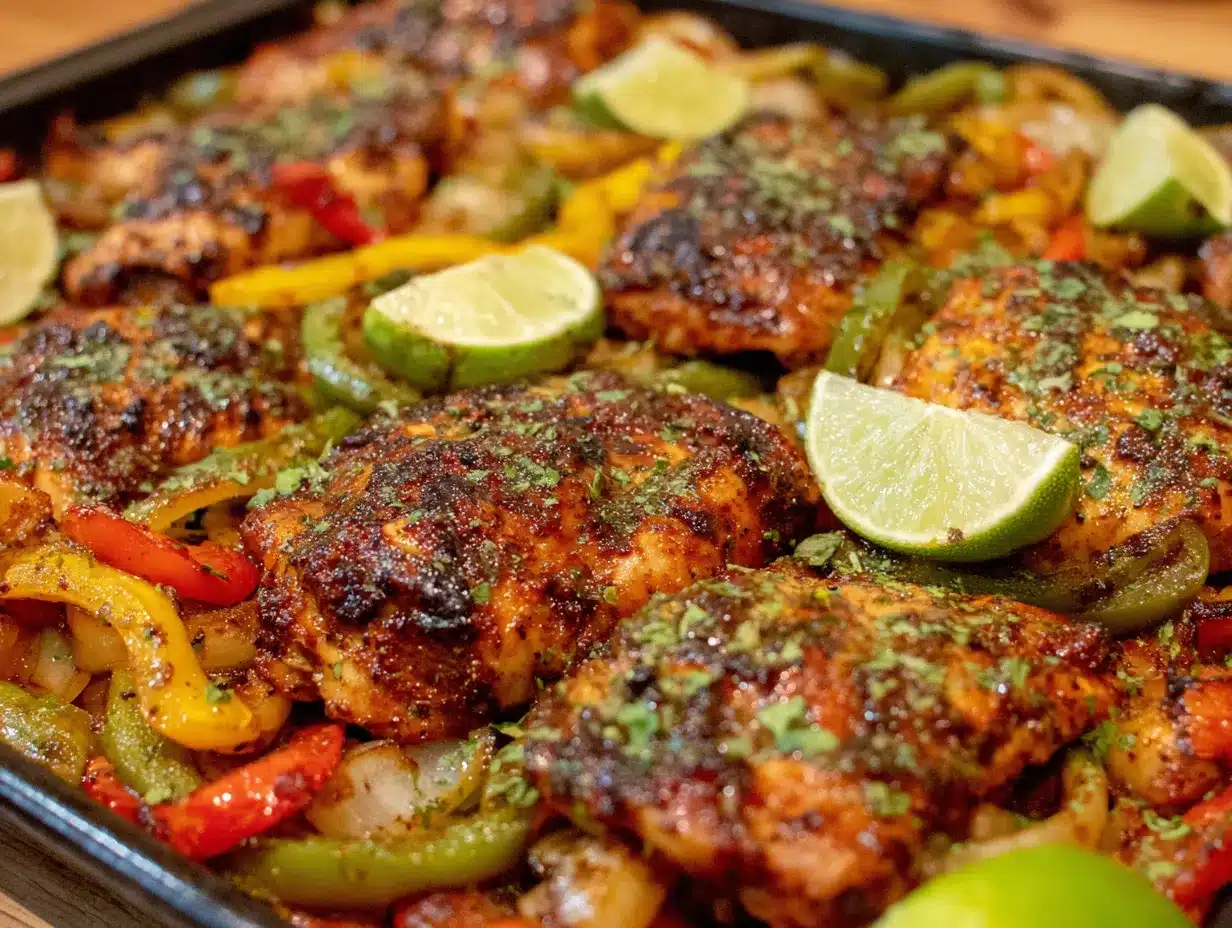
I watched her pull this sheet pan out of the oven, and I swear, the colors alone were gorgeous—bright red and yellow peppers, deep green strips of poblano, golden-brown chicken all lined up and ready to go. She tossed everything onto warm tortillas, added a squeeze of lime, and handed me a plate. That first bite was a revelation. The chicken was perfectly seasoned, the veggies were tender but not mushy, and there was this little char on everything that made it taste like it had taken way more effort than it actually did.
I asked her for the recipe, and she literally texted it to me while we were eating. That’s how simple it is. No marinating for hours, no standing over a hot stove, no piles of dishes. Maybe you’ve been there—starving after a long day, wanting something that actually tastes like a real meal but not wanting to spend your entire evening in the kitchen. This is that recipe. I’ve been making it ever since, and it never gets old.
Why You’ll Love This Recipe
Look, I’ve tested a lot of fajita recipes over the years. Some require marinating the chicken overnight. Others have you standing at the stove, cooking everything in batches like some kind of short-order cook. This sheet-pan version? It’s different. It’s the one I actually make on Tuesday nights when I’m tired and hungry and just want something good without the fuss.
- Ready in 30 Minutes: From start to finish, this comes together in about half an hour. No marinating, no complicated steps. Just chop, season, and bake.
- Simple Ingredients: You probably have most of these in your pantry right now. Chili powder, cumin, garlic powder—basic stuff. No fancy grocery store trips required.
- Perfect for Busy Weeknights: This is the definition of a weeknight hero. You can prep the veggies the night before, toss everything on a pan when you get home, and dinner’s ready before you’ve even changed out of your work clothes.
- Crowd-Pleaser: I’ve served this to picky kids, vegetarian friends (just skip the chicken and add extra peppers), and my dad who claims he doesn’t like “fancy food.” Everyone loves it.
- Unbelievably Delicious: The secret is in the high heat. The chicken gets those gorgeous caramelized edges, the peppers soften and sweeten, and everything gets this smoky char that tastes like you grilled it outside.
What makes this different from every other fajita recipe out there? It’s the technique. Roasting everything on a single sheet pan at high heat means the chicken stays juicy while the vegetables get perfectly tender. And the seasoning blend? I’ve tweaked it over dozens of batches to get that restaurant-quality flavor without any weird ingredients. It’s not just another version—it’s the version I make for my own family, the one my neighbor casually handed over like it was nothing, the one that’s been saving my weeknights ever since.
What Ingredients You Will Need
This recipe uses simple, wholesome ingredients that work together to create that classic fajita flavor without any fuss. Most of these are pantry staples or easy to find at any grocery store.
For the Chicken and Vegetables
- Boneless, skinless chicken breasts (about 1.5 pounds, or 680g) — I prefer to slice them into strips before cooking. They cook faster and soak up more of that seasoning. You can also use chicken thighs if you prefer darker meat; they’ll be even juicier.
- Bell peppers (3 large, mixed colors) — Red, yellow, and orange are sweetest. Green peppers work too, but they’re a little more bitter. I like using at least two colors for visual appeal.
- Poblano pepper (1 large) — This adds a mild heat and smoky flavor without being spicy. If you can’t find poblanos, use a green bell pepper instead.
- Red onion (1 large) — Sliced into thin wedges. Red onions get sweet and mellow when roasted. Yellow or white onions work too, but red is my favorite here.
- Avocado oil (3 tablespoons, or 45ml) — Avocado oil has a high smoke point, which is perfect for roasting at 425°F. Olive oil works too, but don’t use extra-virgin—it can burn.
For the Fajita Seasoning
- Chili powder (2 tablespoons) — This is the backbone of the flavor. I prefer Gebhardt for its deep, smoky taste, but any standard chili powder works.
- Ground cumin (1 tablespoon) — Cumin gives fajitas that warm, earthy flavor. Fresh cumin makes a big difference here—if yours has been sitting in the cabinet for years, it’s time to replace it.
- Garlic powder (2 teaspoons) — Not garlic salt! Garlic powder adds flavor without extra sodium.
- Smoked paprika (1 teaspoon) — This is optional, but it adds a lovely smokiness. Regular paprika works if that’s what you have.
- Dried oregano (1 teaspoon) — Mexican oregano is ideal, but Mediterranean oregano works too. Rub it between your palms before adding to release the oils.
- Salt (1.5 teaspoons) — I use fine sea salt. Adjust based on your preference and dietary needs.
- Black pepper (½ teaspoon) — Freshly ground is best.
For Serving
- Flour or corn tortillas (8-10 small, or 6 large) — Warm them directly over a gas flame or in a dry skillet. It makes a huge difference.
- Fresh lime wedges — Absolutely non-negotiable. The acidity brightens everything.
- Fresh cilantro (chopped) — For garnish. If you’re one of those people who thinks cilantro tastes like soap, leave it out.
- Sour cream or Greek yogurt — For cooling things down.
- Guacamole or sliced avocado — Because everything is better with avocado.
- Salsa (optional) — Your favorite jarred or homemade salsa works great.
Equipment Needed
The beauty of this recipe is that it doesn’t require much equipment. Here’s what you’ll need:
- Large sheet pan (18×13 inches, or half-sheet size) — A rimmed baking sheet is essential to catch all the juices. I’ve used the same Nordic Ware half-sheet pan for years and it still looks great. If you don’t have a large one, use two smaller pans—just make sure not to overcrowd them.
- Chef’s knife — A sharp knife makes slicing the peppers and onions so much easier. Dull knives are dangerous and frustrating.
- Cutting board — Any sturdy cutting board works. I prefer wood or bamboo.
- Large mixing bowl — For tossing everything with the seasoning. You can also do this right on the sheet pan if you’re trying to save dishes.
- Measuring spoons — For the spices. I use the same set I’ve had for a decade—nothing fancy.
- Tongs — For flipping the chicken halfway through cooking. Metal tongs are best for high heat.
- Small skillet or gas burner — For warming tortillas. You can also wrap them in foil and warm them in the oven during the last few minutes of cooking.
If you don’t have a sheet pan, a large baking dish will work in a pinch. Just know that the edges won’t get quite as crispy because the sides are higher. And if you don’t have tongs? Two forks work fine. I’ve done it.
Preparation Method
Alright, let’s get cooking. This comes together fast, so I like to have everything prepped before I turn on the oven. Trust me on this one—it makes the whole process smoother.
Step 1: Preheat and Prep
Preheat your oven to 425°F (220°C). Move the rack to the middle position. While the oven heats up, line your sheet pan with parchment paper or aluminum foil for easy cleanup. I’m not going to lie—I usually use foil because I hate scrubbing pans. If you’re using foil, spray it lightly with cooking spray so nothing sticks.
Step 2: Make the Seasoning
In a small bowl, combine 2 tablespoons chili powder, 1 tablespoon ground cumin, 2 teaspoons garlic powder, 1 teaspoon smoked paprika, 1 teaspoon dried oregano, 1.5 teaspoons salt, and ½ teaspoon black pepper. Whisk it together with a fork. Give it a sniff—it should smell warm and aromatic. If it doesn’t smell like much, your spices might be old. I learned this the hard way after making a batch of bland fajitas that tasted like nothing.
Step 3: Prep the Chicken and Vegetables
Slice 1.5 pounds of chicken breasts into thin strips, about ½-inch thick. Try to make them uniform so they cook evenly. I slice mine on a slight diagonal—it looks nicer and gives you more surface area for the seasoning to cling to.
Seed and slice 3 bell peppers into ¼-inch strips. Slice 1 poblano pepper the same way. Peel and slice 1 large red onion into thin wedges—not rings, wedges. They hold together better during roasting.
Step 4: Season Everything
Place the chicken strips and all the sliced vegetables in a large mixing bowl. Drizzle with 3 tablespoons of avocado oil and sprinkle the seasoning mixture over everything. Use your hands to toss and coat everything evenly. Yes, your hands will get messy. That’s fine. Wash them after. The seasoning gets into every crevice this way, and that’s what you want.
Here’s a tip I learned from making this dozens of times: don’t be shy with the oil. If everything looks dry, add another tablespoon. The oil helps the seasoning stick and promotes browning. Dry chicken = sad fajitas.
Step 5: Arrange on the Sheet Pan
Spread the seasoned chicken and vegetables in a single layer on your prepared sheet pan. Don’t overcrowd them. If everything is piled on top of each other, they’ll steam instead of roast, and you won’t get that beautiful char. If your pan looks too full, use a second pan or bake in two batches.
I like to arrange the chicken strips so they’re not touching each other too much. This gives them room to get those crispy, caramelized edges that everyone fights over.
Step 6: Roast
Roast for 15 minutes. After 15 minutes, remove the pan from the oven and use tongs to flip the chicken strips. Give the vegetables a quick stir too. Return to the oven and roast for another 10-15 minutes, until the chicken is cooked through (internal temperature of 165°F / 74°C) and the vegetables are tender with some charred spots.
Your kitchen is going to smell incredible at this point. I’m not kidding. The first time I made this, my husband walked in from work and asked what restaurant I’d ordered from. That’s the power of high-heat roasting.
Step 7: Warm the Tortillas
While the fajitas are roasting, warm your tortillas. If you have a gas stove, turn a burner to medium-low and place each tortilla directly on the grate for about 30 seconds per side. You’ll see it puff up and get little char marks. If you don’t have gas, heat a dry skillet over medium-high heat and warm each tortilla for about 30 seconds per side. Wrap them in a clean kitchen towel to keep them warm.
Step 8: Assemble and Serve
Once the chicken and vegetables are done, let them rest on the pan for 2-3 minutes. This lets the juices redistribute. Then pile everything onto your warm tortillas. Squeeze fresh lime juice over the top, add a dollop of sour cream or guacamole, sprinkle with fresh cilantro, and dig in.
The first bite should hit you with that smoky, savory flavor, followed by the brightness of the lime and the coolness of the cream. If it doesn’t, add more lime. Seriously—lime is the secret to making fajitas taste restaurant-quality.
Cooking Tips & Techniques
I’ve made this recipe more times than I can count, and I’ve learned a few things along the way. Here are my best tips for getting it right every time.
Don’t Skip the High Heat
425°F might seem high, but it’s essential. That high temperature is what gives the chicken those gorgeous browned edges and the vegetables that smoky char. If your oven runs hot or cold, get an oven thermometer. I thought my oven was accurate until I bought one and discovered it was running 25 degrees too low. No wonder my roasted vegetables were always soggy.
Cut Everything Uniformly
This is one of those boring cooking tips that actually matters. If your chicken strips are different sizes, some will be overcooked and dry while others are undercooked. Same with the vegetables. Take the extra 30 seconds to make everything roughly the same size. Your future self will thank you.
Flip for Even Cooking
Don’t skip the flip at the 15-minute mark. The bottom of the chicken and vegetables will be more exposed to the heat of the pan, so flipping ensures even cooking and browning. I’ve forgotten to do this before, and the results were uneven—some pieces were perfectly charred, others were pale and sad.
Use a Meat Thermometer
Chicken breasts are easy to overcook. The safest way to check doneness is with an instant-read thermometer. Insert it into the thickest piece of chicken—you’re looking for 165°F (74°C). Once it hits that temperature, pull it out immediately. Letting it rest for a few minutes will carry the heat through and keep it juicy.
Toast Your Spices
Here’s a pro tip: if you have an extra minute, toast your spices in a dry skillet over medium heat for 30-60 seconds before mixing them with the oil. It wakes up the flavors and makes everything taste more vibrant. I do this when I’m feeling fancy, but honestly, the recipe works great without it too.
Don’t Overload the Pan
This is the most common mistake I see. If your sheet pan is crowded, the ingredients will steam instead of roast. Use two pans if you need to. The extra minute of cleanup is worth it for perfectly roasted fajitas.
Variations & Adaptations
One of the best things about this recipe is how easy it is to adapt. Here are some of my favorite variations.
Make It Vegetarian
Skip the chicken and add extra vegetables. Portobello mushrooms are fantastic here—slice them thick and roast them alongside the peppers and onions. You can also add zucchini, yellow squash, or even cauliflower florets. The cooking time stays about the same.
Swap the Protein
This method works beautifully with other proteins. Try it with thinly sliced flank steak, shrimp (reduce cooking time to 8-10 minutes total), or even firm tofu. For shrimp, I toss them in the seasoning and add them to the pan for the last 8 minutes of cooking so they don’t overcook.
Change the Heat Level
If you like things spicy, add a sliced jalapeño or serrano pepper to the mix. You can also add ½ teaspoon of cayenne pepper to the seasoning blend. For a milder version, skip the poblano pepper and use all bell peppers. The recipe is forgiving that way.
Try Different Seasonings
This basic method works with all kinds of flavor profiles. Swap the chili powder and cumin for taco seasoning, or try a smoky chipotle blend by adding 1 teaspoon of chipotle powder. I’ve even made a lime-cilantro version by adding the zest of one lime and a handful of chopped cilantro to the seasoning.
Make It Low-Carb or Keto
Skip the tortillas and serve the fajita filling over cauliflower rice or a bed of lettuce. Load it up with guacamole, sour cream, and cheese. It’s still incredibly satisfying, and you won’t miss the tortillas at all.
Serving & Storage Suggestions
These fajitas are best served straight from the oven, but they’re also great for meal prep. Here’s how to handle leftovers.
Serving
Serve the chicken and vegetables straight from the sheet pan—it looks rustic and impressive. Set out a spread of warm tortillas, lime wedges, sour cream, guacamole, salsa, and fresh cilantro so everyone can build their own. I love watching people customize their fajitas. My husband loads his up with extra jalapeños, while my daughter goes heavy on the sour cream.
For drinks, a cold Mexican beer or a margarita pairs perfectly. If you’re keeping it non-alcoholic, try a tart limeade or horchata.
Storage
Store leftover chicken and vegetables in an airtight container in the refrigerator for up to 4 days. Keep the tortillas separate so they don’t get soggy. The flavors actually meld together and get even better overnight—I’ve been known to eat the leftovers cold straight from the fridge.
Reheating
For best results, reheat the filling in a skillet over medium-high heat for 2-3 minutes. This brings back some of the charred edges. You can also microwave it, but the texture won’t be as good. Warm the tortillas fresh—never microwave them. They get rubbery and sad.
Freezing
The cooked chicken and vegetables freeze well for up to 3 months. Let them cool completely, then transfer to a freezer-safe bag or container. To reheat, thaw overnight in the refrigerator and warm in a skillet. I like to double the recipe and freeze half for those nights when I don’t feel like cooking.
Nutritional Information & Benefits
This recipe is naturally gluten-free and can be made dairy-free by skipping the sour cream and cheese. It’s also packed with nutrients.
Per serving (approximately ⅙ of the recipe, without tortillas or toppings):
- Calories: 285
- Protein: 32g
- Carbohydrates: 12g
- Fiber: 4g
- Fat: 13g
- Vitamin C: 150% of daily value
- Vitamin A: 45% of daily value
Bell peppers are loaded with vitamin C—more than an orange, actually. They also contain vitamin A and various antioxidants. Chicken provides lean protein, which keeps you full and satisfied. And the spices? Cumin is known for its digestive benefits, and chili powder contains capsaicin, which may boost metabolism.
I’m not a nutritionist, and these numbers are estimates, but I feel good serving this to my family. It’s a balanced meal that doesn’t feel like “diet food.”
FAQs
Can I use frozen chicken for this recipe?
I don’t recommend it. Frozen chicken releases too much water as it thaws, which will steam everything instead of roasting it. If you’re in a pinch, thaw the chicken completely in the refrigerator first, then pat it dry with paper towels before slicing.
Can I make this ahead of time?
Absolutely. You can slice the chicken and vegetables and mix the seasoning up to 24 hours in advance. Store them separately in the refrigerator, then toss everything together right before roasting. You can also fully cook the fajitas and reheat them—they keep well for several days.
What if I don’t have a sheet pan?
Use a large baking dish or even a cast-iron skillet. Just make sure everything is in a single layer. If you’re using a smaller pan, you might need to cook in batches or use two pans.
Can I grill these instead of roasting?
Yes! Use a grill basket or foil packet to cook the chicken and vegetables over medium-high heat. Grill for about 10-12 minutes, stirring occasionally, until everything is charred and cooked through. The flavor will be even smokier.
How do I keep the tortillas warm?
Wrap warmed tortillas in a clean kitchen towel and place them in a warm oven (200°F) for up to 30 minutes. You can also use a tortilla warmer if you have one. Just don’t leave them out too long—they’ll dry out and crack.
Conclusion
This easy sheet-pan chicken fajita recipe has saved my weeknights more times than I can count. It’s the kind of meal that feels like a treat but takes almost no effort—the perfect combination for busy people who still want to eat well. Whether you’re cooking for a crowd or just yourself, this recipe delivers every single time.
I love that I can customize it based on what’s in my fridge or how much time I have. Some nights I load it up with extra veggies. Other nights I go heavy on the spice. It never gets boring, and it never lets me down.
If you try this recipe, I’d love to hear how it goes. Leave a comment below and let me know what variations you tried or how you served it. Did your family love it as much as mine does? Did you discover a new favorite spice blend? Share your fajita stories—I read every single one.
Now go preheat that oven. Dinner’s waiting.
Pin This Recipe!
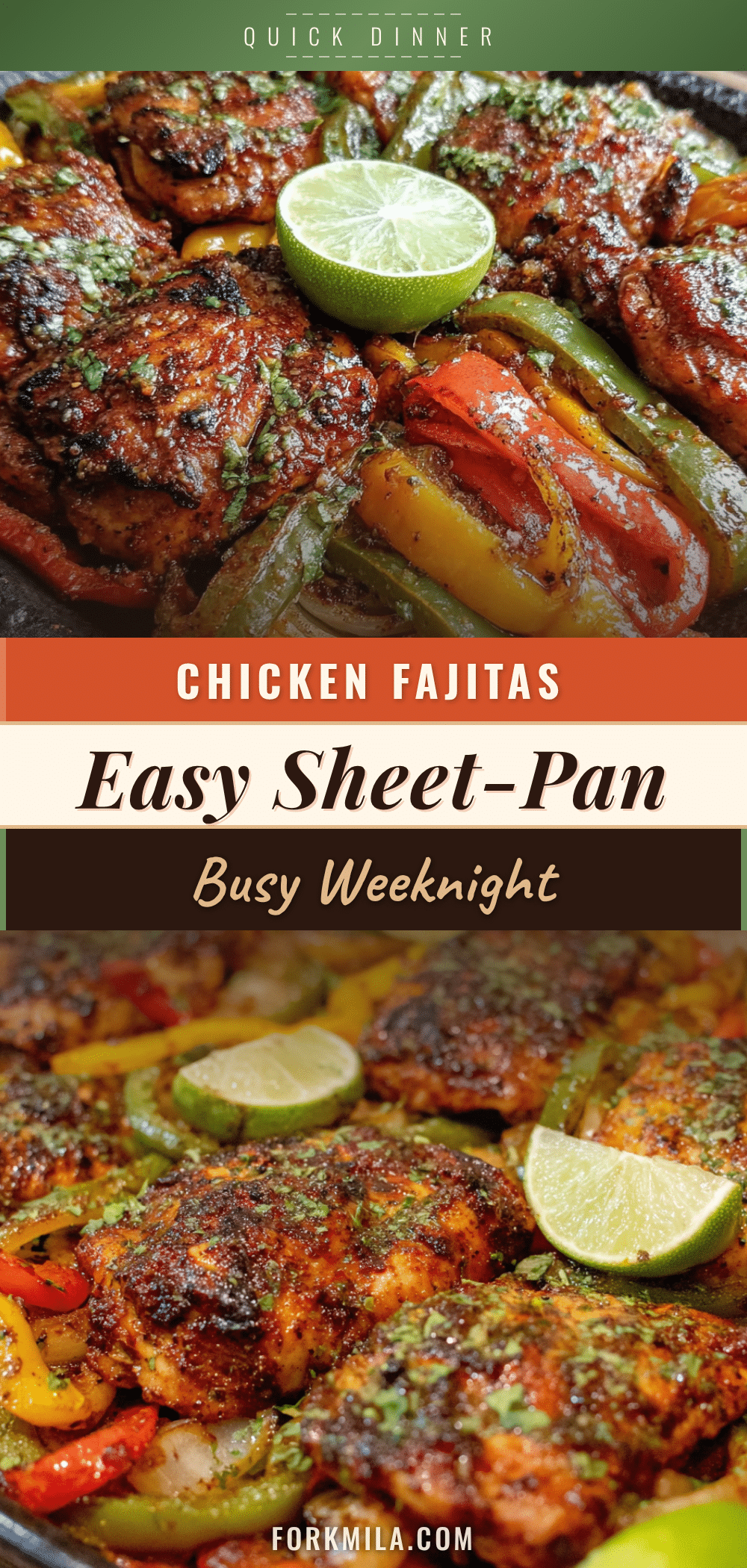
Easy Sheet-Pan Chicken Fajitas: The Best 30-Minute Weeknight Dinner
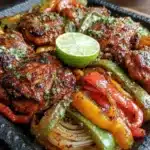
These sheet-pan chicken fajitas are a quick and easy weeknight dinner, ready in just 30 minutes. Juicy chicken strips and colorful bell peppers are roasted with a smoky, flavorful seasoning blend for a delicious meal that requires minimal effort and cleanup.
- Prep Time: 10 minutes
- Cook Time: 25 minutes
- Total Time: 35 minutes
- Yield: 6 servings 1x
- Category: Main Course
- Cuisine: Mexican
Ingredients
- 1.5 pounds (680g) boneless, skinless chicken breasts, sliced into thin strips
- 3 large bell peppers (mixed colors), sliced into ¼-inch strips
- 1 large poblano pepper, sliced into ¼-inch strips
- 1 large red onion, sliced into thin wedges
- 3 tablespoons (45ml) avocado oil
- 2 tablespoons chili powder
- 1 tablespoon ground cumin
- 2 teaspoons garlic powder
- 1 teaspoon smoked paprika
- 1 teaspoon dried oregano
- 1.5 teaspoons fine sea salt
- ½ teaspoon black pepper, freshly ground
- 8–10 small or 6 large flour or corn tortillas, warmed
- Fresh lime wedges, for serving
- Fresh cilantro, chopped, for garnish
- Sour cream or Greek yogurt, for serving
- Guacamole or sliced avocado, for serving
- Salsa (optional), for serving
Instructions
- Preheat oven to 425°F (220°C). Move rack to middle position. Line a large sheet pan (18×13 inches) with parchment paper or aluminum foil; if using foil, spray lightly with cooking spray.
- In a small bowl, combine chili powder, cumin, garlic powder, smoked paprika, oregano, salt, and black pepper. Whisk with a fork.
- Place chicken strips and sliced vegetables (bell peppers, poblano, red onion) in a large mixing bowl. Drizzle with avocado oil and sprinkle seasoning mixture over everything. Use your hands to toss and coat evenly.
- Spread seasoned chicken and vegetables in a single layer on the prepared sheet pan. Avoid overcrowding; use a second pan if needed.
- Roast for 15 minutes. Remove pan from oven and use tongs to flip chicken strips and stir vegetables. Return to oven and roast for another 10-15 minutes, until chicken is cooked through (internal temperature of 165°F / 74°C) and vegetables are tender with some charred spots.
- While fajitas roast, warm tortillas: either directly over a gas flame for about 30 seconds per side, or in a dry skillet over medium-high heat for about 30 seconds per side. Wrap in a clean kitchen towel to keep warm.
- Let chicken and vegetables rest on the pan for 2-3 minutes. Pile onto warm tortillas, squeeze fresh lime juice over the top, and add desired toppings (sour cream, guacamole, cilantro, salsa). Serve immediately.
Notes
For best results, cut chicken and vegetables uniformly. Don’t skip flipping halfway through. Use a meat thermometer to ensure chicken reaches 165°F. If your oven runs hot or cold, use an oven thermometer. For extra flavor, toast spices in a dry skillet for 30-60 seconds before mixing. Leftovers can be stored in an airtight container in the refrigerator for up to 4 days; reheat in a skillet for best texture.
Nutrition
- Serving Size: 1 serving (approxima
- Calories: 285
- Sugar: 6
- Sodium: 680
- Fat: 13
- Saturated Fat: 2
- Carbohydrates: 12
- Fiber: 4
- Protein: 32
Keywords: sheet pan chicken fajitas, easy fajitas, 30-minute dinner, weeknight dinner, chicken fajitas, sheet pan dinner