I wasn’t expecting cooking advice from my plumber, but there I was, standing in my kitchen while he fixed a leaky faucet, listening to him describe exactly how to make these roasted root vegetables. His name was Dave, and between tightening pipes, he told me about the pomegranate molasses his wife brought back from a trip to Lebanon. “She puts it on everything,” he said, wiping his hands on his coveralls. “But the root vegetables? That’s the one you gotta try.”
Honestly, I almost forgot about it. I mean, who takes cooking tips from the person fixing their garbage disposal? But a few weeks later, I was staring at a bag of carrots and parsnips in my fridge, wondering what to do with them for a quick weeknight side dish. And then I remembered Dave. The plumber. And his wife’s pomegranate molasses.
Let me tell you—that first batch was a happy accident. I didn’t have pomegranate molasses, so I used regular pomegranate juice and let it simmer down on the stove. The result? A sticky, tangy-sweet glaze that turned humble root vegetables into something almost fancy. The kitchen smelled amazing, like a cozy autumn evening, and I stood there eating a roasted carrot straight from the pan. Maybe you’ve been there—when a recipe surprises you so much you can’t stop picking at it before it even hits the table.
These Easy Pomegranate Glazed Roasted Root Vegetables have become my go-to for those nights when I need something fast, healthy, and honestly a little impressive without any extra effort. The glaze caramelizes in the oven, creating this beautiful glossy coat that makes the vegetables look like they belong at a holiday dinner. But here’s the thing—they come together in under 40 minutes with just a handful of ingredients. That’s the kind of magic we all need on a busy Tuesday night.
Why You’ll Love This Recipe
I’ve made this recipe more times than I can count, and it never gets old. It’s one of those dishes that feels special enough for company but easy enough for a regular weeknight when you’re tired and hungry. Here’s why it works so well:
- Quick & Easy: From start to finish, these roasted root vegetables are ready in about 35 minutes. The active prep time is maybe 10 minutes—just chop, toss, and roast. Perfect for those evenings when you walk in the door and need dinner on the table fast.
- Simple Ingredients: You probably have most of these in your kitchen right now. Carrots, parsnips, sweet potatoes—whatever root vegetables you have on hand. The pomegranate glaze uses just juice, honey, and a few pantry staples. No fancy grocery trips required.
- Perfect for Busy Weeknights: This recipe respects your time. While the vegetables roast, you can focus on the main dish or just sit down for a few minutes. It’s the kind of side dish that doesn’t demand constant attention.
- Crowd-Pleaser: I’ve served these at family dinners, holiday gatherings, and casual weeknight meals. Kids love the sweetness, and adults appreciate the sophisticated flavor. Everyone goes back for seconds.
- Unbelievably Delicious: The combination of caramelized roasted vegetables with that tangy-sweet pomegranate glaze is next-level comfort food. The edges get crispy, the centers stay tender, and the glaze creates this sticky, glossy finish that tastes like something from a fancy restaurant.
What makes this recipe different from other roasted vegetable recipes is the glaze technique. Instead of just drizzling pomegranate juice over the vegetables, I simmer it down first to concentrate the flavor and create that beautiful syrupy consistency. This simple step makes all the difference—it’s not just another roasted vegetable recipe. It’s the roasted vegetable recipe you’ll keep coming back to.
This is the kind of dish that makes you close your eyes after the first bite. It’s comfort food reimagined—healthier, faster, but with the same soul-soothing satisfaction. And honestly, it’s perfect for impressing guests without any stress, or turning a simple weeknight meal into something memorable.
What Ingredients You Will Need
This recipe uses simple, wholesome ingredients to deliver bold flavor and satisfying texture without the fuss. Most of these are pantry staples, and the pomegranate glaze comes together with just a few key components.
For the Roasted Vegetables
- 2 large carrots, peeled and cut into 1-inch chunks (about 2 cups)
- 2 large parsnips, peeled and cut into 1-inch chunks (about 2 cups)
- 1 medium sweet potato, peeled and cut into 1-inch cubes (about 2 cups)
- 1 medium red onion, cut into wedges (adds sweetness when roasted)
- 2 tablespoons olive oil (I prefer extra virgin for better flavor)
- 1/2 teaspoon salt
- 1/4 teaspoon black pepper
- 1/2 teaspoon dried thyme (or fresh if you have it)
- 1/2 teaspoon garlic powder
For the Pomegranate Glaze
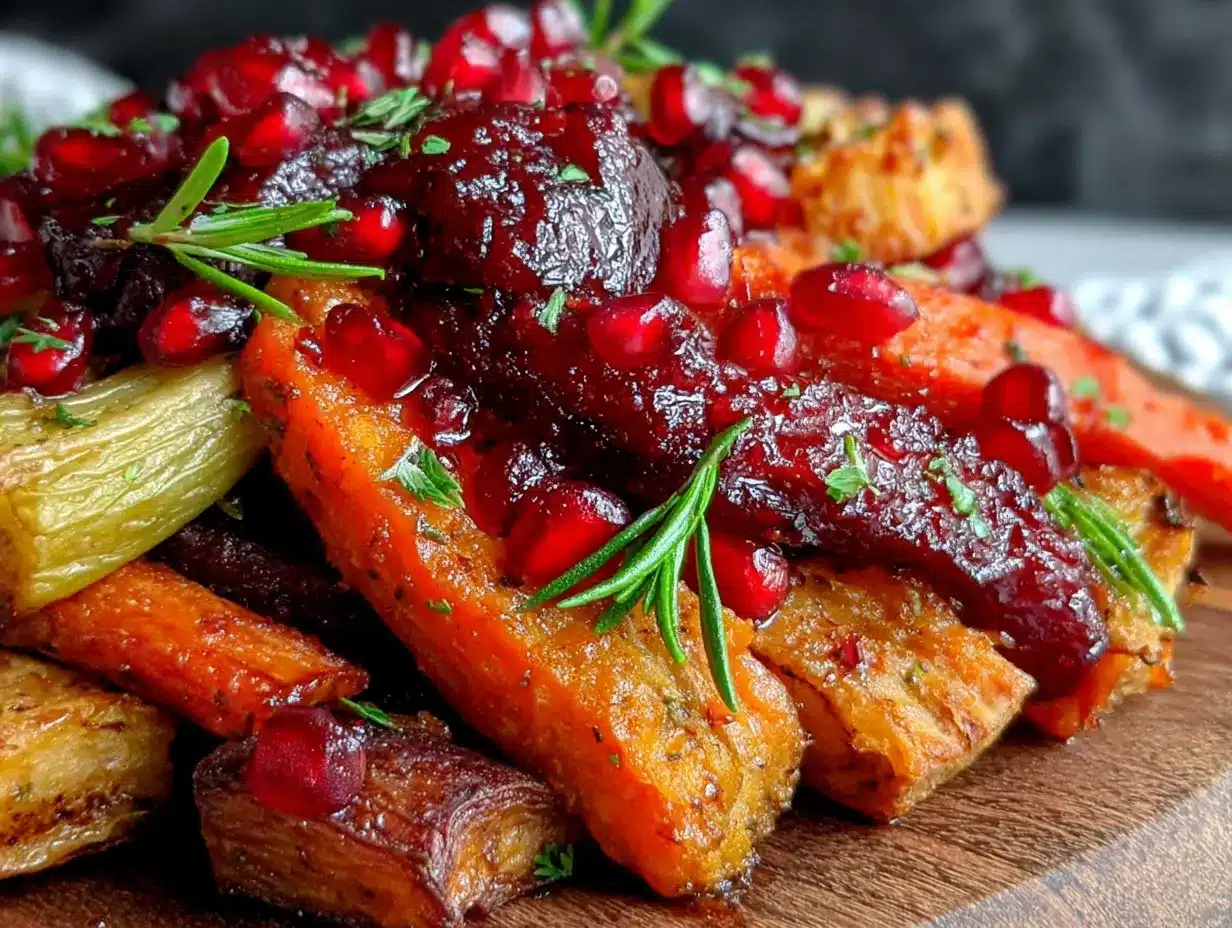
- 1 cup pomegranate juice (100% juice, not from concentrate works best)
- 2 tablespoons honey (or maple syrup for a vegan option)
- 1 tablespoon balsamic vinegar (adds depth and balances the sweetness)
- 1 teaspoon Dijon mustard (helps emulsify the glaze)
- 1/4 teaspoon cinnamon (optional but adds warmth)
For Garnish
- 2 tablespoons fresh pomegranate arils (seeds) for a pop of color and texture
- 1 tablespoon fresh parsley, chopped (optional)
I recommend using POM Wonderful pomegranate juice for the glaze—it’s consistently rich and not too tart. For the vegetables, look for firm, medium-sized carrots and parsnips without any soft spots. If you can’t find parsnips, you can substitute with turnips or just add more carrots and sweet potatoes.
For a seasonal twist, try adding cubed butternut squash in the fall or asparagus in the spring. The glaze works beautifully with almost any vegetable combination. And if you’re out of balsamic vinegar, apple cider vinegar makes a good substitute—just use a little less since it’s more acidic.
Equipment Needed
You don’t need any fancy equipment for this recipe, which is exactly what we want on a busy weeknight. Here’s what you’ll need:
- Large baking sheet (half-sheet pan works best for even roasting)
- Parchment paper or aluminum foil for easy cleanup
- Small saucepan for simmering the glaze
- Chef’s knife and cutting board for chopping vegetables
- Mixing bowl for tossing vegetables with oil and seasonings
- Measuring cups and spoons
- Spatula or tongs for flipping vegetables halfway through
If you don’t have a large baking sheet, you can use two smaller ones—just make sure the vegetables are in a single layer so they roast instead of steam. I’ve used both rimmed and rimless baking sheets, and both work fine. Parchment paper is my favorite for easy cleanup, but aluminum foil works too.
For the glaze, any small saucepan will do. I use a 1-quart saucepan, and it’s the perfect size. If you don’t have a saucepan, you can simmer the glaze in a small skillet—just watch it closely since it will reduce faster with more surface area.
Preparation Method
Let me walk you through this step by step. I’ve made this recipe dozens of times, so I’ll share all the little tricks I’ve learned along the way.
- Preheat your oven to 425°F (220°C). Getting the oven hot is crucial for caramelization. While it’s heating up, line a large baking sheet with parchment paper for easy cleanup.
- Make the pomegranate glaze first. In a small saucepan, combine 1 cup pomegranate juice, 2 tablespoons honey, 1 tablespoon balsamic vinegar, 1 teaspoon Dijon mustard, and 1/4 teaspoon cinnamon if using. Bring to a simmer over medium heat, then reduce the heat to low and let it bubble gently for about 10-12 minutes. You want it to reduce by about half, until it’s syrupy and coats the back of a spoon. Stir occasionally to prevent burning. Pro tip: The glaze will thicken more as it cools, so don’t let it get too thick on the stove.
- While the glaze simmers, prep your vegetables. Peel the carrots, parsnips, and sweet potato. Cut them into 1-inch chunks—try to keep them similar in size so they cook evenly. Cut the red onion into wedges, leaving the root end intact so the layers stay together. I know it’s tempting to cut smaller pieces for faster cooking, but 1-inch chunks give you that perfect crispy exterior with a tender interior.
- Toss the vegetables with oil and seasonings. In a large mixing bowl, combine the chopped vegetables with 2 tablespoons olive oil, 1/2 teaspoon salt, 1/4 teaspoon black pepper, 1/2 teaspoon dried thyme, and 1/2 teaspoon garlic powder. Use your hands or a spatula to make sure every piece is coated. This step is important—the oil helps the vegetables caramelize and the seasonings stick.
- Spread the vegetables in a single layer on the prepared baking sheet. Make sure they’re not crowded—give them some space so they roast instead of steam. If they’re too crowded, use a second baking sheet. I learned this the hard way after making soggy vegetables one too many times.
- Roast for 20 minutes, then flip. After 20 minutes, remove the baking sheet from the oven and use a spatula or tongs to flip the vegetables. This ensures even browning. Return to the oven and roast for another 10-15 minutes, until the vegetables are tender and golden brown with crispy edges. The total roasting time is about 30-35 minutes.
- Glaze the vegetables. When the vegetables are done, transfer them to a serving dish. Drizzle the pomegranate glaze over the top and toss gently to coat. You don’t need to use all the glaze—start with half and add more to taste. The glaze should coat the vegetables in a thin, glossy layer without making them soggy.
- Garnish and serve. Sprinkle fresh pomegranate arils and chopped parsley over the top. The arils add a burst of tartness that balances the sweetness of the glaze. Serve immediately while the vegetables are still warm and the glaze is sticky.
One more thing—if you’re making this for a holiday meal or special occasion, you can prep the vegetables and make the glaze a day ahead. Just store them separately in the refrigerator, then roast and glaze right before serving. It’s a real time-saver when you’re juggling multiple dishes.
Cooking Tips & Techniques
After making these roasted root vegetables more times than I can count, I’ve picked up a few tricks that make a real difference. Here’s what I wish someone had told me from the start:
Don’t skip the parboil for denser vegetables. If you’re using particularly thick sweet potatoes or carrots, you might want to parboil them for 3-4 minutes before roasting. This ensures they cook through without burning on the outside. I learned this after serving undercooked sweet potato chunks to my family one night—they were nice about it, but I knew better.
Keep an eye on the glaze while it simmers. Pomegranate juice can go from perfectly syrupy to burnt sugar in a matter of seconds. I always set a timer for 8 minutes and then watch it closely after that. If it starts to smell caramelized, it’s done. And if you accidentally reduce it too much, just add a splash of water and whisk it back together.
Cut your vegetables the same size. I cannot stress this enough. Uneven pieces mean some will be perfectly roasted while others are either raw or mushy. Take the extra 30 seconds to make sure your chunks are uniform. Your future self will thank you.
Use the middle rack of your oven. Roasting on the top rack can burn the glaze, and the bottom rack might not give you enough caramelization. The middle rack is the sweet spot for even cooking and beautiful browning.
Don’t overcrowd the pan. This is probably the most common mistake people make with roasted vegetables. If the pieces are touching or overlapping, they’ll steam instead of roast. Give them space, and if you need to use two pans, do it. It’s worth the extra dish.
Let the vegetables rest for a minute before glazing. If you add the glaze while the vegetables are piping hot, it can slide right off. Let them cool for just a minute or two, then toss with the glaze. This helps the glaze stick and creates that beautiful glossy finish.
Double the glaze if you like extra. I always make a double batch of the glaze because I love drizzling extra over the finished dish. It’s also amazing on roasted chicken or drizzled over a grain bowl the next day.
Variations & Adaptations
One of the best things about this recipe is how adaptable it is. I’ve tried several variations over the years, and they’ve all been delicious in their own way.
Seasonal Vegetable Swap: In the fall, I love using butternut squash and Brussels sprouts instead of the parsnips and sweet potatoes. The Brussels sprouts get crispy and caramelized, and the squash adds a natural sweetness that pairs perfectly with the pomegranate glaze. In the spring, try asparagus and radishes—just reduce the roasting time since they cook faster.
Spicy Version: For a little heat, add 1/4 teaspoon cayenne pepper or red pepper flakes to the glaze. The spicy-sweet combination is incredible, and it gives the dish a nice kick that warms you up on a cold night. I made this version for a dinner party once, and it was the first dish to disappear.
Herb Variations: Instead of thyme, try rosemary or sage for a different flavor profile. Rosemary adds an earthy, pine-like aroma that works beautifully with the sweet glaze. Sage gives it a more rustic, almost Thanksgiving-like feel. Fresh herbs are always best, but dried work perfectly fine.
Vegan Option: Simply swap the honey for maple syrup or agave nectar. The flavor will be slightly different—maple syrup adds a deeper, woodsy sweetness—but it’s just as delicious. I’ve made it both ways, and honestly, I can’t decide which I prefer.
Add Protein: For a complete one-pan meal, add chickpeas or tofu to the baking sheet during the last 15 minutes of roasting. The chickpeas get crispy and soak up the glaze beautifully. I’ve also added chicken thighs to the same pan—just increase the roasting time to about 40 minutes and check for doneness.
Low-Carb Adaptation: Replace the sweet potatoes with cauliflower florets or radishes. Cauliflower gets beautifully caramelized and absorbs the glaze wonderfully. Radishes lose their spiciness when roasted and become surprisingly sweet and tender.
Serving & Storage Suggestions
These roasted root vegetables are versatile enough to pair with almost any main dish. Here’s how I like to serve and store them:
Serving Temperature: These are best served warm, straight from the oven when the glaze is still sticky and the vegetables are at their crispiest. That said, they’re also delicious at room temperature, which makes them perfect for potlucks or holiday buffets.
Presentation: I like to serve them on a large platter or in a shallow serving bowl. The vibrant colors—orange from the carrots, golden from the parsnips, and deep red from the pomegranate arils—make a beautiful presentation. A sprinkle of fresh parsley or mint adds a nice green contrast.
Complementary Dishes: These vegetables pair beautifully with roasted chicken, grilled steak, or pan-seared salmon. For a vegetarian meal, serve them over a bed of quinoa or farro with a dollop of Greek yogurt or tahini sauce. They’re also fantastic alongside a hearty grain bowl with roasted chickpeas and a lemony dressing.
Beverage Pairings: A crisp white wine like Sauvignon Blanc or a light Pinot Noir complements the sweet-tart flavors beautifully. For a non-alcoholic option, try sparkling water with a splash of pomegranate juice.
Storage Instructions: Store any leftovers in an airtight container in the refrigerator for up to 4 days. The vegetables will soften over time, but the flavor will actually deepen and become more complex. I often make a double batch just for leftovers—they’re that good the next day.
Reheating Tips: The best way to reheat these is in a 350°F (175°C) oven for about 10 minutes. This helps restore some of the crispiness. You can also reheat them in a skillet over medium heat for 5-7 minutes, stirring occasionally. Avoid the microwave if you can—it makes them soggy.
Freezer Instructions: You can freeze the roasted vegetables (without the glaze) for up to 3 months. Spread them on a baking sheet and freeze until solid, then transfer to a freezer bag. When ready to use, reheat in a 400°F (200°C) oven for 15-20 minutes, then toss with fresh glaze.
Flavor Development: Honestly, these vegetables taste even better the next day. The glaze soaks into the vegetables overnight, creating a deeper, more complex flavor. I’ve been known to make them a day ahead on purpose, just for that incredible flavor.
Nutritional Information & Benefits
These roasted root vegetables aren’t just delicious—they’re packed with nutrients that make you feel good about eating them. Here’s a quick breakdown:
Estimated Nutritional Values (per serving, about 1 cup):
- Calories: 180
- Total Fat: 7g
- Saturated Fat: 1g
- Carbohydrates: 30g
- Fiber: 5g
- Sugar: 16g
- Protein: 3g
- Vitamin A: 200% DV
- Vitamin C: 25% DV
- Potassium: 500mg
Health Benefits: Root vegetables are nutritional powerhouses. Carrots are loaded with beta-carotene, which supports eye health and immune function. Sweet potatoes provide complex carbohydrates for sustained energy, plus fiber for digestive health. Parsnips are rich in folate and vitamin C. And pomegranate juice is packed with antioxidants that fight inflammation and support heart health.
Dietary Considerations: This recipe is naturally gluten-free, dairy-free, and nut-free. With the maple syrup substitution, it’s also vegan-friendly. It’s a great option for anyone following a Mediterranean diet or looking to add more vegetables to their meals.
Potential Allergens: None of the common allergens are present in this recipe, but always check your ingredients if you have specific sensitivities. Some commercial pomegranate juices may contain added sugars or preservatives.
Personally, I love that this recipe lets me enjoy something that tastes indulgent while still being good for me. It’s the kind of dish that makes eating your vegetables feel like a treat rather than a chore.
Conclusion
These Easy Pomegranate Glazed Roasted Root Vegetables have become a staple in my kitchen for good reason. They’re quick enough for a busy weeknight, impressive enough for company, and healthy enough to feel good about serving to your family. The combination of caramelized vegetables with that tangy-sweet glaze is honestly something special.
I hope you give this recipe a try and make it your own. Maybe you’ll add a little extra cinnamon, or swap in your favorite seasonal vegetables. That’s the beauty of a recipe like this—it’s a starting point that you can adapt to whatever you have on hand.
If you make these, I’d love to hear how they turned out. Drop a comment below and let me know what variations you tried, or share a photo of your creation. And if you’re looking for more quick and easy weeknight recipes, be sure to check out my crispy garlic chicken and one-pan lemon herb salmon—they pair perfectly with these roasted vegetables.
Happy cooking, friends! Here’s to making weeknight dinners a little more delicious and a lot less stressful.
Frequently Asked Questions
Can I use frozen vegetables for this recipe?
I don’t recommend using frozen vegetables for this recipe. Frozen vegetables release a lot of moisture as they thaw, which prevents them from getting that beautiful caramelization and crispy edges. Fresh vegetables really do make a difference here. If you’re short on time, you can prep the vegetables a day ahead and store them in the fridge.
How do I know when the glaze is thick enough?
The glaze is ready when it coats the back of a spoon and leaves a clear trail when you run your finger through it. It should be syrupy but still pourable. Remember that it will continue to thicken as it cools, so it’s better to take it off the heat a little early than to let it get too thick. If you accidentally over-reduce it, just whisk in a tablespoon of water.
Can I make this recipe without pomegranate juice?
Absolutely! If you don’t have pomegranate juice, you can substitute with cranberry juice, cherry juice, or even orange juice mixed with a splash of lemon juice. Each will give a slightly different flavor, but they all work beautifully. Cranberry juice will be more tart, while orange juice will be sweeter and brighter.
Why are my roasted vegetables soggy instead of crispy?
This usually happens for one of three reasons: the oven isn’t hot enough, the vegetables are too crowded on the baking sheet, or they were cut too small. Make sure your oven is fully preheated to 425°F, give the vegetables plenty of space on the pan, and cut them into 1-inch chunks. If they’re still soggy, try roasting them for an additional 5-10 minutes with the convection setting if you have it.
How can I make this recipe ahead for a holiday meal?
This is perfect for make-ahead holiday cooking! You can prep the vegetables and make the glaze up to 2 days in advance. Store the chopped vegetables in an airtight container in the fridge, and keep the glaze in a separate container. On the day of your meal, simply roast the vegetables and toss with the glaze right before serving. You can even reheat the glaze gently on the stove if it has thickened too much in the fridge.
Pin This Recipe!
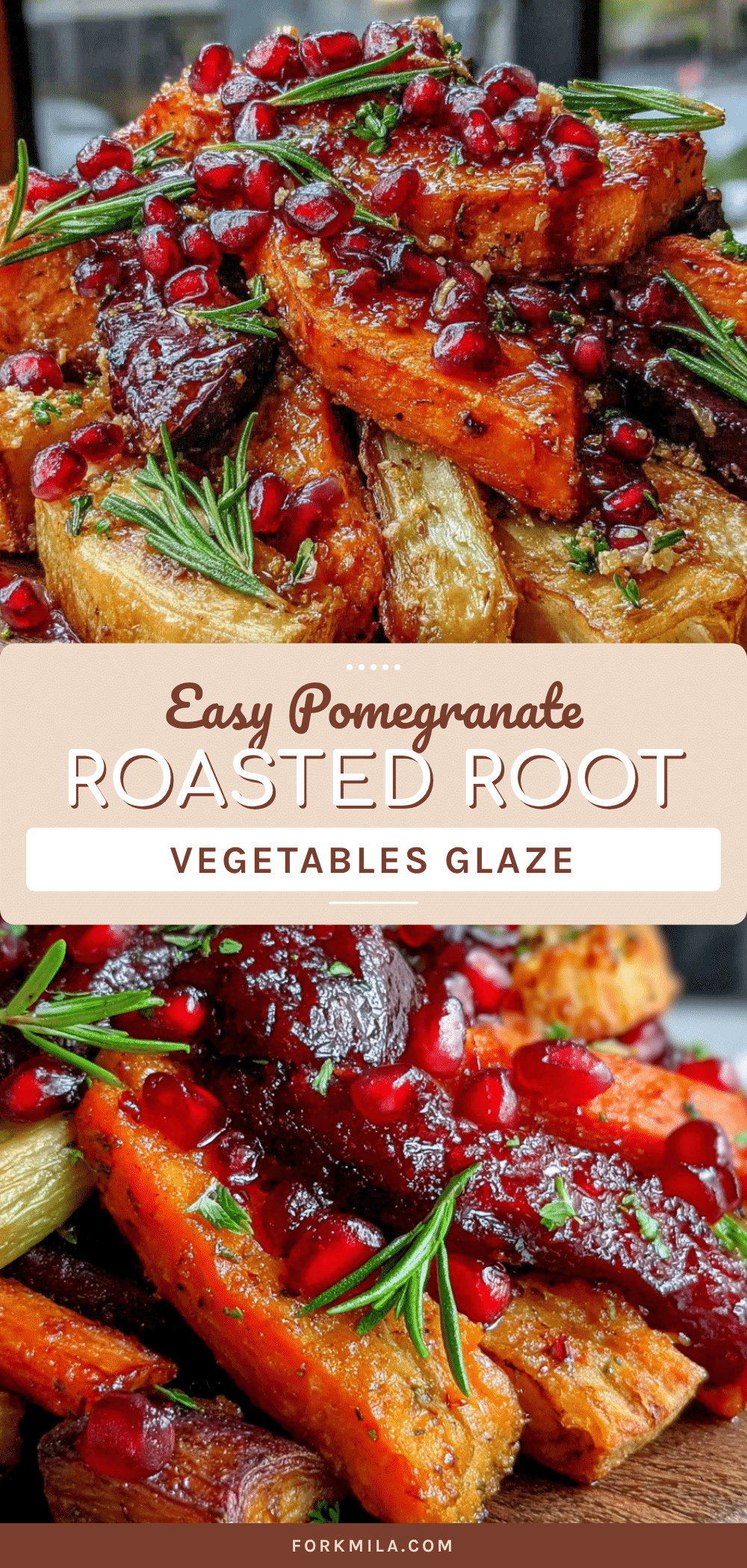
Perfect Pomegranate Glazed Roasted Root Vegetables

These Easy Pomegranate Glazed Roasted Root Vegetables are a quick, healthy, and impressive side dish that comes together in under 40 minutes. The tangy-sweet pomegranate glaze caramelizes in the oven, creating a beautiful glossy coat that makes humble root vegetables taste like something from a fancy restaurant.
- Prep Time: 10 minutes
- Cook Time: 30 minutes
- Total Time: 40 minutes
- Yield: 4 servings 1x
- Category: Side Dish
- Cuisine: Mediterranean
Ingredients
- 2 large carrots, peeled and cut into 1-inch chunks (about 2 cups)
- 2 large parsnips, peeled and cut into 1-inch chunks (about 2 cups)
- 1 medium sweet potato, peeled and cut into 1-inch cubes (about 2 cups)
- 1 medium red onion, cut into wedges
- 2 tablespoons olive oil
- 1/2 teaspoon salt
- 1/4 teaspoon black pepper
- 1/2 teaspoon dried thyme
- 1/2 teaspoon garlic powder
- 1 cup pomegranate juice (100% juice, not from concentrate)
- 2 tablespoons honey (or maple syrup for vegan)
- 1 tablespoon balsamic vinegar
- 1 teaspoon Dijon mustard
- 1/4 teaspoon cinnamon (optional)
- 2 tablespoons fresh pomegranate arils (seeds) for garnish
- 1 tablespoon fresh parsley, chopped (optional)
Instructions
- Preheat your oven to 425°F (220°C). Line a large baking sheet with parchment paper.
- Make the pomegranate glaze: In a small saucepan, combine 1 cup pomegranate juice, 2 tablespoons honey, 1 tablespoon balsamic vinegar, 1 teaspoon Dijon mustard, and 1/4 teaspoon cinnamon if using. Bring to a simmer over medium heat, then reduce heat to low and let bubble gently for 10-12 minutes until reduced by half and syrupy. Stir occasionally. The glaze will thicken more as it cools.
- While the glaze simmers, prep the vegetables: Peel carrots, parsnips, and sweet potato. Cut into 1-inch chunks. Cut red onion into wedges, leaving root end intact.
- In a large mixing bowl, toss the chopped vegetables with 2 tablespoons olive oil, 1/2 teaspoon salt, 1/4 teaspoon black pepper, 1/2 teaspoon dried thyme, and 1/2 teaspoon garlic powder until evenly coated.
- Spread the vegetables in a single layer on the prepared baking sheet, ensuring they are not crowded.
- Roast for 20 minutes, then flip the vegetables. Return to the oven and roast for another 10-15 minutes until tender and golden brown with crispy edges (total roasting time 30-35 minutes).
- Transfer roasted vegetables to a serving dish. Drizzle with pomegranate glaze and toss gently to coat. Start with half the glaze and add more to taste.
- Garnish with fresh pomegranate arils and chopped parsley. Serve immediately while warm.
Notes
For denser vegetables like thick sweet potatoes, parboil for 3-4 minutes before roasting. Watch the glaze closely while simmering to prevent burning. Cut vegetables into uniform 1-inch chunks for even cooking. Use the middle rack of the oven. Do not overcrowd the pan. Let vegetables rest for a minute before glazing to help the glaze stick. Double the glaze if you like extra. Store leftovers in an airtight container in the refrigerator for up to 4 days. Reheat in a 350°F oven for 10 minutes or in a skillet over medium heat for 5-7 minutes. Freeze roasted vegetables (without glaze) for up to 3 months.
Nutrition
- Serving Size: 1 cup
- Calories: 180
- Sugar: 16
- Sodium: 500
- Fat: 7
- Saturated Fat: 1
- Carbohydrates: 30
- Fiber: 5
- Protein: 3
Keywords: roasted root vegetables, pomegranate glaze, easy side dish, healthy vegetables, weeknight dinner, holiday side dish, gluten-free, dairy-free