There used to be a diner on Route 9, just past the old farm stand that always closed by August, that made a meatloaf that defied logic. It wasn’t fancy—the place had sticky vinyl booths and a jukebox that only played songs from 1988—but that meatloaf had a glaze so sticky-sweet and a texture so tender that people drove forty minutes just for a slice. When the diner closed in 2019 (the owner retired, the building became a vape shop, which honestly felt like a personal insult), I went through a real grieving period. I mean, I tried every meatloaf recipe I could find online, and none of them came close. After fourteen tries—fourteen!—I finally cracked the code. This is that meatloaf. The one with the brown sugar glaze that caramelizes into a candy-like crust, the one that stays moist even on day three, the one that makes you close your eyes after the first bite. Maybe you’ve been there, chasing a flavor from a place that no longer exists. Let me tell you, it’s worth the hunt.
I remember the Tuesday night I finally nailed it. I had a cracked Pyrex measuring cup that kept leaking, and I’d forgotten to buy ketchup, so I had to use a half-empty bottle from the back of the fridge. That’s the thing about recreating a memory—sometimes the imperfections make it better. The glaze caught just right, the meatloaf held its shape without crumbling, and when I pulled it from the oven, the whole kitchen smelled like that diner. My neighbor, a guy named Frank who never comments on anything, knocked on my door to ask what I was cooking. That’s how I knew I had it. This recipe stays with you because it’s not just food—it’s a time machine wrapped in brown sugar and ground beef.
Why You’ll Love This Recipe
Let me be straight with you: this isn’t just another meatloaf recipe. This is the meatloaf that gets requested for birthday dinners, the one that disappears at potlucks before the mac and cheese, the one that makes people ask for the recipe before they’ve finished chewing. Here’s what makes it special.
- That Brown Sugar Glaze : The glaze is the star here—it’s not just a ketchup smear. It’s a thick, caramelized layer that gets slightly crispy on the edges and sticky-sweet in the center. It’s the kind of glaze that makes you scrape the pan.
- Incredibly Moist Texture : I’ve tested this with different meat blends, and the secret is a combination of ground beef and ground pork, plus a panade (that’s a fancy word for bread soaked in milk) that keeps every bite tender. No dry meatloaf here.
- Simple Pantry Ingredients : You probably have everything already. Onions, garlic, eggs, breadcrumbs, ketchup, brown sugar. No trips to specialty stores, no hunting for obscure spices.
- Perfect for Entertaining : This is the dish you make when you want to impress without stress. It comes together in under 20 minutes of active prep, then the oven does the work. Your guests will think you slaved all day.
- Crowd-Pleaser Guaranteed : Kids love the sweet glaze. Adults love the savory, satisfying flavor. Even picky eaters go back for seconds. I’ve served this to over fifty people at a holiday party, and every single slice disappeared.
- Leftovers That Shine : Cold meatloaf sandwiches the next day? Yes, please. The flavors actually deepen overnight, making day-two meatloaf even better than day one.
What sets this apart from every other recipe? It’s the balance. Most meatloaf recipes either go too heavy on the ketchup or too dry on the breadcrumbs. This one hits that sweet spot where the meat is savory, the glaze is sweet, and everything works together like a perfectly tuned engine. It’s comfort food at its finest—the kind that makes you feel like everything’s going to be okay.
What Ingredients You Will Need
This recipe uses simple, honest ingredients that come together to create something greater than the sum of their parts. Most of these are pantry staples, but I’ve included notes on what to look for to get the best results.
For the Meatloaf
- Ground Beef (2 lbs / 900g) : I recommend 80/20 blend—the fat keeps the meatloaf moist. Leaner blends (like 90/10) will result in a drier loaf. If you can find it, grass-fed beef adds a nice depth of flavor.
- Ground Pork (1 lb / 450g) : This is my secret weapon. Pork adds fat and tenderness that beef alone can’t match. You can substitute with all beef, but you’ll miss that extra juiciness.
- Yellow Onion (1 medium, finely diced) : About 1 cup. Don’t skip this—onions add moisture and sweetness. I prefer yellow over white or red for its balanced flavor.
- Garlic (3 cloves, minced) : Fresh garlic only. The jarred stuff has a different flavor profile that doesn’t work as well here.
- Breadcrumbs (1 cup / 120g) : Plain or Italian-style both work. Panko breadcrumbs give a lighter texture, while traditional breadcrumbs make a denser loaf. I’ve used both and prefer traditional for this recipe.
- Whole Milk (1/2 cup / 120ml) : This soaks into the breadcrumbs to create a panade, which keeps the meatloaf tender. You can substitute with 2% or even oat milk, but whole milk gives the best results.
- Large Eggs (2) : These bind everything together. Make sure they’re at room temperature for easier mixing.
- Worcestershire Sauce (2 tablespoons) : Adds that deep, savory umami flavor. I prefer Lea & Perrins brand—it’s the gold standard.
- Ketchup (1/4 cup / 60ml) : For the meat mixture itself. Use a good-quality ketchup like Heinz or a organic brand if you prefer.
- Dijon Mustard (1 tablespoon) : This cuts through the richness and adds a subtle tang. Don’t skip it—you won’t taste it directly, but you’ll miss it if it’s gone.
- Dried Thyme (1 teaspoon) : Earthy and slightly floral, thyme pairs beautifully with beef. You can substitute with dried oregano or Italian seasoning.
- Salt (1 teaspoon) : I use kosher salt. If you’re using table salt, reduce to 3/4 teaspoon.
- Black Pepper (1/2 teaspoon) : Freshly ground is always better.
For the Brown Sugar Glaze
- Ketchup (1/2 cup / 120ml) : The base of the glaze. Don’t use fancy flavored ketchup—stick with classic.
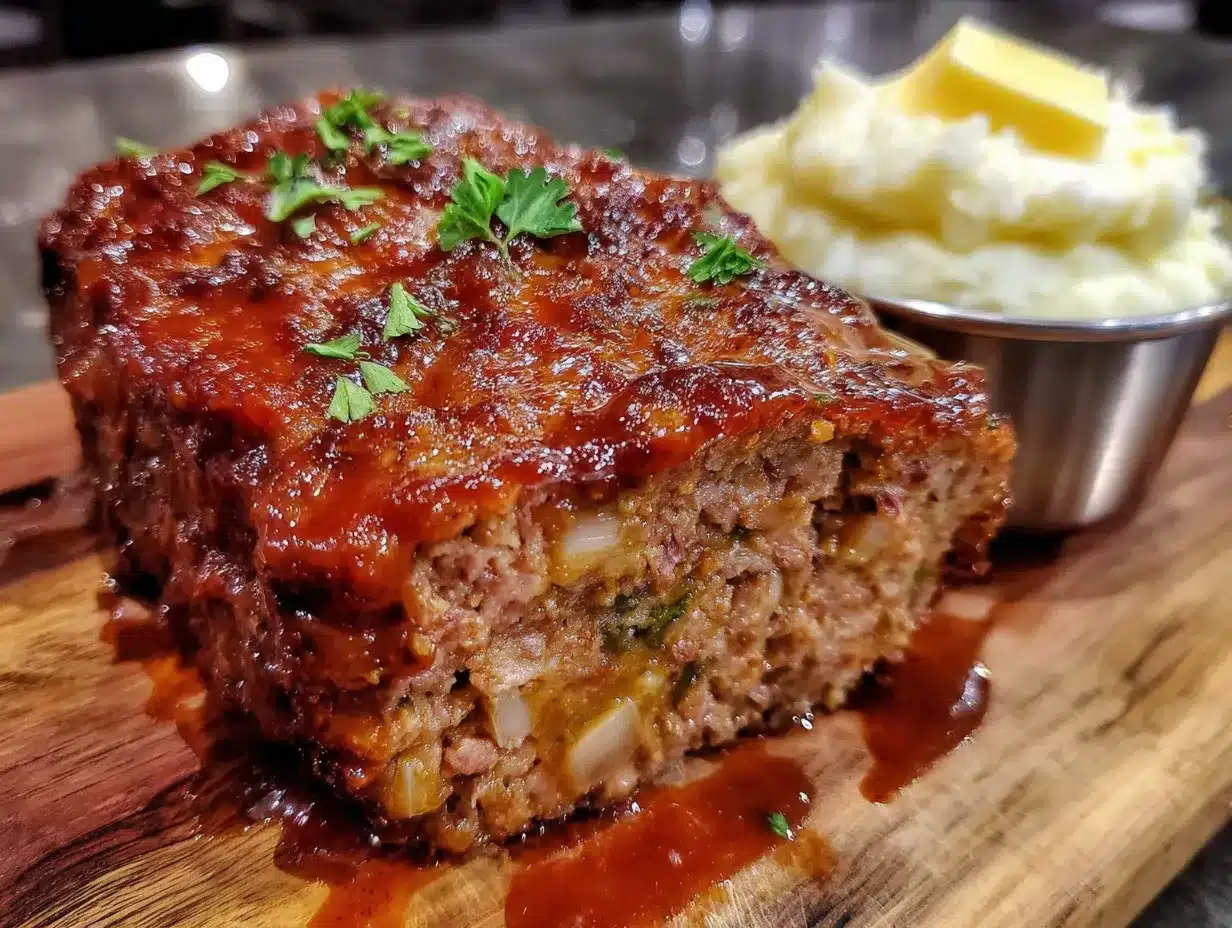
- Brown Sugar (1/3 cup / 70g) : Packed firmly. Light brown sugar gives a milder caramel flavor, while dark brown sugar adds deeper molasses notes. I use dark brown sugar for that diner-style intensity.
- Apple Cider Vinegar (1 tablespoon) : This balances the sweetness and adds a tangy kick. White vinegar works in a pinch, but apple cider vinegar adds a subtle fruitiness.
- Worcestershire Sauce (1 teaspoon) : Just a touch to deepen the savory side of the glaze.
- Garlic Powder (1/2 teaspoon) : Not the same as fresh garlic, but it works perfectly in the glaze.
One thing I’ve learned the hard way: don’t skip the panade. I once thought I could just toss in dry breadcrumbs and call it a day. The result was a meatloaf that crumbled like a bad relationship. Soaking the breadcrumbs in milk for five minutes before mixing is non-negotiable. Trust me on this.
Equipment Needed
You don’t need a professional kitchen to make this meatloaf. Here’s what you’ll need, along with some alternatives if you’re working with limited tools.
- Large Mixing Bowl : You need space to get your hands in there and mix everything thoroughly. A stainless steel bowl works great, but any large bowl will do.
- Measuring Cups and Spoons : Accuracy matters, especially for the glaze. If you don’t have measuring spoons, use the “pinch and hope” method at your own risk.
- Chef’s Knife : For dicing the onion and mincing the garlic. A sharp knife makes this job so much easier. If your knife is dull, you’ll end up with uneven onion pieces.
- Cutting Board : Any stable surface works. I prefer wood or bamboo because they’re gentler on knife blades.
- Loaf Pan (9×5 inch / 23×13 cm) : This is the standard size. If you only have an 8×4 inch pan, your meatloaf will be taller and may need extra cooking time. You can also shape the meatloaf free-form on a baking sheet lined with parchment paper.
- Small Bowl : For mixing the glaze. Any small bowl works—I use a cereal bowl most of the time.
- Whisk or Fork : For combining the glaze ingredients. A fork works perfectly fine if you don’t have a whisk.
- Meat Thermometer : This is optional but highly recommended. The USDA says meatloaf is safe at 160°F (71°C), but I prefer pulling it at 155°F (68°C) and letting carryover cooking bring it to 160°F. This prevents overcooking.
- Parchment Paper : Lining the loaf pan makes cleanup a breeze. You can skip this, but you’ll be scrubbing caramelized glaze off the pan for a while.
- Cooling Rack : Letting the meatloaf rest on a rack allows air to circulate, preventing the bottom from getting soggy. If you don’t have one, just tilt the pan slightly to let juices run off.
I’ll be honest—I made this recipe for years without a meat thermometer. I just used the “cut into it and hope it’s done” method. It worked most of the time, but there were some close calls. If you make meatloaf regularly, a $10 thermometer is a worthwhile investment.
Preparation Method
Alright, let’s get cooking. This recipe takes about 15 minutes of active prep and about an hour of oven time. Here’s how to nail it every single time.
Step 1: Preheat and Prep
Preheat your oven to 350°F (175°C). While it’s heating, line your loaf pan with parchment paper, leaving some overhang on the sides. This makes it easy to lift the meatloaf out later. If you’re shaping it free-form, line a baking sheet with parchment paper instead.
Step 2: Make the Panade
In your large mixing bowl, combine the breadcrumbs and milk. Stir them together until the breadcrumbs are fully saturated. Let this sit for 5 minutes while you prep the other ingredients. The breadcrumbs will absorb the milk and turn into a soft, paste-like mixture. This is your panade, and it’s the key to a tender meatloaf. Don’t rush this step.
Step 3: Sauté the Aromatics
Heat a small skillet over medium heat. Add a drizzle of olive oil (about 1 teaspoon), then add the diced onion. Cook for 4-5 minutes, stirring occasionally, until the onions are translucent and starting to soften. Add the minced garlic and cook for another 30 seconds until fragrant. Remove from heat and let it cool slightly. Why sauté first? Raw onions release water during cooking, which can make the meatloaf mushy. Sautéing them first concentrates their flavor and removes excess moisture. I learned this after making a few batches that tasted more like onion soup than meatloaf.
Step 4: Mix the Meatloaf
To the bowl with the panade, add the ground beef, ground pork, sautéed onions and garlic, eggs, Worcestershire sauce, ketchup, Dijon mustard, dried thyme, salt, and pepper. Now, here’s the important part: use your hands to mix everything together. I know it’s messy, but your hands are the best tool for this job. You want to mix until everything is just combined—overmixing will make the meatloaf tough. Stop when you can’t see any streaks of egg or pockets of breadcrumbs. It should look uniform but not overworked.
Step 5: Shape the Loaf
Transfer the meat mixture to your prepared loaf pan. Press it gently into the pan, making sure there are no air pockets. Shape it so the top is slightly domed—this gives you a nice presentation. If you’re going free-form, shape the meat into a loaf shape on your baking sheet, about 2 inches high. Make sure the edges are smooth and even so it cooks uniformly.
Step 6: Make the Glaze
In your small bowl, combine the ketchup, brown sugar, apple cider vinegar, Worcestershire sauce, and garlic powder. Whisk until the brown sugar is fully dissolved. The mixture should be thick and glossy. Taste it—it should be sweet with a tangy kick. If it’s too sweet for your liking, add another splash of vinegar. If it’s too tangy, add a bit more brown sugar.
Step 7: Apply the Glaze
Spoon about half of the glaze over the top of the meatloaf. Use the back of the spoon to spread it evenly, letting some drip down the sides. Reserve the remaining glaze for later. Don’t use all of it now—you’ll add more during the last 15 minutes of baking for that perfect caramelized crust.
Step 8: Bake
Place the meatloaf in the preheated oven and bake for 45 minutes. After 45 minutes, remove the meatloaf from the oven and spoon the remaining glaze over the top. Spread it evenly. Return to the oven and bake for another 15-20 minutes. The internal temperature should reach 160°F (71°C) when measured with a meat thermometer inserted into the center. The glaze should be bubbling and dark, with some caramelized edges.
Step 9: Rest and Serve
Remove the meatloaf from the oven and let it rest in the pan for 10 minutes. This is crucial—if you slice it immediately, it will fall apart. The resting time allows the juices to redistribute and the structure to set. After 10 minutes, use the parchment paper overhang to lift the meatloaf out of the pan. Transfer to a cutting board. Slice into 1-inch thick pieces and serve warm.
I’ll never forget the time I forgot to add the eggs. I was rushing, the kids were yelling, and I just dumped everything into the bowl without thinking. The meatloaf came out of the oven looking beautiful, but when I tried to slice it, it crumbled into a pile of meaty rubble. It still tasted good (we ate it with forks), but it was a mess. So double-check your ingredients before you start mixing.
Cooking Tips & Techniques
After making this recipe more times than I can count, I’ve collected a few tricks that make the process smoother and the results more consistent. Here’s what I’ve learned.
Don’t Overmix : I mentioned this earlier, but it bears repeating. Mixing develops the protein in the meat, which can make your meatloaf tough and dense. Mix just until the ingredients are combined. You should still see small flecks of onion and herbs, not a uniform paste.
Use a Meat Thermometer : I know I sound like a broken record, but this is the single best investment you can make for meatloaf success. Oven temperatures vary, pan sizes vary, and meat blends vary. The only reliable way to know if your meatloaf is done is to check the internal temperature. Pull it at 155°F (68°C) and let carryover cooking bring it to 160°F (71°C) during resting.
Let It Rest : This is the hardest part, I know. The smell fills your kitchen, everyone’s hungry, and you just want to slice into that beautiful loaf. But trust me on this one. If you cut into it too soon, the juices will run out onto the cutting board, leaving you with a dry meatloaf. Ten minutes of patience makes all the difference.
Make a Foil Tent : If the glaze starts getting too dark before the meatloaf is fully cooked, loosely tent a piece of aluminum foil over the top. This prevents the sugar in the glaze from burning while the inside continues cooking. I’ve had to do this a few times when my oven runs hot.
Line Your Pan : Parchment paper is your friend. The brown sugar glaze gets incredibly sticky as it caramelizes, and scrubbing it off a metal pan is a nightmare. With parchment paper, you just lift the meatloaf out and toss the paper. Easy cleanup.
Double the Recipe : Meatloaf freezes beautifully. If you’re going to the trouble of making one, make two. Wrap the second one tightly in plastic wrap and aluminum foil, then freeze for up to 3 months. When you’re ready to eat, thaw it in the refrigerator overnight and reheat in a 350°F oven for 20-25 minutes.
I had a disaster once where I forgot to add the glaze entirely. I was multitasking—talking on the phone, helping with homework—and I just put the naked meatloaf in the oven. It came out looking pale and sad. We ate it anyway, but it was a stark reminder of how much that glaze matters. Don’t be like me. Set a timer for the glaze step.
Variations & Adaptations
This recipe is a great starting point, but don’t be afraid to make it your own. Here are some variations I’ve tried and loved.
Spicy Chipotle Meatloaf
Add 2 minced chipotle peppers in adobo sauce to the meat mixture, and stir 1 teaspoon of adobo sauce into the glaze. The smoky heat pairs beautifully with the sweet brown sugar. This version is fantastic if you’re serving it with a side of black beans and rice.
Turkey Meatloaf
Substitute the ground beef and pork with 3 lbs of ground turkey (93/7 blend). Add an extra tablespoon of olive oil to the mixture to compensate for the lower fat content. The cooking time stays about the same, but check the internal temperature at 50 minutes—turkey can dry out quickly if overcooked.
Gluten-Free Version
Use gluten-free breadcrumbs or crushed gluten-free crackers (like Schar or Pamela’s brands) instead of regular breadcrumbs. Ensure your Worcestershire sauce is gluten-free (Lea & Perrins is gluten-free, but some brands aren’t). Everything else in the recipe is naturally gluten-free.
Cheese-Stuffed Meatloaf
After shaping the meatloaf in the pan, make a trench down the center and fill it with shredded mozzarella or cheddar cheese. Press the meat back together to seal the cheese inside. The melted cheese creates a gooey, surprise center that’s absolutely decadent.
BBQ Glaze Variation
Replace the ketchup in the glaze with your favorite barbecue sauce. Use 1/2 cup BBQ sauce, 1/4 cup brown sugar, and skip the vinegar and Worcestershire sauce. This gives the meatloaf a smoky, Southern-style flavor that’s perfect for summer cookouts.
My personal favorite variation is the chipotle version. I made it for a Super Bowl party a few years ago, and people were literally fighting over the last slice. It’s got that sweet-heat thing going on that’s just addictive.
Serving & Storage Suggestions
This meatloaf is versatile enough for a casual weeknight dinner or a special occasion. Here’s how to serve and store it.
Serving Temperature : Serve the meatloaf warm, right after the 10-minute rest. It’s also delicious at room temperature, especially in sandwiches. I wouldn’t recommend serving it cold straight from the fridge—the texture firms up too much.
Presentation Tips : For a dinner party, slice the meatloaf into even pieces and arrange them on a platter. Spoon any extra glaze from the pan over the slices. Garnish with fresh parsley or thyme sprigs for a pop of color. Serve with mashed potatoes and green beans for a classic comfort meal.
What to Serve Alongside : This meatloaf pairs beautifully with creamy mashed potatoes, roasted vegetables (especially carrots and Brussels sprouts), a simple side salad, or buttery egg noodles. For a complete meal, add a side of garlic bread to soak up any extra glaze.
Complementary Dishes : If you’re hosting, consider serving this with a crispy garlic chicken as a second protein option for guests who want variety. A roasted vegetable medley adds color and nutrition to the table.
Storage Instructions : Store leftover meatloaf in an airtight container in the refrigerator for up to 4 days. The flavors actually deepen overnight, making leftovers even better. For longer storage, wrap individual slices tightly in plastic wrap and place them in a freezer bag. Freeze for up to 3 months.
Reheating Methods : The best way to reheat meatloaf is in a 350°F (175°C) oven for 10-15 minutes, or until warmed through. You can also microwave individual slices for 1-2 minutes, though the texture won’t be as good. For a quick lunch, slice cold meatloaf and pan-fry it in a little butter until crispy on both sides—this is my favorite way to eat leftovers.
Flavor Development : I’ve noticed that the meatloaf tastes even better on day two. The flavors meld together overnight, and the texture becomes more cohesive. If you’re planning ahead, make the meatloaf a day in advance, refrigerate it unsliced, then reheat it whole before serving.
Nutritional Information & Benefits
Here’s the honest truth: this isn’t a health food. It’s comfort food, meant to be enjoyed in moderation. But it does have some redeeming qualities.
| Nutrient | Per Serving (1 slice, 1/8 of recipe) |
|---|---|
| Calories | 385 |
| Protein | 32g |
| Fat | 22g |
| Saturated Fat | 8g |
| Carbohydrates | 18g |
| Fiber | 1g |
| Sugar | 12g |
| Sodium | 680mg |
Health Benefits : The beef and pork provide high-quality protein, iron, and B vitamins, especially B12. Onions and garlic offer antioxidants and anti-inflammatory compounds. The eggs add choline, which is important for brain health. If you want to boost the nutritional profile, you can add finely grated carrots or zucchini to the meat mixture—they’ll add fiber and vitamins without affecting the taste much.
Dietary Considerations : This recipe contains gluten (from breadcrumbs), dairy (from milk), and eggs. It can be adapted for gluten-free diets (see variations) and low-carb diets (use almond flour instead of breadcrumbs, though the texture will be different). It’s not suitable for vegan or vegetarian diets.
Potential Allergens : Wheat (gluten), milk (dairy), eggs. The Worcestershire sauce may contain anchovies, so it’s not suitable for those with fish allergies. Always check labels if you’re cooking for someone with allergies.
My personal take? This meatloaf is a treat, not an everyday meal. I make it when I want to feel connected to that diner memory, or when I’m hosting people I really care about. It’s worth the calories, and honestly, the joy it brings is its own kind of nutrition.
Conclusion
This meatloaf with brown sugar glaze is more than just a recipe—it’s a resurrection of a flavor I thought I’d lost forever. Every time I make it, I’m back in that diner on Route 9, sitting in a sticky booth, watching the jukebox cycle through songs I haven’t heard in years. That’s the power of good food, isn’t it? It carries memories.
I hope you’ll try this recipe and make it your own. Maybe you’ll add more garlic, or swap in a different meat blend, or double the glaze like I sometimes do. That’s the beauty of cooking—it’s never exactly the same twice. The important thing is that you start with a solid foundation, and this recipe gives you that.
When you make it, I’d love to hear how it turns out. Drop a comment below and tell me about your meatloaf memories. Did you have a diner or a restaurant that served a version you loved? Did your grandmother make something similar? Share your stories—I read every single comment. And if you loved this recipe, share it with a friend who needs a little comfort food in their life. Happy cooking!
Frequently Asked Questions
Can I make this meatloaf ahead of time?
Absolutely. You can assemble the meatloaf (without the glaze) up to 24 hours in advance. Cover it tightly with plastic wrap and refrigerate. When you’re ready to bake, apply the glaze and add about 10 extra minutes to the cooking time since you’re starting from cold.
Why did my meatloaf fall apart?
This usually happens for one of three reasons: not enough binders (eggs and breadcrumbs), overmixing (which breaks down the fat), or not letting it rest before slicing. Make sure you’re using the full amount of eggs and breadcrumbs, mix gently, and let it rest for a full 10 minutes.
Can I use ground turkey instead of beef?
Yes, but with adjustments. Use 93/7 lean ground turkey and add 1 tablespoon of olive oil to the mixture. The cooking time stays about the same, but check the internal temperature at 50 minutes. Turkey dries out faster than beef, so a meat thermometer is especially important here.
How do I prevent the glaze from burning?
If the glaze starts getting too dark before the meatloaf is fully cooked, loosely tent a piece of aluminum foil over the top. You can also reduce the oven temperature to 325°F (163°C) for the last 20 minutes of cooking. Make sure your brown sugar is fully dissolved in the glaze before applying it—undissolved sugar crystals can burn faster.
Can I freeze this meatloaf?
Yes, it freezes beautifully. Let the cooked meatloaf cool completely, then wrap it tightly in plastic wrap and aluminum foil. Freeze for up to 3 months. To reheat, thaw overnight in the refrigerator, then warm in a 350°F (175°C) oven for 20-25 minutes. You can also freeze it before baking—just assemble, wrap tightly, and freeze. Thaw overnight before baking.
Pin This Recipe!
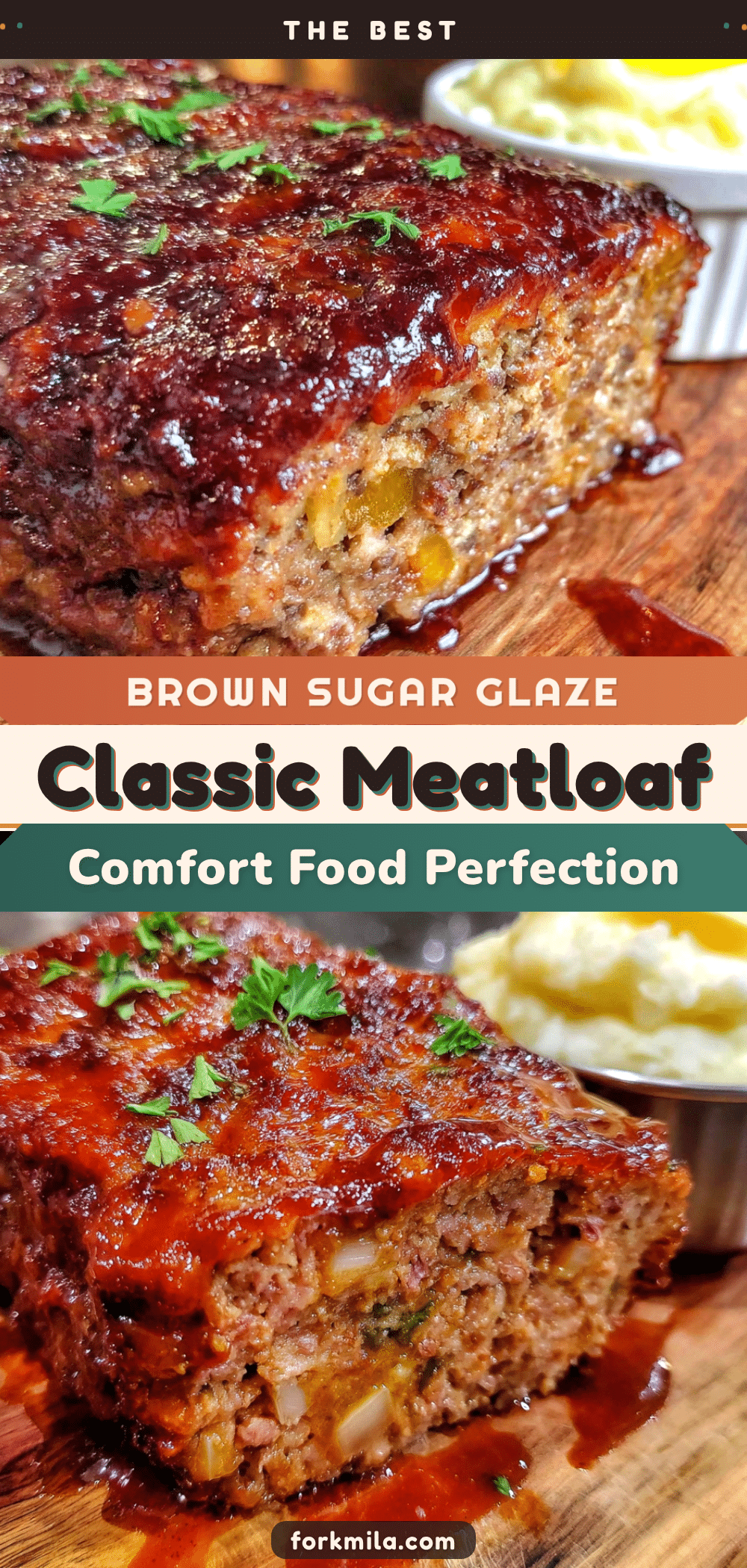
The Best Classic Meatloaf with Brown Sugar Glaze Recipe
This classic meatloaf features a sticky-sweet brown sugar glaze that caramelizes into a candy-like crust, with a tender, moist texture from a blend of ground beef and pork. It’s a crowd-pleasing comfort food that stays delicious even on day three.
- Prep Time: 15 minutes
- Cook Time: 60 minutes
- Total Time: 1 hour 15 minutes
- Yield: 8 servings 1x
- Category: Main Course
- Cuisine: American
Ingredients
- 2 lbs (900g) ground beef (80/20 blend)
- 1 lb (450g) ground pork
- 1 medium yellow onion, finely diced (about 1 cup)
- 3 cloves garlic, minced
- 1 cup (120g) plain or Italian-style breadcrumbs
- 1/2 cup (120ml) whole milk
- 2 large eggs, at room temperature
- 2 tablespoons Worcestershire sauce
- 1/4 cup (60ml) ketchup
- 1 tablespoon Dijon mustard
- 1 teaspoon dried thyme
- 1 teaspoon kosher salt (or 3/4 teaspoon table salt)
- 1/2 teaspoon freshly ground black pepper
- 1/2 cup (120ml) ketchup (for glaze)
- 1/3 cup (70g) packed brown sugar (light or dark)
- 1 tablespoon apple cider vinegar
- 1 teaspoon Worcestershire sauce (for glaze)
- 1/2 teaspoon garlic powder
Instructions
- Preheat oven to 350°F (175°C). Line a 9×5-inch loaf pan with parchment paper, leaving overhang on the sides.
- In a large mixing bowl, combine breadcrumbs and milk. Stir until breadcrumbs are fully saturated. Let sit for 5 minutes to form a panade.
- Heat a small skillet over medium heat with a drizzle of olive oil. Add diced onion and cook for 4-5 minutes until translucent. Add minced garlic and cook for 30 seconds until fragrant. Remove from heat and let cool slightly.
- To the bowl with the panade, add ground beef, ground pork, sautéed onions and garlic, eggs, 2 tablespoons Worcestershire sauce, 1/4 cup ketchup, Dijon mustard, dried thyme, salt, and pepper. Mix with your hands until just combined—do not overmix.
- Transfer the meat mixture to the prepared loaf pan. Press gently to shape, doming the top slightly.
- In a small bowl, whisk together 1/2 cup ketchup, brown sugar, apple cider vinegar, 1 teaspoon Worcestershire sauce, and garlic powder until the sugar is dissolved.
- Spoon about half of the glaze over the meatloaf, spreading evenly. Reserve the remaining glaze.
- Bake for 45 minutes. Remove from oven, spoon the remaining glaze over the top, and spread evenly. Return to oven and bake for another 15-20 minutes, until internal temperature reaches 160°F (71°C).
- Remove from oven and let rest in the pan for 10 minutes. Use parchment paper to lift the meatloaf out, transfer to a cutting board, slice into 1-inch thick pieces, and serve warm.
Notes
Don’t skip the panade (soaking breadcrumbs in milk)—it keeps the meatloaf tender. Let the meatloaf rest for 10 minutes before slicing to prevent it from falling apart. If the glaze gets too dark before the meatloaf is fully cooked, loosely tent with foil. Leftovers can be stored in the refrigerator for up to 4 days or frozen for up to 3 months.
Nutrition
- Serving Size: 1 slice (1/8 of reci
- Calories: 385
- Sugar: 12
- Sodium: 680
- Fat: 22
- Saturated Fat: 8
- Carbohydrates: 18
- Fiber: 1
- Protein: 32
Keywords: meatloaf, brown sugar glaze, classic meatloaf, comfort food, ground beef, ground pork, diner-style